






 Portuguese
  Spanish


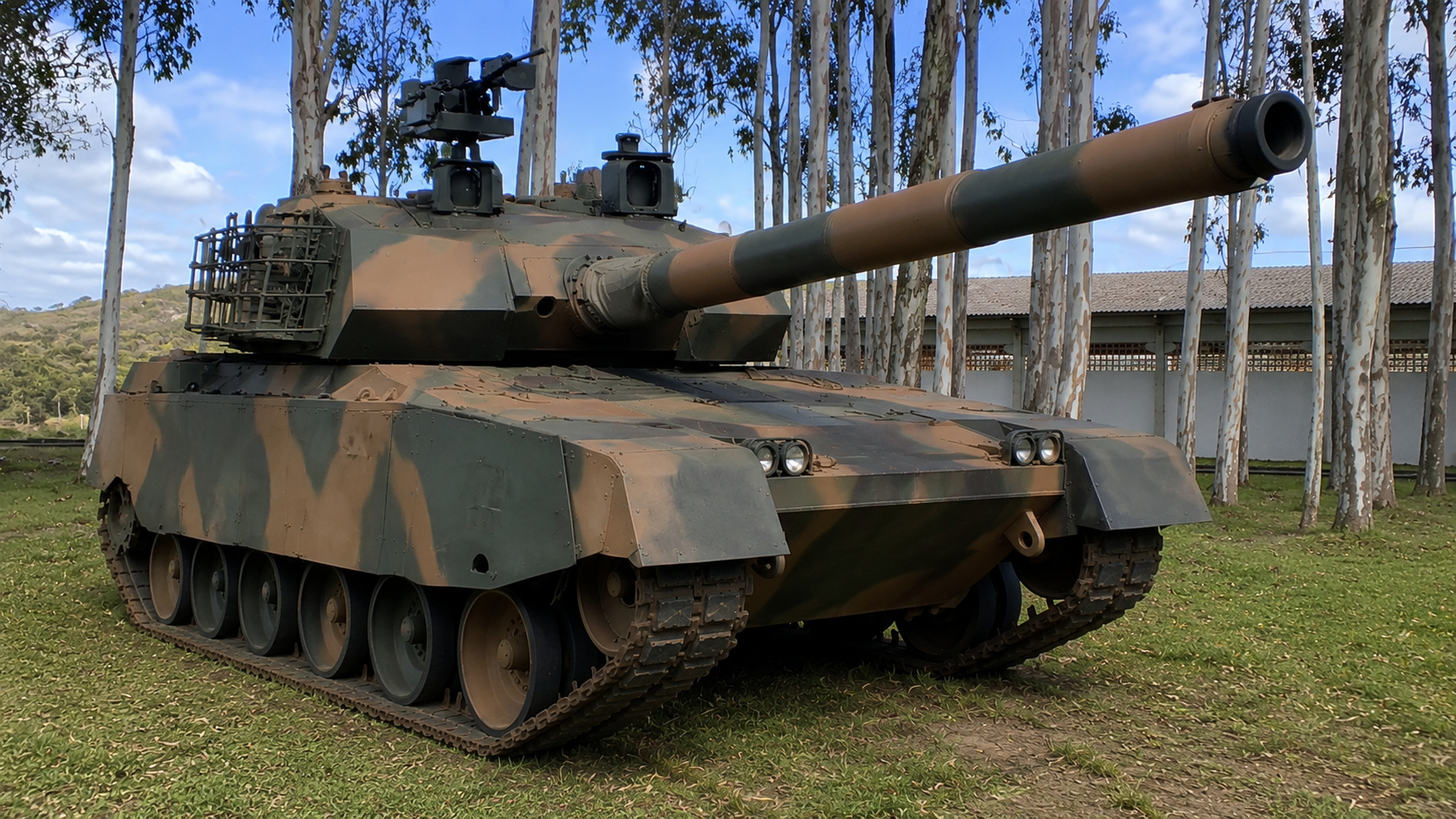


Developed by Engesa during the final years of the Cold War, the EE-T1 Osório impressed in military tests conducted in Saudi Arabia, outperformed Western competitors in various technical evaluations, and was even considered a favorite in a billion-dollar contest that was ultimately won by the American tank M1 Abrams.
In the early 1980s, during the final stretch of the Cold War, Saudi Arabia sought to modernize its military fleet with a new main battle tank. To this end, it launched an international competition that attracted manufacturers from different countries.
In this scenario, a Brazilian company entered a contest dominated by traditional powers in the sector. Engesa, known for armored vehicles, presented the EE-T1 Osório, a tank developed practically from scratch to compete in the international market.
The project drew attention because it placed Brazil alongside heavyweight Western models, such as the American M1 Abrams, the British Challenger 1, and the French AMX-40. Furthermore, the performance of the Brazilian armored vehicle in Saudi tests fueled expectations of a billion-dollar contract.
-
Bruno Guimarães, 28, Misses Crucial Penalty Against Norway in World Cup After Replacing Vinicius Jr.

-
Inspired by a school lesson on Africa’s water crisis, a young boy raised money through chores to fund a well that transformed a Ugandan community.

-
Brazilian Construction Worker Moves to France, Earns Up to €2,500 Monthly with Home Renovations, Gains Social Media Attention

-
US Navy Sinks USS Oriskany with 230 kg of C-4, Creating World’s Largest Artificial Reef in 37 Minutes




EE-T1 Osório placed Engesa in a contest dominated by military powers
Engesa already had experience in developing military vehicles, but had not yet entered the main battle tank segment. Therefore, the EE-T1 Osório represented a bold gamble and also a technological leap for the Brazilian defense industry.
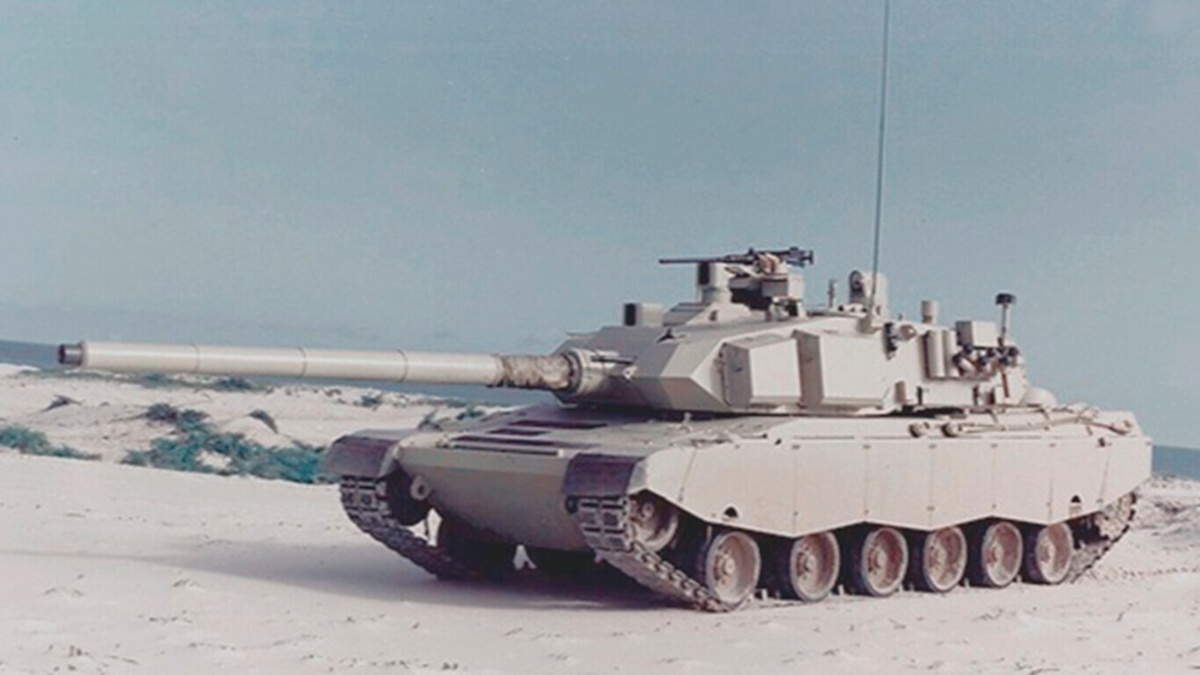
The armored vehicle had a size similar to tanks like the European Leopard and the American M1 Abrams. In its most powerful version, the vehicle exceeded 10 meters in length, including the main cannon.
Moreover, the Osório incorporated advanced technologies for its time. The bimetallic armor, developed by Engesa itself, combined steel, aluminum, ceramic, and carbon fibers. According to technical records from the defense sector, this structure aimed to enhance protection against projectiles and shaped charges without excessively increasing the tank’s weight.
Another important feature was the hydropneumatic suspension, designed to improve mobility on difficult terrains. This way, the vehicle gained more maneuverability in demanding environments, especially in areas of sand, earth, and inclines.


German engine, automatic transmission, and 120 mm cannon enhanced the armored vehicle’s performance
While the M1 Abrams used a heavy, high-consumption gas turbine, Engesa chose a German MWM 834 diesel engine. This 21.63-liter turbocharged V12 delivered 1,040 hp.
With a 1,380-liter fuel tank, the Osório achieved an estimated range of 550 km. Additionally, it used a four-speed automatic hydromechanical transmission from ZF Friedrichshafen AG, with a system aimed at reducing consumption and overheating.
In practice, the armored vehicle reached about 77 km/h on paved roads and approximately 50 km/h on rough terrain. Therefore, the design combined power, range, and mobility in a competitive package for export.
The armament also divided the tank versions. The EE-T1 P1 used the British L7 105 mm cannon. Meanwhile, the EE-T2, created especially to compete in the foreign market, featured the French GIAT G1 120 mm smoothbore cannon.
This cannon had an L/52 length, superior to the Western standard Rheinmetall Rh-120 L/44 mentioned in technical records. Thus, the Brazilian model aimed to compete directly with the main tanks available for export at that time.
Tests in the Saudi desert placed the Osório among the competition finalists
During the Saudi evaluation, the EE-T1 Osório faced tough tests in real military use conditions. The armored vehicle was analyzed alongside the M1A1 Abrams, the AMX-40, and the Challenger 1.
The tanks covered 2,350 km, with 1,750 km on sand and dirt. Additionally, they needed to cross three-meter trenches, climb slopes of up to 65%, operate on lateral inclines of 30%, tow another tank for 10 km, and withstand long periods with the engine running under extreme heat.
There were also shooting tests against fixed and moving targets. According to the then technical director of Engesa, the Osório performed superiorly in several stages. In one of the cited evaluations, the Brazilian armored vehicle reportedly hit eight out of 12 shots, while the M1 Abrams hit five.
As a result, the Osório reached the final stage of the competition alongside the Abrams. The outcome reinforced the perception that the Brazilian tank had achieved a technical level capable of rivaling Western giants.
Billion-dollar contract did not materialize, and Saudi choice changed Engesa’s destiny
In 1988, Saudi Arabia had signaled interest in purchasing 318 units of the Brazilian tank, in a deal estimated at approximately US$ 7.2 billion. However, the transaction was never completed.
In 1990, the Saudis signed a contract with General Dynamics to acquire 315 units of the M1A2 Abrams, an improved version of the American tank. This decision completely changed the future of the Brazilian project.
Furthermore, the Gulf War strengthened the military alliance between the United States and Saudi Arabia. As a result, the political and strategic environment began to favor the purchase of the American armored vehicle even more.
Without the Saudi contract, Engesa lost the main bet to recover the investment made in the Osório. Estimates vary according to the source, but point to expenses between US$ 50 million and US$ 150 million in the development and production of the prototypes.
The company was already facing financial difficulties during the project. After the commercial frustration, it suspended payments in 1990 and declared bankruptcy in 1993.
Legacy of the EE-T1 Osório remains in museums and in the memory of the defense industry
Even without reaching mass production, the EE-T1 Osório became one of the most remembered projects of the Brazilian military industry. The tank symbolizes a period when the country tried to compete in a market dominated by major powers.
Some of the prototypes ended up scrapped, while other units were preserved as historical pieces. An EE-T2 model with a French 120 mm cannon is at the Armored Instruction Center.
The version equipped with a British cannon can be seen at the Conde de Linhares Military Museum in Rio de Janeiro. The information is found in defense sector records, technical materials associated with Engesa, data from the U.S. Army Worldwide Equipment Guide, and publications specialized in armored vehicles.
Thus, the Osório remains a rare example of Brazilian technological ambition. Additionally, its trajectory shows how technical performance, geopolitical context, and commercial decisions can define the success or end of a military project.





