Portuguese
  Spanish


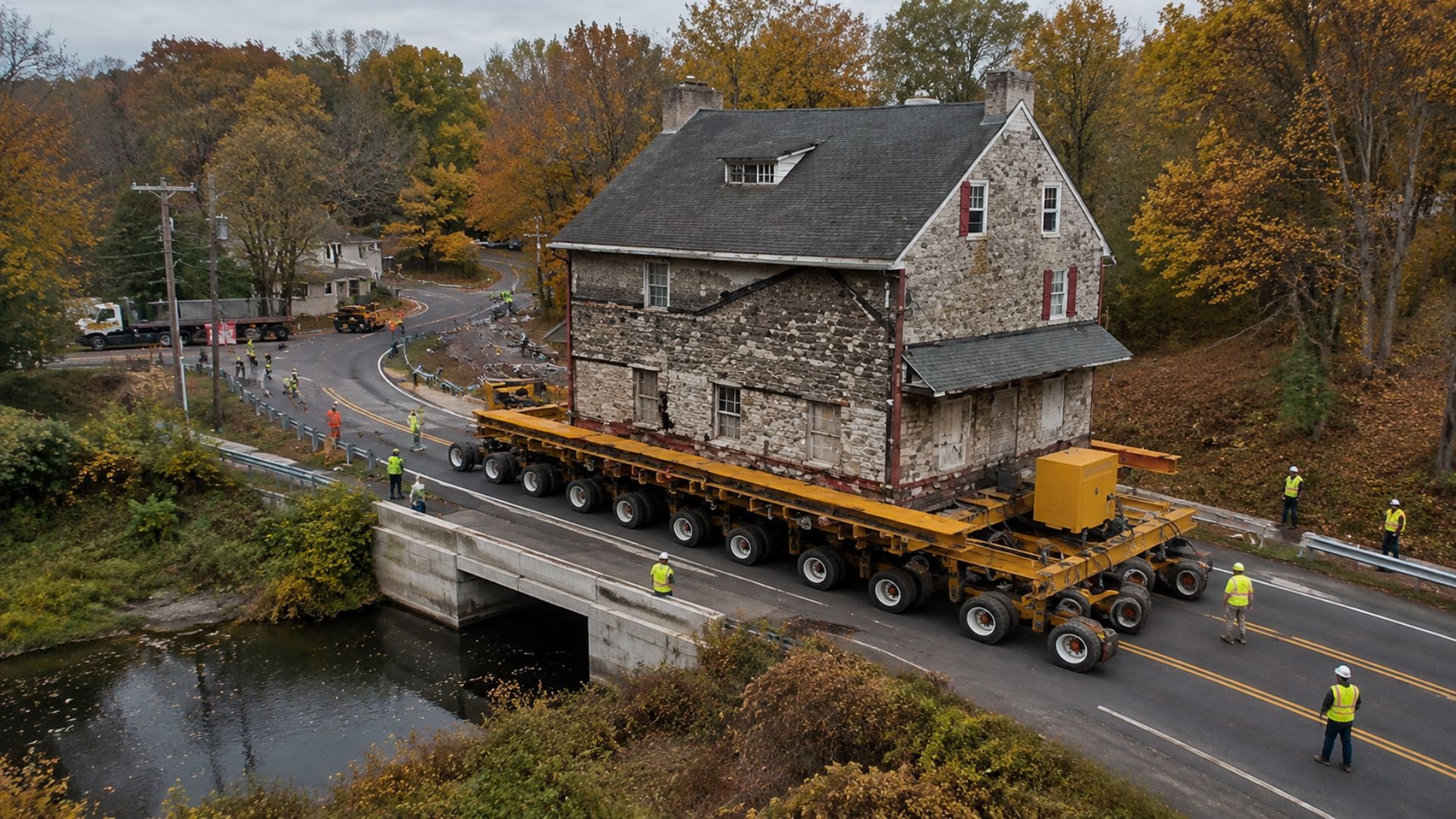

The feat took place in October 2018, in New Hope, Pennsylvania, executed by Wolfe House & Building Movers to make way for a luxury hotel. Closed since 2006 due to flooding, the stone mansion was preserved instead of demolished and today functions as a historic space.
Moving a nearly 240-year-old stone mansion, weighing 387 tons, and transporting the entire building along a highway seems impossible, but that is exactly what happened in New Hope, United States. In October 2018, the historic building that housed the Chez Odette’s restaurant, built around 1784, was lifted from its foundation and transported about 300 meters, intact, to a new site. The operation crossed a canal and a state highway closed to traffic and lasted less than four hours.
The work was executed by Wolfe House & Building Movers, a Pennsylvania company specializing in relocating entire buildings. The mansion needed to be moved out of the way for a development, the luxury hotel Riverhouse at Odette’s, which opened in early 2020, and gained a new function as a historic space open to the public. Closed since 2006 due to flooding from the Delaware River, the property was preserved instead of demolished, a choice increasingly common in cases of historic preservation.
The relocation of the Chez Odette’s mansion
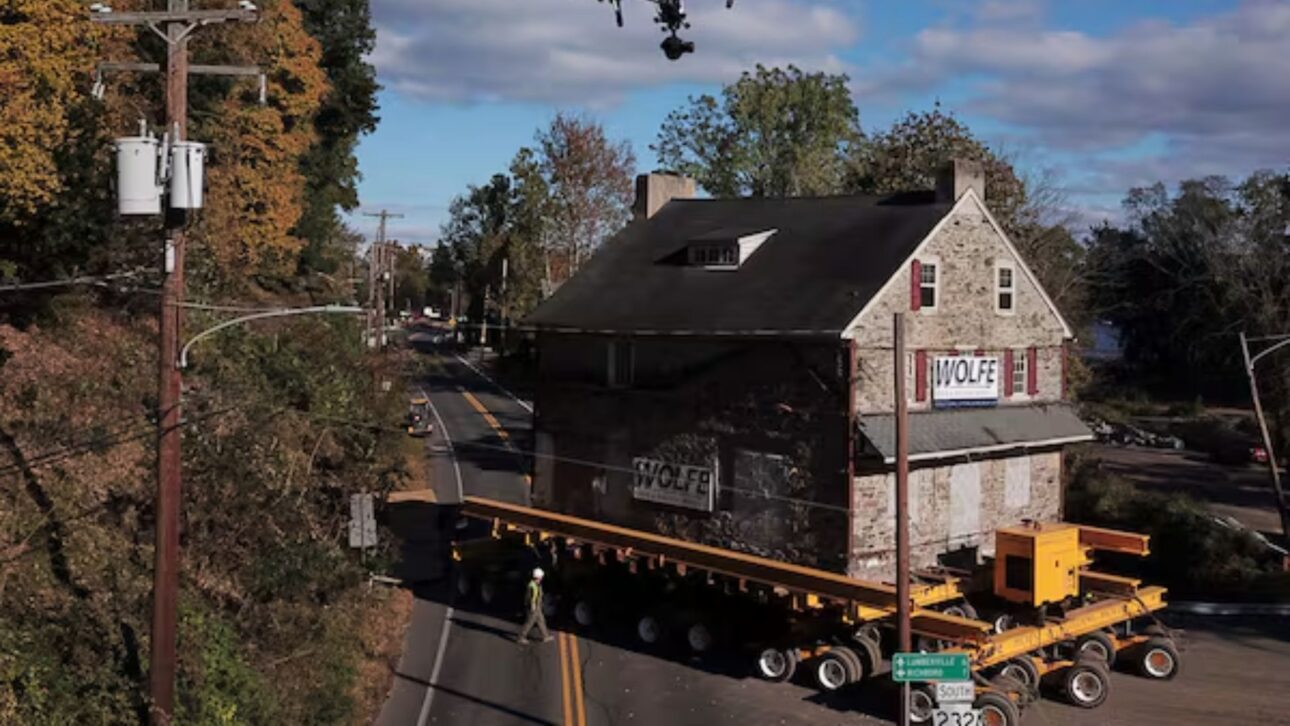
The stone mansion was located on the banks of the Delaware River, at 274 River Road, in New Hope, Pennsylvania. Built around 1784 as a tavern, the property became the famous Chez Odette’s restaurant, which closed in 2006 after successive floods. When the area was designated for a new development, the developer Gateway to New Hope LLC decided to preserve the structure, and the responsible parties themselves recognized that demolition would be “a loss to the community.”
-
British Asphalt May Soften in 40°C Heatwaves, While Indian Roads Withstand Harsh Heat with Tougher Materials, Highlighting Engineering Challenges Amid Climate Change

-
World’s Tallest Bridge Opens in China, Cutting Travel Time from 2 Hours to 2 Minutes

-
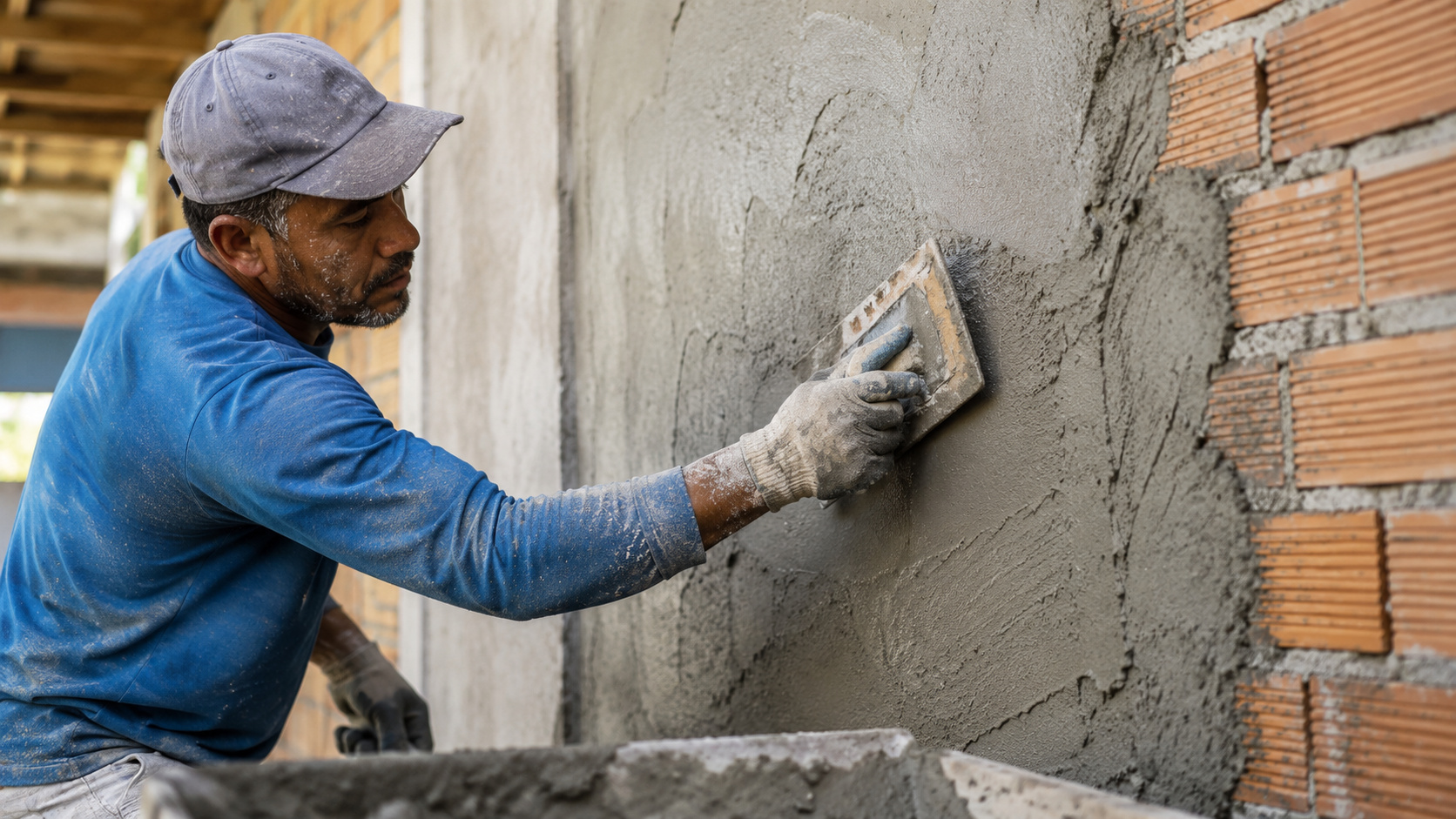
Proper Cement Mix Extends Plaster Durability, Prevents Early Detachment, and Reduces Home Structural Risks

-
Brazilian Researchers Develop Plant Fiber Cement Absorbing 100 kg of CO2 per Cubic Meter, Aiming for Low-Carbon Construction




On October 24, 2018, the mansion slid about 300 meters on 15 remotely controlled hydraulic carts, guided by Wolfe House & Building Movers, crossing the Delaware Canal to a new site. For this, State Highway 32 was completely closed from 9 AM to 3 PM, with traffic detours, a security barrier of about 60 meters, and even power and phone interruptions for some neighbors. In front of hundreds of spectators, the move was completed in less than four hours, and the building began to function as a historical space about the Delaware Canal State Park.
How to Lift and Move an Entire Mansion
Moving a mansion starts long before it leaves its place, with excavation around the entire structure. The team opens holes in the foundation and fits a steel beam structure under the building, wedged with wooden blocks and mortar to create a firm support base. Then, a unified hydraulic jack system lifts the building from the old foundation, slowly and evenly to avoid cracking the walls.
With the mansion suspended, motorized carts come into play, functioning as a self-propelled trailer. These carts, remotely controlled, guide the building to the new location, where it is placed on a new foundation. The company responsible for the move, Wolfe House & Building Movers, from Bernville, has been operating for about five decades, and its teams belong to a religious group, the German Baptist Brethren, often mistaken for the Amish. It was the same company that, in 2008, moved Alexander Hamilton’s house in Manhattan, raising it about 11 meters in the air.
Why Move Instead of Demolish
There are practical reasons to move an entire mansion instead of tearing down the building. The most common are historical preservation, when an old building needs to make way for a new development, moving houses away from busy roads, and protection against floods, raising the property so that water can pass underneath without destroying the habitable space. In the case of Chez Odette’s, the move combined historical preservation with the advancement of a new real estate project.
The practice of moving buildings is old and today features technology that has made it almost routine. Companies in the sector operate throughout the United States and in other countries, and there are records of impressive moves, such as the heaviest building ever transported on wheels, weighing about 2,600 tons. Entire lighthouses, like Cape Hatteras, were relocated in 1999 to escape coastal erosion.
The Limits and Costs Behind the Feat
Despite the impressive effect, moving a mansion is not magic nor a solution for all cases. The process is expensive, requires months of planning, and heavy coordination with police, power companies, phone companies, tree trimmers, and agencies that authorize street closures. The move of Chez Odette’s itself interrupted power and phone services for some residents and closed a state highway for hours.
In many cases, rebuilding is cheaper than transporting, and there is still a debate in the field of historical preservation. For some experts, removing a building from its original location loses the connection with the historical context in which it was built, making the move a measure to be used with discretion. In other words, behind the feat are costs, risks, and choices that do not always appear in the spectacular images.
When the house travels with everything inside


A surprising detail is that the mansion usually travels with almost everything inside. In residential moves, the furniture generally remains in the rooms because the movement is so slow and steady that it does not require emptying the house. Fragile and valuable objects, like an antique wall clock or glass pieces on shelves, may be removed as a precaution, but this is rarely necessary.
For companies in the field, the greatest value lies in offering a solution to a problem that seems unsolvable. Many people cannot even imagine that a building can be lifted and moved to another address, making each move a mix of engineering, patience, and logistics. In the end, the mansion arrives at the new site ready for a second life, without losing the memory it carries.
The journey of the Chez Odette’s mansion shows that, with planning and technology, moving an entire historic building is no longer an exception. Between the desire to preserve the past and the pressure for new developments, lifting and transporting a construction has become a concrete alternative to demolition, even if expensive and full of stages. It remains to be seen, in each case, whether it is more worthwhile to move, rebuild, or simply leave history where it has always been.
And you, do you think it’s worth spending so much to move an old mansion, or would it be better to rebuild or preserve it in the original location? Share your opinion, respecting the different views on the subject.