





 Portuguese
  English
  Spanish
  3 min of reading
  0 comments


Coastal Engineering Project In Kuwait Repositions Desert Sand, Advances The Sea Over Dry Areas And Enables A Planned City, Altering Local Geography, Land Use And Regional Environmental Debates
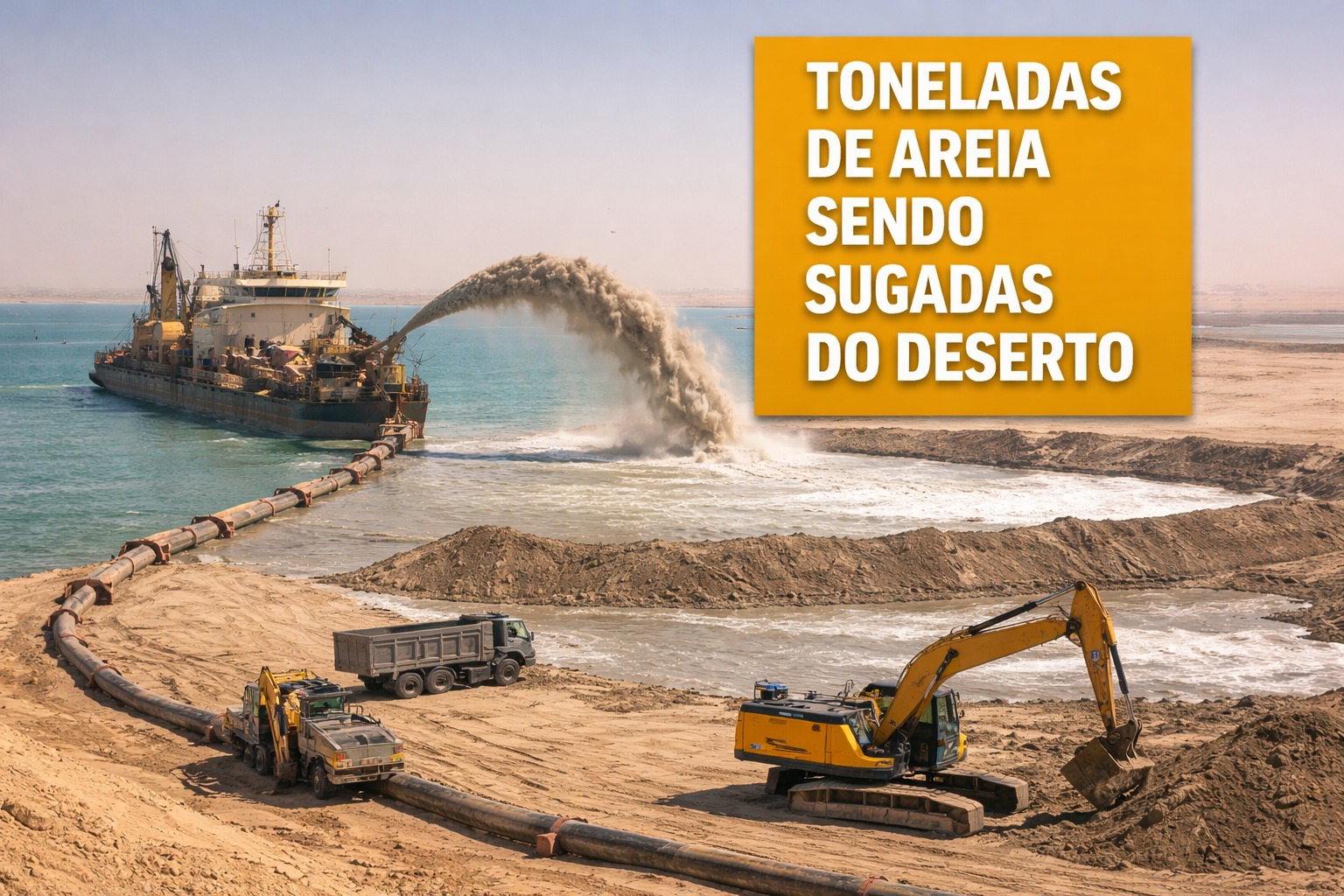
The Kuwaiti desert is undergoing an unprecedented transformation: tons of sand are being suctioned to create about 200 km of artificial coastline, allowing for the emergence of a planned seaside city in a historically arid region.
Engineering Repositions Sand And Redesigns Local Geography
The project reshapes a strip of desert to accommodate an entirely new coast, designed through large-scale engineering and advanced marine dredging technology.
Millions of tons of sand are removed and repositioned to allow the sea to advance over previously dry areas, creating channels, bays, and new shorelines.
-
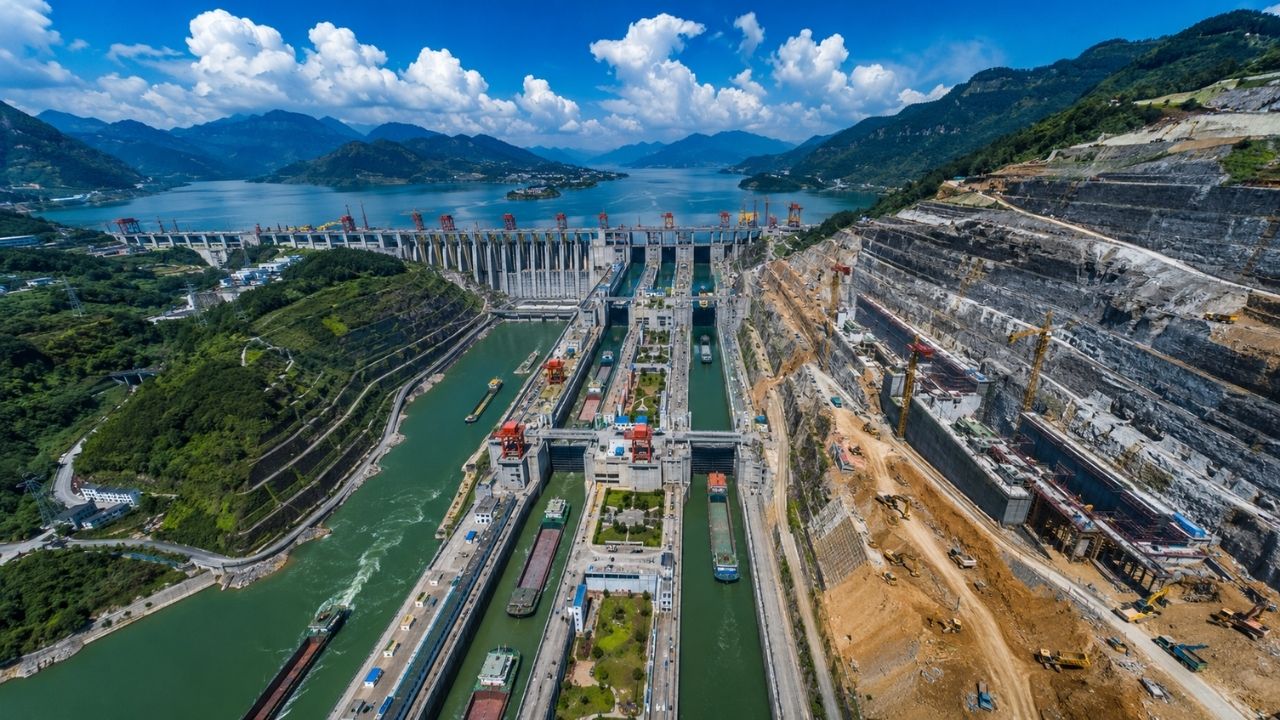
China’s major economic artery receives a megaproject worth $11.39 billion to allow ships to pass through the Three Gorges: new locks carved into the mountain promise to double the logistical capacity of the Yangtze River by 2050.

-
Banco Master has its liquidation recognized by the Bahamas Justice, expands the international scope of the process, and places overseas assets at the center of a billion-dollar dispute involving creditors, investigations, and cooperation between countries.

-
R$ 3,500 marks the entry into the Brazilian middle class, which extends up to R$ 8,300 in the first tier and reaches R$ 26,000 in the so-called upper middle class, the only level capable of saving and investing budget surpluses, according to IBGE and Ipea.

-
The automaker BYD, a leader in electric cars in Brazil, has been added to a U.S. military list alongside Alibaba and Baidu, in a Pentagon decision that threatens to strain the fragile trade truce between Trump and Xi Jinping.


This redesign completely alters the local geography and creates space for planned urbanization, something previously nonexistent in a territory dominated by arid soil.
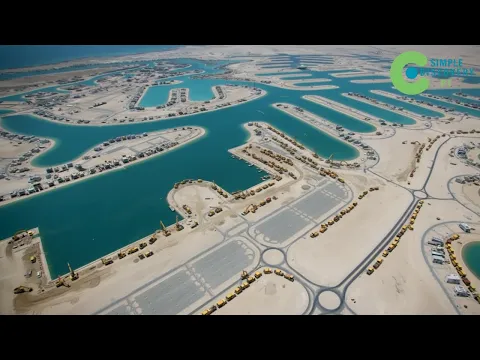

Dredging Allows The Sea To Advance Over Previously Dry Regions
The starting point of the work is large-scale dredging, which deepens the seabed and shapes the coast with technical precision.
This process allows water to advance inland for the first time in areas that were once entirely arid, creating artificial beaches and new coastal margins.
As a result, areas are created for recreation, environmental protection, and urban occupation, changing the historical relationship between desert and coastline.
Kuwait Future City Blends Urbanism And Planned Nature
Within this new scenario emerges the so-called Kuwait Future City, conceived as a metropolis integrated into the newly created coastline and marine environment.
The urban plan combines housing development with nature-based solutions, seeking to balance human occupation and the recovery of coastal ecosystems.
High-standard buildings, with striking architecture, are designed to provide comfort, energy efficiency, and visual integration with the sea.
Artificial Ecosystems And Technology Monitor The New Coast
The project envisions the recovery of coastal ecosystems while creating habitable areas, something uncommon in regions marked by extreme heat and barren soil.
Among the solutions are mangrove protection, artificial reefs, and monitoring of the new coastline with sensors and smart systems.
These strategies transform the coastline into a regional reference for arid countries facing increasing urban pressure.
Environmental Criticism And Costs Accompany The Experiment
Despite the narrative of innovation and sustainability, the project faces criticism related to environmental impacts, intensive resource consumption, and high costs.
Dredging and coastal redesign may affect local species, while maintaining a high-standard city requires robust permanent systems.
Cooling, desalination, and complex infrastructure are essential to sustain urban life in a naturally hostile environment.
An Urban Laboratory In The Midst Of The Desert Region
The experiment reveals how some countries test the limits between engineering, nature, and urbanism, creating an observable laboratory on a real scale.
The maintenance of the city and artificial ecosystems depends on constant technology, raising questions about limits and long-term consequences.
As a precursor, the project fits into a trend of extreme interventions for urban expansion, now applied directly against the desert.
With information from O Antagonista.




-

-

-

-

-

-

12 people reacted to this.