Portuguese
  Spanish


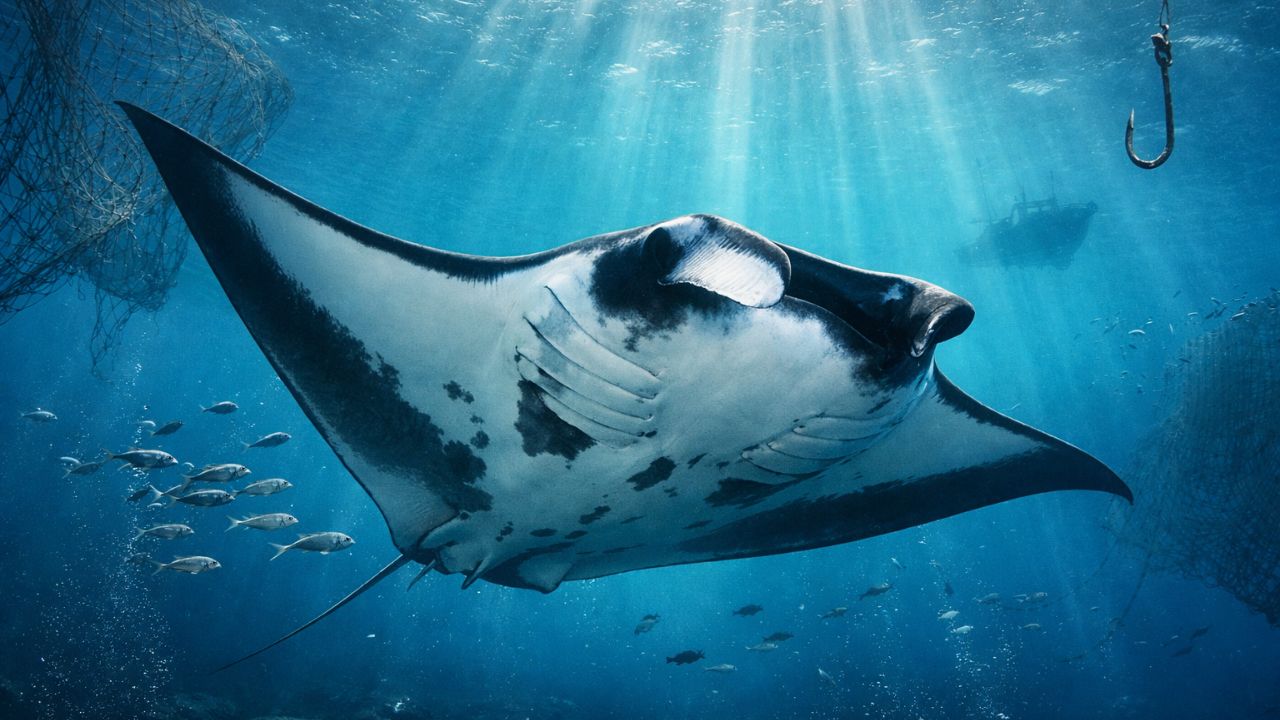

The Manta Ray (Mobula birostris), known as the Ocean Flying Giant, is among the largest fish in the world. Understand where it lives, how it feeds, and why it is endangered.
The manta ray, also called the flying giant, is one of the most impressive marine animals today, both for its size and its gentle behavior.
These cartilaginous fish live in the tropical and subtropical oceans of the planet, can exceed 7 meters in wingspan and weigh nearly two tons, and captivate attention by the way they “fly” elegantly underwater.
Belonging to the group of cartilaginous fish, manta rays do not have bones but rather a skeleton made of cartilage.
-
Brazilian Mayor Uses Humorous Sign to Raise Awareness About Littering, Goes Viral on Social Media

-
Award-Winning Japanese Restaurant Reveals It Has Preserved Part of the Same Frying Oil for 66 Years

-
American Youth Transforms from Severe Obesity to U.S. Air Force Enlistment, Losing 90 Kilograms in Two Years
-
11-Year-Old Entrepreneur Sells 60 Homemade Sweets Daily, Mastering Cost Calculation, Social Media Promotion, and Client Negotiation Since Age 7




This same group includes sharks and other rays, animals fundamental for the balance of marine ecosystems.
Scientific and tourism interest in this flying giant has grown in recent years precisely because of its ecological role and the constant threat to its survival.
Flying Giant: Differences Between Manta Ray Species
Until 2009, all manta rays were classified as a single species. More detailed studies, however, identified clear differences in behavior and habitat, resulting in the separation into two main species.
The oceanic manta, scientifically known as Mobula birostris, is the largest and exhibits migratory habits, crossing entire oceans in search of food.

On the other hand, the reef manta, called Mobula alfredi, tends to be smaller and lives near islands and shallow reefs, especially in the Indian Ocean and the South West Pacific.
This manta ray prefers warmer, nutrient-rich waters, remaining in the same areas for extended periods.
Manta Ray and the Spectacle of Filter Feeding
One of the most curious aspects of the manta ray is the way it feeds.
The flying giant swims with its mouth open, filtering large volumes of water to capture plankton, which gets trapped in its gills.
This feeding method is rare among rays and underscores the importance of the species in controlling plankton in the oceans.
Despite its imposing size, the manta ray has few natural predators.
Among them are orcas and some large sharks, such as tiger sharks, hammerhead sharks, and bull sharks. Still, the greatest threat does not come from nature, but from human actions.
Manta Ray Endangered
Currently, the manta ray is classified as “vulnerable” by the International Union for Conservation of Nature.
Overfishing, driven mainly by the fin trade, coupled with a low reproduction rate and the destruction of coastal habitats, has drastically reduced the populations of this flying giant.

Although protective laws exist, enforcement is still limited in various regions of the world.
On the other hand, scientific outreach and sustainable diving tourism have proven to be important allies.
Alive, the manta ray is worth much more than dead, generating income, environmental awareness, and inspiration for the preservation of the oceans.
With information from the site Bioicos.