





 Portuguese
  English
  Spanish
  4 min of reading
  0 comments


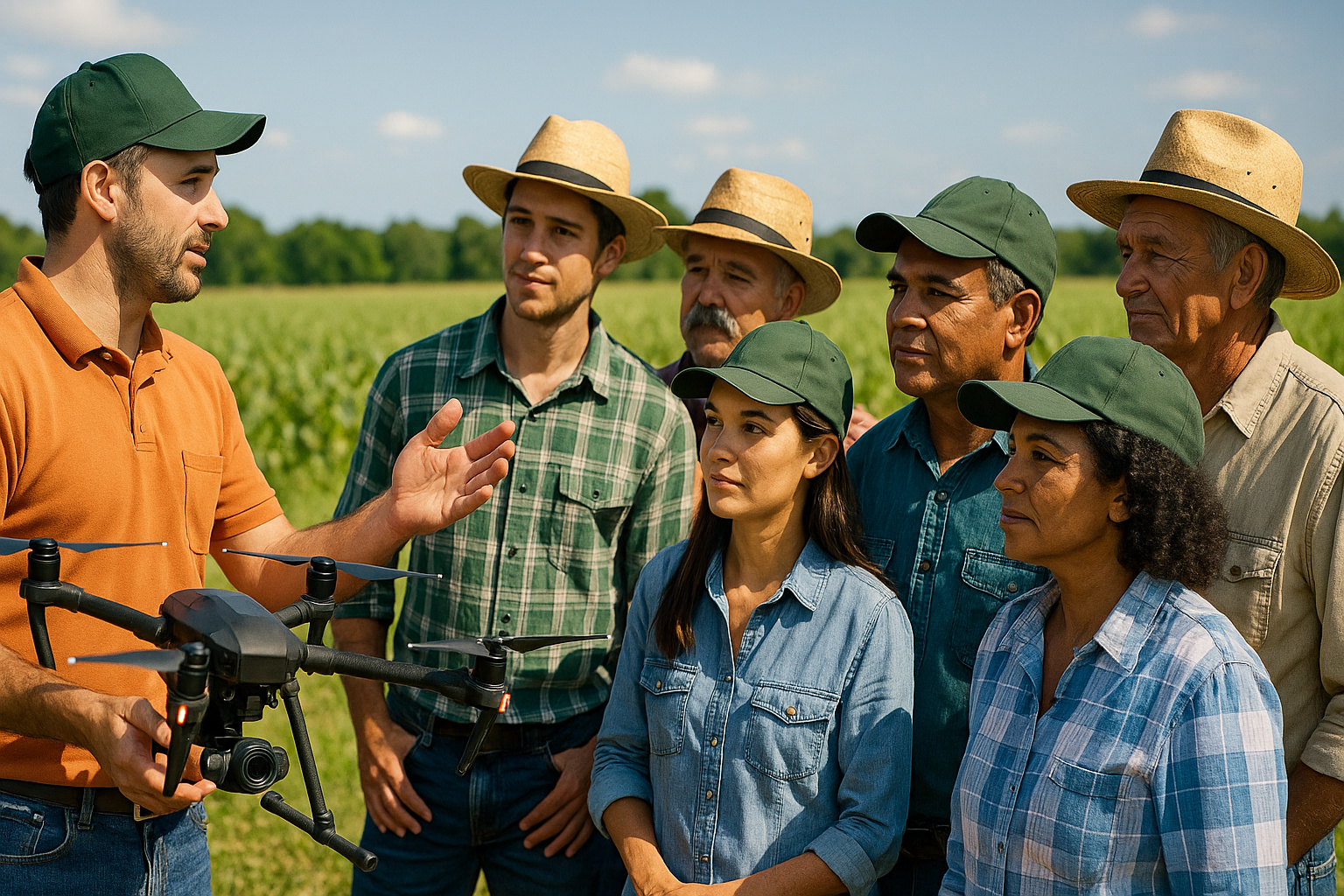
Program Will Train Rural Producers in All Regions of Santa Catarina, Focused on Innovation, Sustainability, and Strengthening the Local Agribusiness
The National Rural Learning Service of Santa Catarina (Senar/SC), an entity linked to the Federation of Agriculture and Livestock of the State of Santa Catarina (Faesc), launched one of the largest training agendas in the country: about 500 free courses will be offered throughout October 2025.
The training programs, developed in partnership with Rural Unions, aim to elevate the technical and managerial level of rural properties, promoting sustainability, productivity, and safety in fieldwork.
According to the president of the Faesc/Senar System, José Zeferino Pedrozo, the program reflects the institution’s continuous effort to respond to the new demands of modern agribusiness.
-
Detran opens registration for free car and motorcycle mechanics courses with 120 spots; see how to participate

-
Santander offers free Spanish courses with 1,000 spots, online classes for 6 months, native teachers, international certification, 4 monthly private mentoring sessions, and access without requiring a college degree for those seeking qualification and new opportunities in the global market.

-
Gerdau and Ânima Educação surprise the sector by launching an unprecedented training program for the steel industry, connecting higher education and the market in a strategic program that promises to accelerate the qualification of professionals for one of the most important segments of the Brazilian economy.
-
Raízen offers a scholarship of R$ 2,000 + R$ 194 for transportation assistance or chartered transport to work 30 hours per week; the Internship Program has open positions in 11 states of Brazil.


“The rural producer needs to be prepared to deal with technology, legislation, and new market requirements. These courses are the foundation for this evolution,” Pedrozo stated.
Regional Planning: Tailored Training for Each Reality
Senar/SC works with detailed territorial planning. Each course is offered according to the needs and economic vocations of each region of Santa Catarina.
The objective is to serve everyone from small family producers to large agro-industrial enterprises, ensuring equal access and practical applicability.
According to Senar/SC Superintendent Gilmar Antônio Zanluchi, this approach makes learning more efficient:
“The courses are planned according to the reality of each microregion. That is what guarantees concrete and immediate results for the producer,” he emphasized.
As a result, dairy producers in the West, grain farmers in the Midwest, horse breeders in the Highlands, and artisanal food entrepreneurs in the South find training directly related to their daily activities.
Two Main Pillars: Technique, Management, and Citizenship in the Field
The October program is structured around two major operating axes that complement each other and cover all areas of rural life:
- Rural Professional Training (FPR) — includes technical courses focused on agriculture, agro-industry, aquaculture, agrosilvopastoral activities, service provision, livestock, and forestry.
- Social Promotion (PS) — offers training focused on education, community organization, health, nutrition, and handicrafts, contributing to a better quality of life in the field.
These two fronts form the tripod of the new phase of Senar: technical training, efficient management, and rural citizenship.
The proposal is simple and effective: “Teach the producer to produce better, live better, and sell better.”
Featured Courses: From Artificial Insemination to Drones, the Future of the Field Is Now
The list of courses from Senar/SC for October impresses with its diversity and practical focus.
The trainings blend tradition and technology, with topics ranging from animal husbandry to precision agriculture.
Among the main courses are:
- Safety and Health in Working with Agricultural Pesticides – NR 31
- Operation and Maintenance of Brush Cutters
- Processing of Chicken Meat
- Artificial Insemination in Cattle
- Equine Science – Rational Training
- Homemade Pasta Production for Freezing
- Tractors and Agricultural Implements – Operation and Maintenance
- Issuance of Electronic Invoices for Rural Producers
- First Aid – Workers in Health Promotion and Support Services
- Drone – Piloting and Operation (In-Person Course)
- Legislation Applied to Agricultural Transport
The training combines theory and practice, with classes conducted by experienced instructors and supporting materials provided by Senar itself.
In courses like artificial insemination in cattle, participants learn reproductive management techniques that enhance the efficiency and genetics of the herd.
Meanwhile, in the drone piloting training, the focus is on the practical application of technology in the field — monitoring crops, precision spraying, and aerial mapping.
These courses place the producers of Santa Catarina in the era of digital and sustainable agriculture.
Education as a Tool for Transformation in the Field
In addition to technical training, Senar/SC aims to develop rural leadership.
The idea is for each participant to take the knowledge acquired back to their community, creating a network of multipliers.
Superintendent Gilmar Zanluchi emphasizes that the education system is designed to be simple, practical, and transformative:
“When the producer understands the value of training, they change their way of working. Knowledge is the most important input for the property.”
This investment reinforces Senar/SC’s role as an agent of modernization and inclusion, bringing training to even the most remote municipalities.
Registrations, Locations, and Digital Platform
Interested parties can access the official website sistemafaesc.com.br/senar/agenda-de-treinamentos to check the complete schedule, with dates, locations, and modalities.
Registrations are made directly at the Rural Unions in each region.
Additionally, Senar/SC maintains a Distance Learning (EAD) platform, which expands access to training and allows producers to study from anywhere at their own pace.
The institution emphasizes that, even in in-person courses, there are limited classes and registrations must be made in advance.
In times of digital transformation, training is an investment worth more than any machinery: the return is guaranteed.
The Real Impact: Productivity, Income, and Staying in the Field
Faesc evaluates that the expansion of training generates direct gains for the agribusiness sector in Santa Catarina.
Continuous training helps producers adopt new technologies, comply with environmental and labor regulations, and improve the competitiveness of rural properties.
The results can already be felt: producers trained by Senar/SC report increased productivity, better financial control, and reduced waste.
Moreover, the investment in rural education has been decisive in attracting young people to the field, reversing rural exodus in some regions.









-

-

-

8 people reacted to this.