






 Portuguese
  Spanish


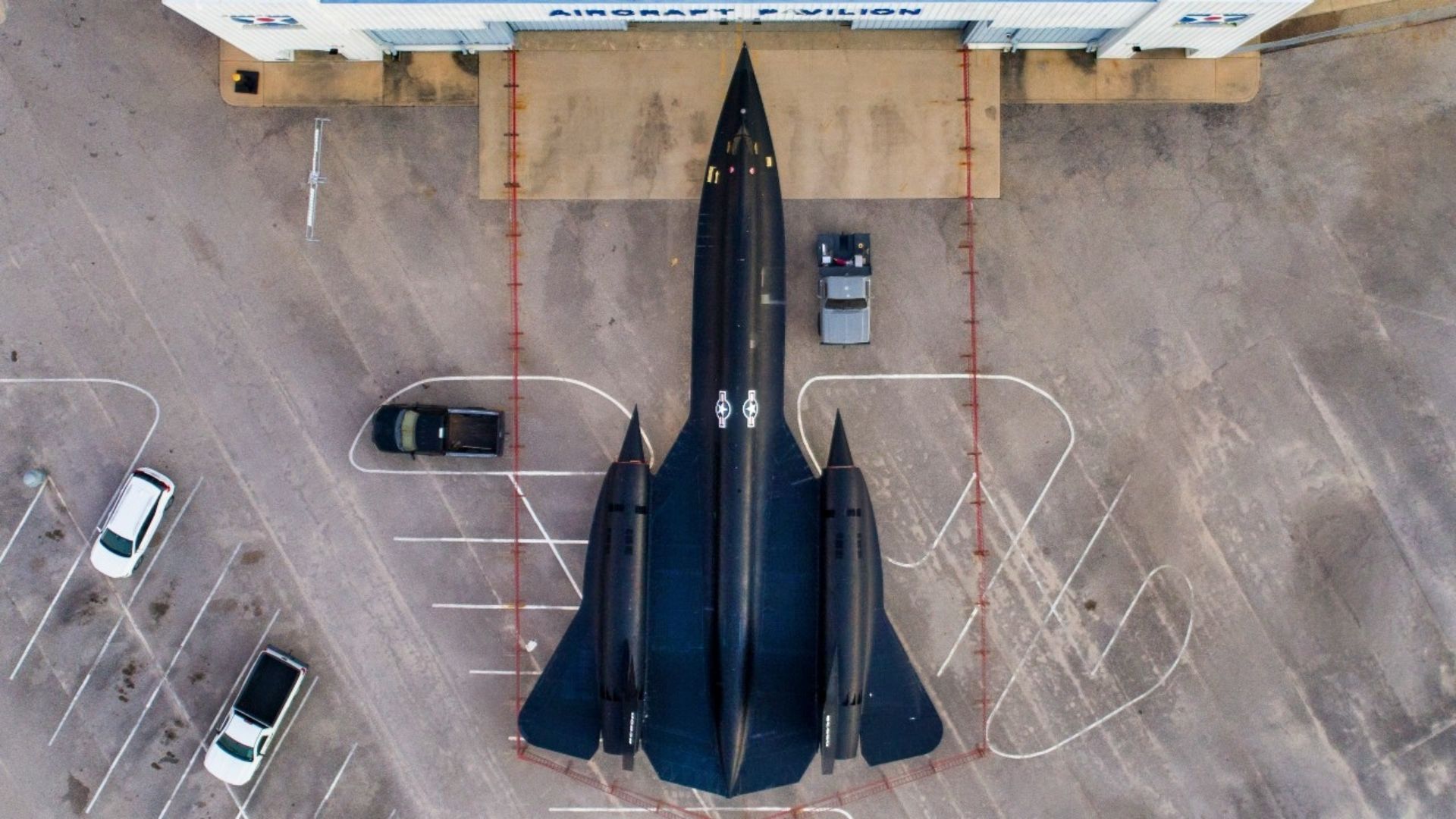

Extreme Speed, Uncommon Altitude, and Thermal Engineering Transformed the SR-71 Blackbird into a Reference for Strategic Reconnaissance. Titanium on a Large Scale, Variable Air Inlets, and Engines Designed for Mach 3 Shaped an Aircraft Created to Cross Monitored Areas with Little Margin for Reaction.
Few aircraft were designed with a goal as direct as that of the SR-71 Blackbird: to fly too high and too fast to make interception an almost unsolvable problem.
Developed as a strategic reconnaissance aircraft, it combined sustained speeds above Mach 3 with operational ceiling above 25,000 meters, according to public technical sheets from museums and aviation agencies in the United States, and made physics itself its main form of defense.
The Blackbird’s proposal was not to “fight” in the sky, but to observe.
-
Collector adapts forklift electric motor in a Kombi Corujinha pickup, hides 16 batteries under the bed, and makes the Brazilian classic run silently with up to 90 km of range.

-
Goodbye traditional vacuum: Samsung surprises and launches 2-in-1 robot with steam, AI that recognizes floors and stains, self-cleaning station, hot air drying, automatic emptying, water refill, and app control.
-
Brazil is transforming acerola waste discarded by the pulp industry into an ambitious and surprising project that could forever change the way the country utilizes one of the most invisible by-products of the fruit sector.
-
Scientists have created a colossal digital twin to predict tsunamis in real time, a simulation of 55.5 trillion unknowns run on 43,520 GPUs that reduced 50 years of calculation to 0.2 seconds and could change the defense of coastal cities.


Without armament and with a crew of two military personnel, a pilot and a reconnaissance systems officer, the SR-71 was designed to gather information over vast areas and return quickly, minimizing the window of reaction for radars, fighters, and air defense missiles.
In a scenario where shooting down spy aircraft had already proven possible, the response was to build a plane that could cross risk zones and, if necessary, accelerate and exit the reach before the threat closed in.
Performance That Turned into Protection

The result was a rare balance between aerodynamics, materials, and propulsion.
According to the technical sheet from the National Museum of the United States Air Force, the SR-71 reached a maximum speed of “Mach 3+,” exceeding 2,000 miles per hour, and could operate above 85,000 feet in altitude.
In practical terms, this translates to over 3,200 km/h and about 25.9 km, an altitude range where the air is thin, temperatures are extreme, and any engineering error becomes an immediate physical limit.
Titanium on an Industrial Scale and the Manufacturing Challenges
Flying for long periods in this regime required a complete mindset shift regarding what was considered an “aircraft structure.”
A technical study available in NASA’s NTRS repository, based on program documentation and manufacturer data, records that approximately 93% of the Blackbird’s structural weight was made of titanium alloys.
This was not a whim: at speeds above Mach 3, aerodynamic heating raises the surface temperature to levels where aluminum alloys, common in aircraft, would lose strength and deform much more easily.
Titanium brought another challenge: manufacturing and assembling each section of the aircraft became a discipline in itself.
The same NASA study describes machining difficulties, quality control, and industrial processes that had to be reinvented to handle a resistant, lightweight metal that is not very tolerant to contamination.
The complexity was such that inspection methods and parts traceability became a central part of the program, and the production process began to rely on specific tools and techniques to prevent corrosion and structural failures.
SR-71 Aerodynamics and Stability at Mach 3

The shape of the Blackbird also carried decisions that deviated from the standard of fighters and bombers of the era.
The design incorporated long “chines,” lateral extensions of the nose along the fuselage, which helped generate lift and stability at very high speeds.
The same study in NASA’s NTRS points out that these surfaces significantly contributed to the total lift of the aircraft, in addition to influencing aerodynamic behavior in different flight regimes.
The goal was to allow the aircraft to remain efficient where many designs began to lose fine control: at the edge between performance and heating.
This philosophy was echoed in radar signature.
Instead of relying solely on electronic shielding or a “one trick,” the SR-71 incorporated physical solutions.
The NASA document records the use of composite and laminated materials in peripheral parts, such as edges and external components, which also helped reduce the radar cross-section in certain areas of the aircraft.
It was not an “invisible” aircraft in the modern sense, but it was part of a phase where the design already considered reducing detection and buying time, while speed provided the escape route.
J58 Engines and Variable Air Inlets
Propulsion was the other pillar of the design.
The U.S. Air Force museum sheet identifies the use of two Pratt & Whitney J58 engines.
What makes the system unique, however, is that the engine did not operate alone.
The NASA technical study describes how the air inlet and exhaust system were part of an integrated high-speed system: at cruise speeds around Mach 3, the air compression at the inlet accounted for the majority of total thrust, with the inlet and exhaust having the largest share, while the turbojet contributed a smaller fraction of the overall system.
In this design, the aircraft behaved, in performance terms, like a hybrid system that used the aerodynamics of the airflow to multiply thrust at high speeds. Controlling this flow was critical.

Variable air inlets needed to maintain shock stability and provide the engines with air under appropriate conditions, which increased operational and technical complexity.
The same NASA study describes how the operation of the propulsion system transformed throughout the flight envelope and why the compression generated at the air inlet became critical as the SR-71 accelerated and climbed.
In other words, the aircraft depended as much on the “breathing” engineering as it did on the engine itself.
Heat as Part of the Design and the Black Paint of the Blackbird
Heat also became an element of design, not a side effect.
The NTRS document records the use of high-emissivity black paint as part of the thermal management strategy, helping to radiate heat and reduce thermal stresses on the structure.
The appearance that became synonymous with the Blackbird therefore had a practical function: to handle high temperatures generated by friction and air compression at extreme speeds.
At the same time, structural details such as panels and joints needed to accommodate expansion and contraction without compromising the aircraft’s integrity.
Operation at High Altitudes and Crew Safety
On the human side, flight conditions required unusual measures.
At such high altitudes, survival depended on rigorous pressurization and protocols similar to those in high-altitude environments, as the margin for error is reduced.
Reports published by institutions linked to aviation museums and by the specialized press associated with the Smithsonian describe the use of pressure suits and operation routines designed to handle the rarity of air and the need to maintain physiological safety on long missions.
The cockpit, in this context, was part of a larger system that needed to function as an “ecosystem” in a part of the sky where commercial aviation never operates.

Strategic Reconnaissance and the Impact on Air Defense
The logic behind the SR-71 also explains why it became a symbol of an era.
When air defense became capable of shooting down slower high-flying reconnaissance aircraft, as had occurred with earlier platforms, the program’s response was to shift the problem to a point where interception required a difficult combination: early detection, reaching sufficient altitude and speed, and still guiding an attack with precision.
Instead of relying on a single resource, the Blackbird combined altitude, speed, and signature-oriented design and heat, creating an aircraft that put any defense in a position to play catch-up.
The very operational career of the aircraft reinforced its uniqueness.
The U.S. Air Force museum sheet describes the SR-71 as a long-range strategic reconnaissance aircraft, derived from earlier designs in the same family, and records milestones such as first flight and entry into service, as well as performance characteristics.
Public NASA research documents show that, in addition to military use, variants of the Blackbird were used as test platforms, precisely because they offered a Mach 3 environment that was difficult to reproduce otherwise with crewed aircraft.
The engineering of the SR-71 ended up leaving a legacy that goes beyond the fascination with numbers.
The program forced advancements in titanium manufacturing, quality control of materials, integration between engine and air inlet, and thermal solutions for sustained flight at high speeds.
At the same time, it showed how, in certain designs, the boundary between “possible” and “viable” runs through industrial chains, costs, and maintenance as challenging as the flight itself.
If an aircraft capable of routinely operating above Mach 3 already required an entire industry to exist, what kind of technology would need to be mastered to put, today, a new generation of crewed aircraft in that same performance range without repeating the same costs and limitations?


