






 Portuguese
  Spanish


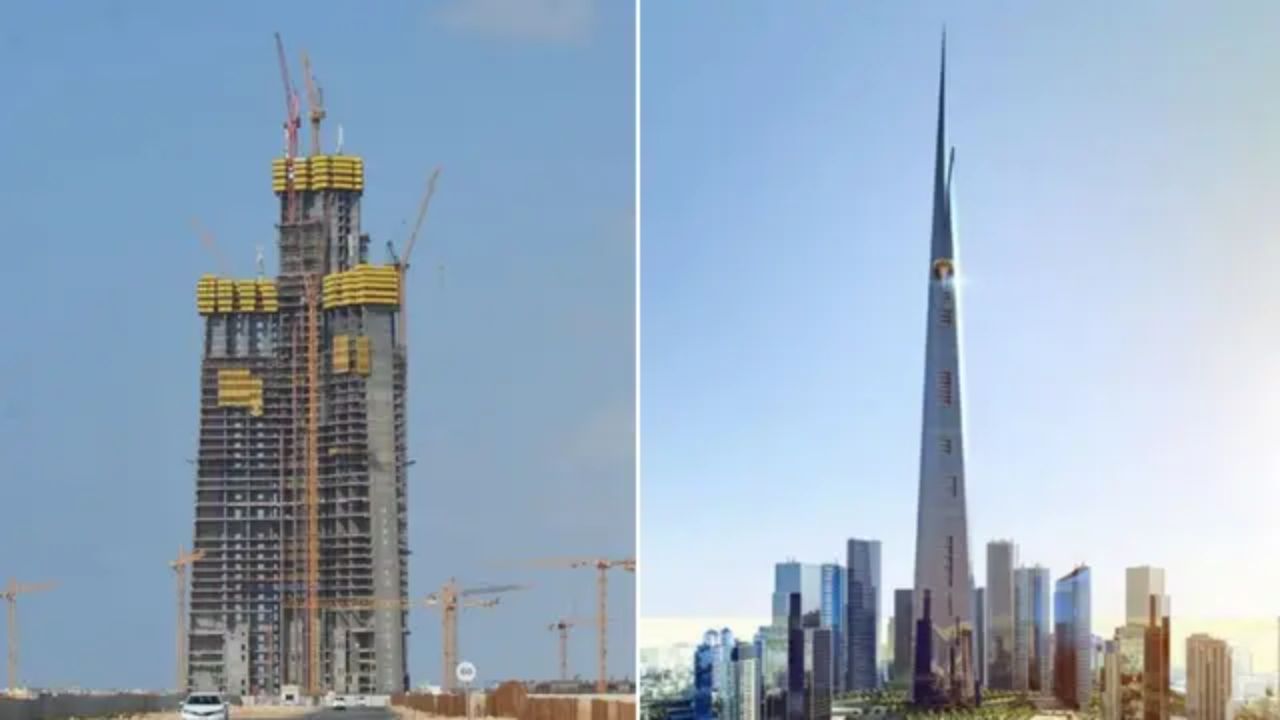


Expected for 2028, the structure in Saudi Arabia will not only redefine the skyline but also the limits of what is considered possible in modern architecture.
Saudi Arabia is constructing the Jeddah Tower, a skyscraper that plans to exceed the impressive barrier of one kilometer in height. When completed, it will become the tallest building in the world, surpassing the Burj Khalifa. This ambitious project is both an engineering marvel and a symbol of the country’s economic transformation, but it also raises important environmental questions.
A New Era in Engineering: Surpassing the Burj Khalifa
Imagine stacking three Eiffel Towers. Add a 40-story building on top. This is the approximate dimension of the Jeddah Tower. At over 1,000 meters tall, the structure will cut across the Saudi Arabian skyline, along the shores of the Red Sea. This is not an ordinary skyscraper. It is an attempt to build a structure one kilometer high, an age-old dream of engineers.
Once completed, the building will surpass the current record holder, the Burj Khalifa in Dubai, by about 180 meters. The tower will serve as the centerpiece of a US$ 20 billion development project, the Jeddah Economic City.
-
China to Drill 90 Kilometers Under the Sea to Connect Two Cities Currently Linked Only by Ferry

-
18 m² Home Built in Two Days by Teto Volunteers Provides Shelter from Insects and Cold for Resident in Brazilian Community; 43 Delivered in 2026

-
$134.7 Million Project in São Paulo Installs Over 5 Kilometers of Pipes, Creates New Underwater Crossing to Boost Water Supply for Over 450,000 People

-
At 61, Former Homeless Wheelchair User Receives Key to Container Home in Brazil, Declares Independence


A Vision Paused and Restarted with Vigor
The dream of the tower was born with grand ambitions. The lead designer is Adrian Smith, the same architect behind the Burj Khalifa. Smith’s vision for the tower is inspired by nature. Its shape resembles young desert plant leaves. The slender and asymmetrical profile was designed for aerodynamic efficiency, crucial against winds at high altitudes.
Then, a setback nearly dashed the dream. Construction was halted between 2018 and 2023. But the project was reborn. In January 2025, work resumed at full strength. By September 2025, the tower reached the 70th floor. Construction teams finish one floor every four days, keeping the completion goal for 2028 within reach.
The Innovative Engineering of the Tallest Building in the World
Building a one-kilometer tower requires solutions to unprecedented challenges. The foundation is an engineering marvel. It features a hybrid system with 270 piles that extend up to 105 meters deep.
Unlike other skyscrapers, the Jeddah Tower uses a reinforced core system. Three wings surround a central hexagonal core. This innovative design eliminates the need for complex structures. Perhaps the most impressive aspect is the concrete pumping technology, which has already reached 800 meters in height. For vertical transportation, the design plans for 59 elevators. The building also incorporates sustainable technologies, such as high-performance glass, energy-efficient systems, and rainwater harvesting.
A Symbol of Saudi Arabia’s Vision 2030
To understand the tower, one must be familiar with the Vision 2030. The kingdom seeks to diversify its economy beyond oil. The plan aims to transform the country into a global center for commerce, tourism, and culture. The Jeddah Tower is not just a building in this plan; it is a beacon. It signals to the world that Saudi Arabia is open for business.
The tower will house a luxury Four Seasons hotel, residential apartments, luxury condominiums, and offices. But its crown jewel will be the world’s highest observation deck at 644 meters, offering panoramic views in all directions.
The Paradox of Progress: Ambition vs. Environmental Impact
The Jeddah Tower is an impressive feat, but it comes with consequences. The project demands about 500,000 cubic meters of concrete and 80,000 tons of steel. The construction may generate 200,000 tons of carbon emissions. Environmental scientists have dubbed projects like this “vanity height”, constructions that exceed practicality merely to break records.
The coastal location exacerbates concerns. The waters of Jeddah already suffer from pollution due to inadequate sewage disposal. The construction may increase stress on the coastal environment. This creates a paradox: a kingdom that seeks a forward-looking image is constructing a mega-project that critics view as lacking climate consciousness.
As the Jeddah Tower rises, it represents more than engineering. When completed in 2028, the tallest building in the world will force a reflection on human ambitions and the limits of the planet. Its legacy will depend on an honest assessment of the true cost of our boldest dreams.




O vírus da cegueira existencial se alastrou pelo mundo. Aqui no Brasil muitos seguem ignorantemente o ideal da autofagia consumista que enaltece o ter e negligencia o ser.
Espero que não demore muito para que todos acordemos para uma realidade sustentável e inclusiva, onde olhemos o próximo como irmão na mesma caminhada e não concorrente desumanizado ou líder supremo a depender do capital financeiro acumulado.
É uma verdadeira vergonha esses arranha céus. Um exagero e um exemplo de ambição de poderia e tirania. Esses arranha céus não passam de verdadeiros pontos de desequilíbrio terrestre levando ao caos e extinção da raça humana na terra num futuro não muito longínquo. Até quando a humanidade vai continuar vendo essa aberração e continuar sem tomar providências.
A desculpa climática só serve para atrapalhar o progresso, o trabalho e a economia, enquanto as ideias socialistas atreladas ao ambientalismo insistem em encarcerar a liberdade de criação e expressão de opinião. O ambientalismo fanático e ignorante não contribuí com absolutamente nada, é um lixo ideológico patrocinado pela China comunista, onde esse ambientalismo é inócuo, que tem a única finalidade de atravancar o progresso do capitalismo democrático em outras regiões do mundo. Eis a verdade!