





 Portuguese
  English
  Spanish
  5 min of reading
  0 comments


A reconstruction project in Maarat al Numan, Syria, revealed a Byzantine underground tomb with burial chambers, a cross on a stone column, and ancient graves hidden beneath a house destroyed by war
A mason was clearing debris from a destroyed house in Syria to rebuild the property when he found a 1,500-year-old underground tomb hidden beneath the floor. The discovery happened in Maarat al Numan, in Idlib province, on May 30, 2025.
The information was published by AP News, a news agency. The discovery attracted attention because a common construction project, carried out amid the return of residents to homes damaged by war, revealed two burial chambers with stone graves.
The site did not appear in a planned excavation. It emerged during the clearing of a destroyed area, showing how the reconstruction of houses in Syria can reveal ancient parts of history that have been buried for centuries.
-
Russia paints trucks with zebra stripes to confuse Ukrainian drones powered by artificial intelligence, surprising experts by using a technique created in 1917; learn about zebra camouflage.

-
A robotic hand uses touch and vision to pick ripe fruits with nearly 100% accuracy. Researchers have built a flexible robotic claw that detects the ripeness point and gently picks fruits.

-
Mechanic mixes boat and car parts, uses adapted hull, wheels, and two engines to build an amphibious vehicle that drives on land and sails in the sea.

-
The rocket man now surpasses $1 trillion: SpaceX IPO takes Elon Musk to the greatest financial milestone in history and turns his fortune into a symbol of the new space, technological, and digital race.





House destroyed by war hid entrance to burial chambers under the floor
The discovery happened next to residential buildings made of concrete blocks. Many of these houses still bore the marks of war, with visible damage and destroyed parts.
Amid this scenario, an opening in the ground led to two burial chambers. A burial chamber is a room used for burying people. In this case, each room had six stone graves.
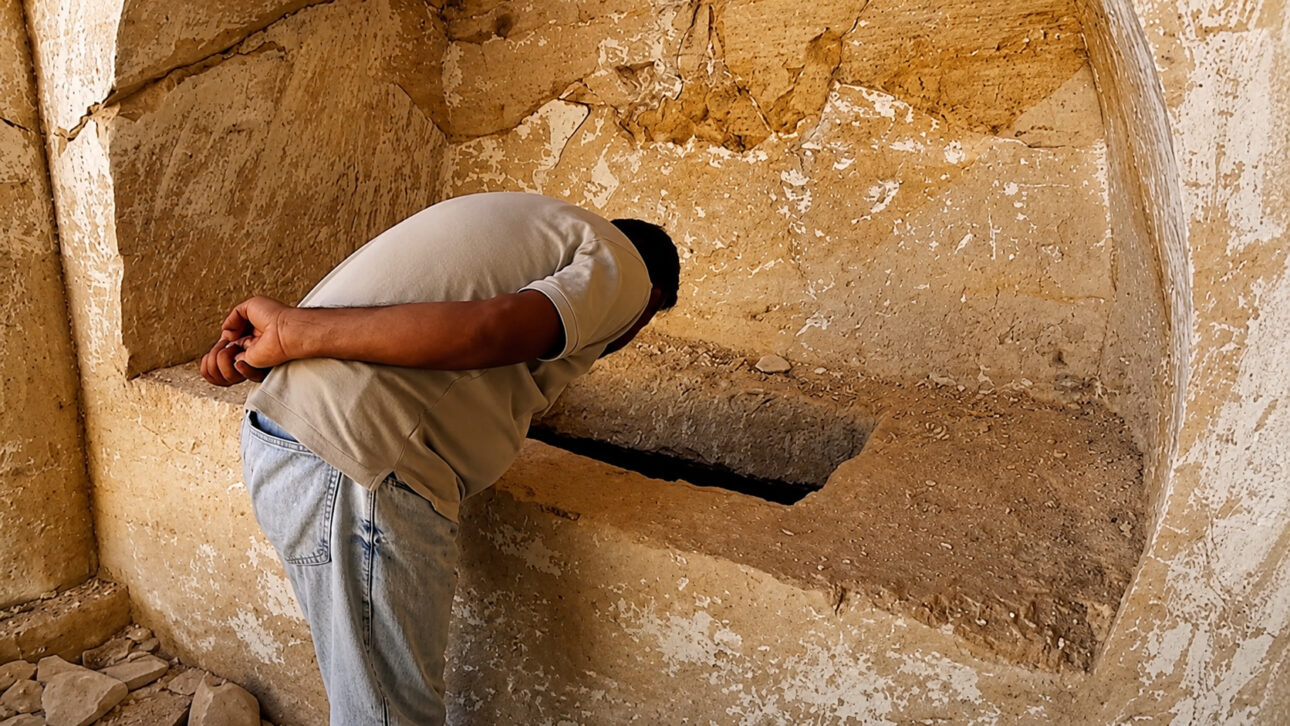
The most striking aspect of the discovery is precisely the contrast. Above ground, there were the ruins of a destroyed house. Below it, there was an ancient tomb linked to the Byzantine period.
To passersby, the area might appear to be just another war-damaged site. But the removal of debris exposed an underground structure that had been preserved for a long time.
AP News recorded the cross on a stone column and the six tombs in each room
AP News, news agency, reported that a cross mark was found on top of a stone column inside the underground complex. This sign helped link the tomb to the Byzantine period.
The Byzantine period refers to the Byzantine Empire, connected to the continuation of the Roman Empire in the East. In practice, this helps to understand why Christian marks appeared at the site.
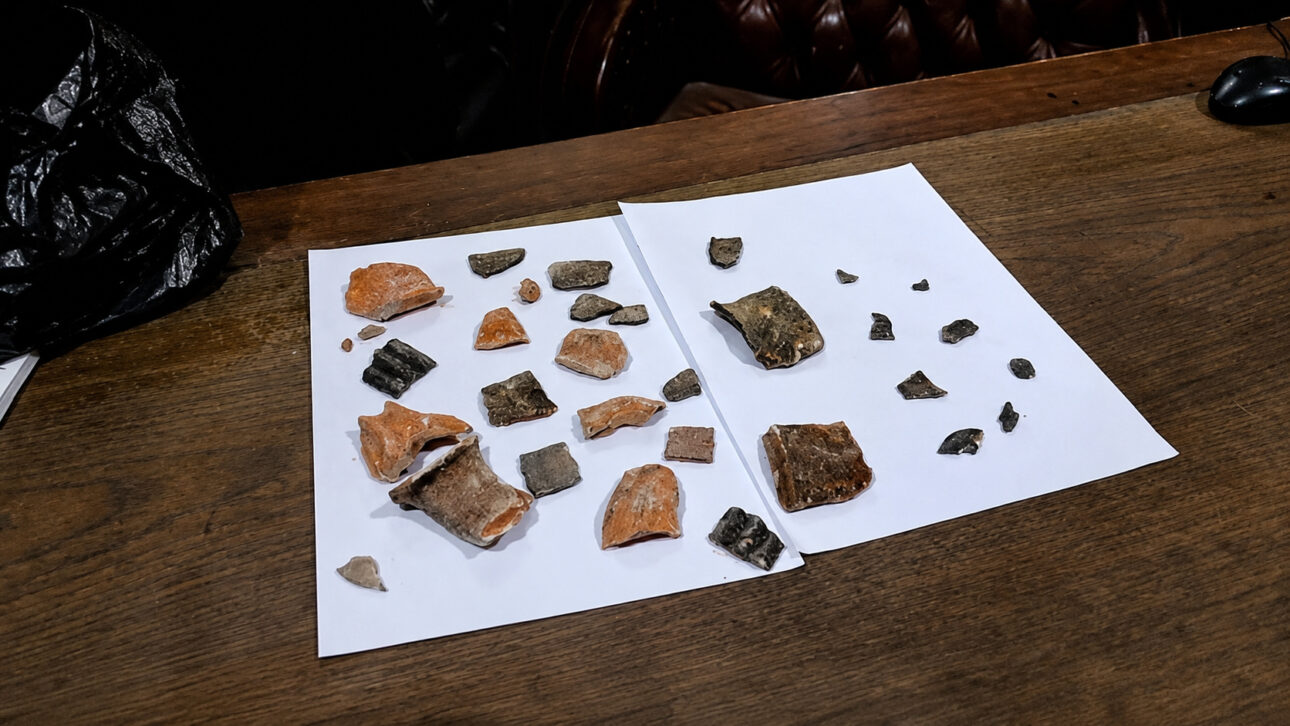
Besides the cross, the find also involved ceramic and glass pieces. Hassan al Ismail, director of antiquities in Idlib, related these elements to the dating of the tomb in the Byzantine period.
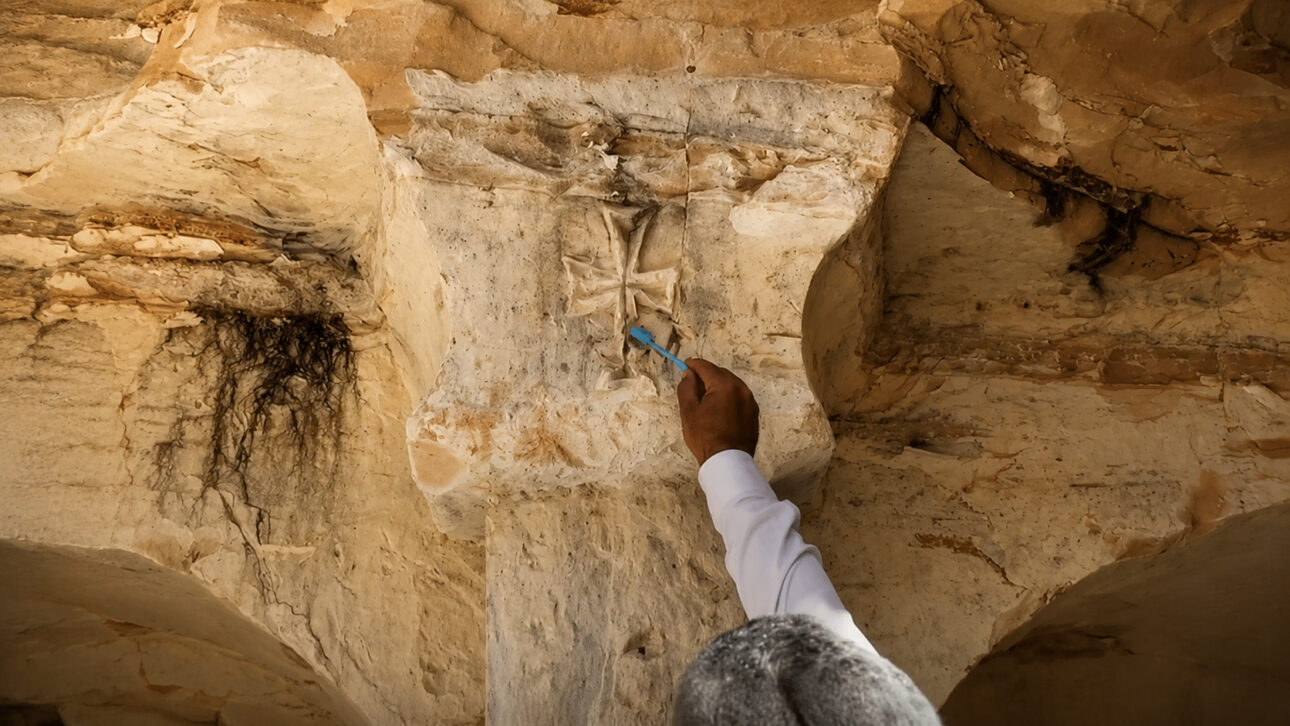
The presence of these signs transforms the find into something more than just a simple opening in the ground. The space had religious indications, organized tombs, and a connection to an ancient phase of the region.
Reconstruction in Maarat al Numan exposed past hidden under the rubble
Maarat al Numan is located in a strategic region between Aleppo and Damascus. The city was heavily affected by the Syrian civil war, which lasted almost 14 years and left entire neighborhoods damaged.
In 2020, forces linked to Bashar Assad regained the area from opposition control. After that, houses were looted and demolished. Many buildings remained standing, but without roofs.
With the return of residents, cleaning and reconstruction works began to change the city’s landscape again. It was in this process that the stone openings appeared and indicated the presence of ancient tombs.
The situation shows a real difficulty. While families try to recover destroyed homes, workers may also find historical remains that need to be evaluated and protected.
Idlib concentrates hundreds of archaeological sites and an ancient city
The province of Idlib has a strong presence of ancient ruins and monuments. Hassan al Ismail stated that Idlib has one-third of Syria’s monuments, with 800 archaeological sites and an ancient city.
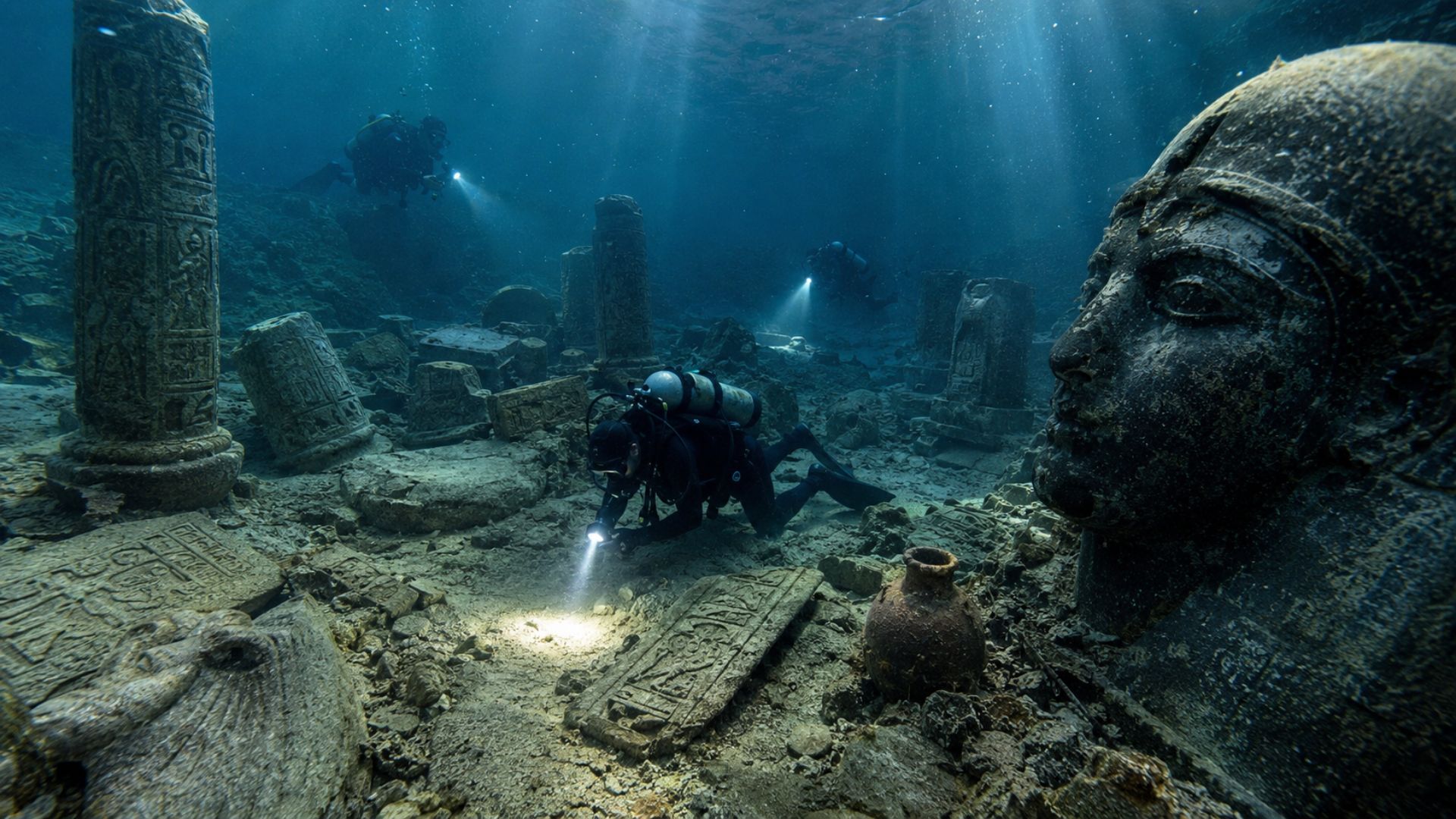
An archaeological site is a place where there are remains of constructions, objects, or marks of ancient peoples. In such a region, the underground can hold important structures, even in areas occupied by residences.
Northwest Syria also has ancient stone constructions, houses, basilicas, tombs, and streets with columns. These elements help explain why a tomb might appear beneath an ordinary house.
The problem is that the war damaged many of these sites. Bombings, looting, and unauthorized excavations have affected parts of Syria’s historical heritage.
Residents see in the discovery a mixture of fear, memory, and hope
The discovery also brought concern to residents. In previous cases, landowners where ruins were found feared losing their property so that the site could be preserved.
Ghiath Sheikh Diab, a resident of Maarat al Numan who witnessed the moment of discovery, cited the importance of fair compensation for owners in similar situations. He also mentioned assistance for displaced people who returned and found destroyed homes.
This point makes the story more human. The ancient tomb needs to be preserved, but many families also need to rebuild their lives after years of conflict.
Another resident, Abed Jaafar, went to the site with his son to see the discovered tombs and take photos. For him, the ruins can help recover tourism and the economy, as long as they are cared for and restored.
Underground tomb shows how a simple work can reveal an ancient city
The discovery in Maarat al Numan shows how a reconstruction work can reveal much more than broken walls. The work started with debris from a destroyed house and ended in front of a 1,500-year-old underground tomb.
The find brings together elements that explain the strength of history: a devastated house, residents returning to the city, a stone cross, funerary chambers, and ancient tombs hidden beneath the ground.
The tomb also reminds us that Syria does not only carry recent marks of war. Beneath streets, houses, and lands, there are still ancient layers of memory, religion, and everyday life.
This type of discovery raises a difficult question for any city in reconstruction. How to protect the past without abandoning those who need to rebuild the present?
Do you think that an ancient tomb found under a destroyed house should become a preserved area, or should the priority be to help families rebuild their homes? Leave your opinion in the comments and share this story.




Be the first to react!