Portuguese
  Spanish


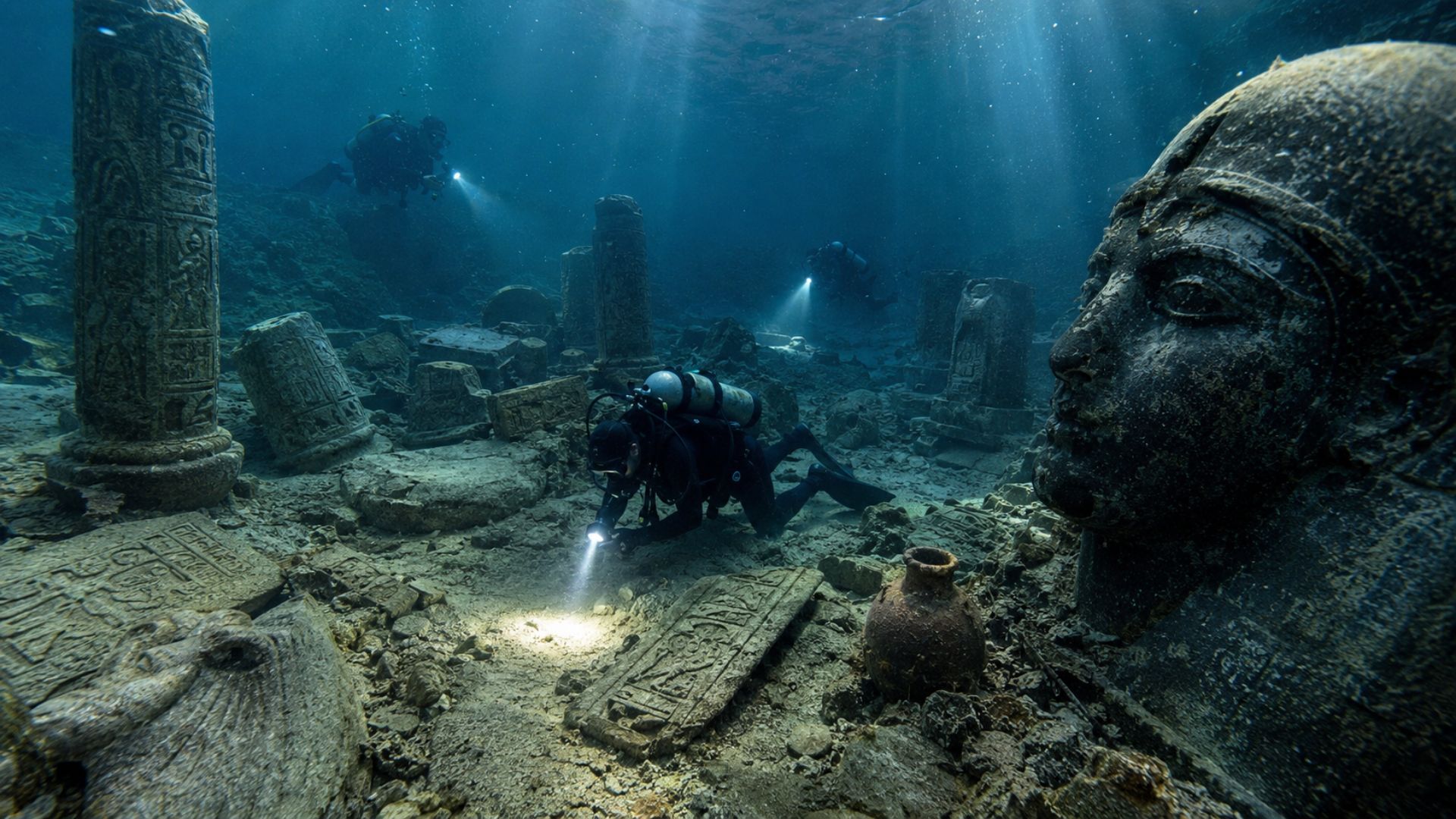

Near the coast of Alexandria, the submerged ruins of the eastern port hide the ancient royal district of the city. On the sunken island of Antirhodos, researchers suspect palaces and temples linked to the last years of Cleopatra, although nothing is confirmed. The bay still holds remains of the legendary Lighthouse.
In the blue depths of the Mediterranean, very close to the coast of Alexandria, columns and giant stones tell a story that the sea tried to hide for centuries. These are submerged ruins that hold traces of the ancient center of power of Egypt. And, among all the names linked to this scenario, one draws more attention than any other, that of Cleopatra.
The report from Gazeta de S. Paulo states that the sunken area hides what remains of the royal district of ancient Alexandria, with palaces and temples of the Ptolemaic dynasty. The main suspicion is that part of these structures belonged to the complex where Cleopatra VII lived her last years of power. Suspicion, and only suspicion, because there is still no definitive answer.
The city that the sea swallowed
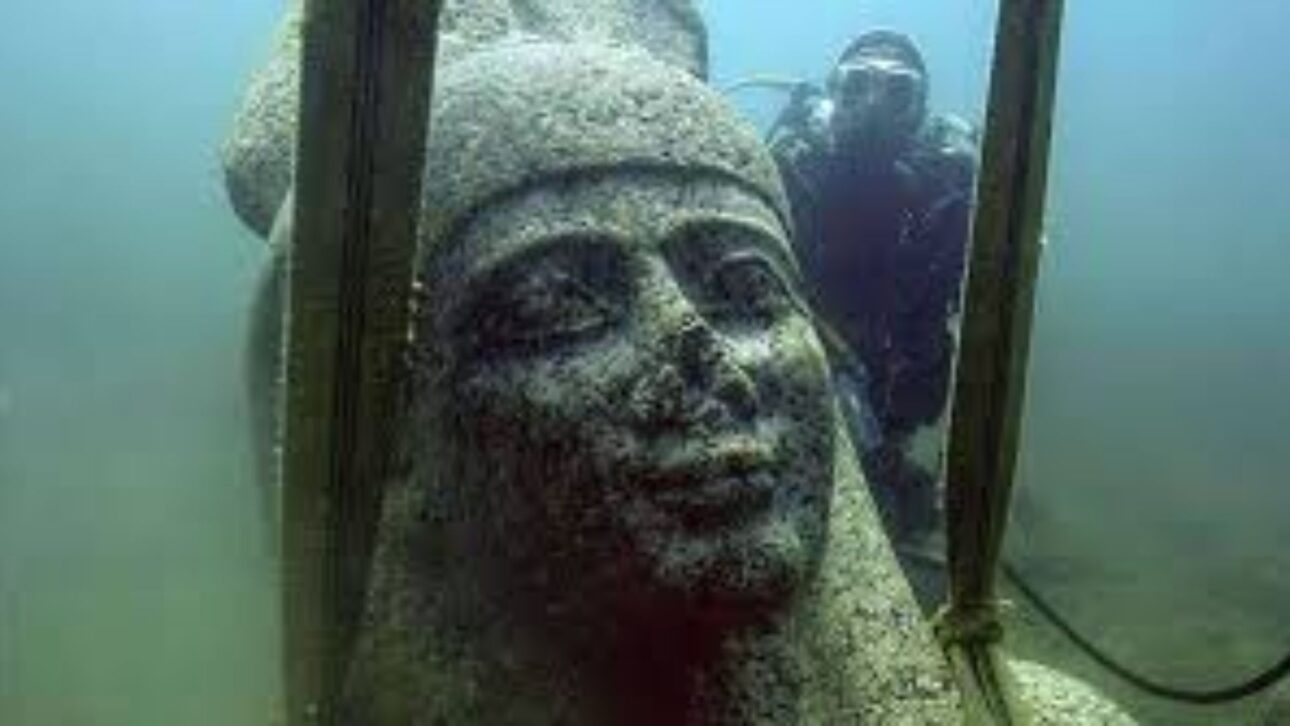
Alexandria was created by Alexander the Great and became one of the largest cultural, political, and commercial centers of the ancient world.
-
Largest Known Single-Piece Meteorite, Weighing 60 Tons, Puzzles Scientists with Its Intact Fall and Lack of Visible Crater

-
Oceanographer Turns Abandoned Fishing Nets from Brazilian Waters into Bags, Creating Jobs and Earning Over $7,000 Monthly

-
Australia deploys poisoned sausages and uses traps, shooting, and fences in a battle against invasive cats that kill over 1.5 billion native animals annually, threatening more than 200 species.

-
NASA Rover Captures “Tired Face” on Mars, Highlighting Human Brain’s Tendency to See Faces in Rock Formations




Over the centuries, however, part of this landscape disappeared. The sea advanced. Earthquakes, changes in the soil, and the force of the waters pushed entire neighborhoods below the surface.
Today, the eastern port concentrates some of the most important findings of underwater archaeology.
Since the 1990s, expeditions conducted by specialists have been scouring the region in partnership with Egyptian authorities.
The work has already brought to light columns, monumental blocks, statues, and structures linked to the ancient royal district, pieces that, together, are reconstructing a lost city.
The Submerged Ruins That Point to Cleopatra
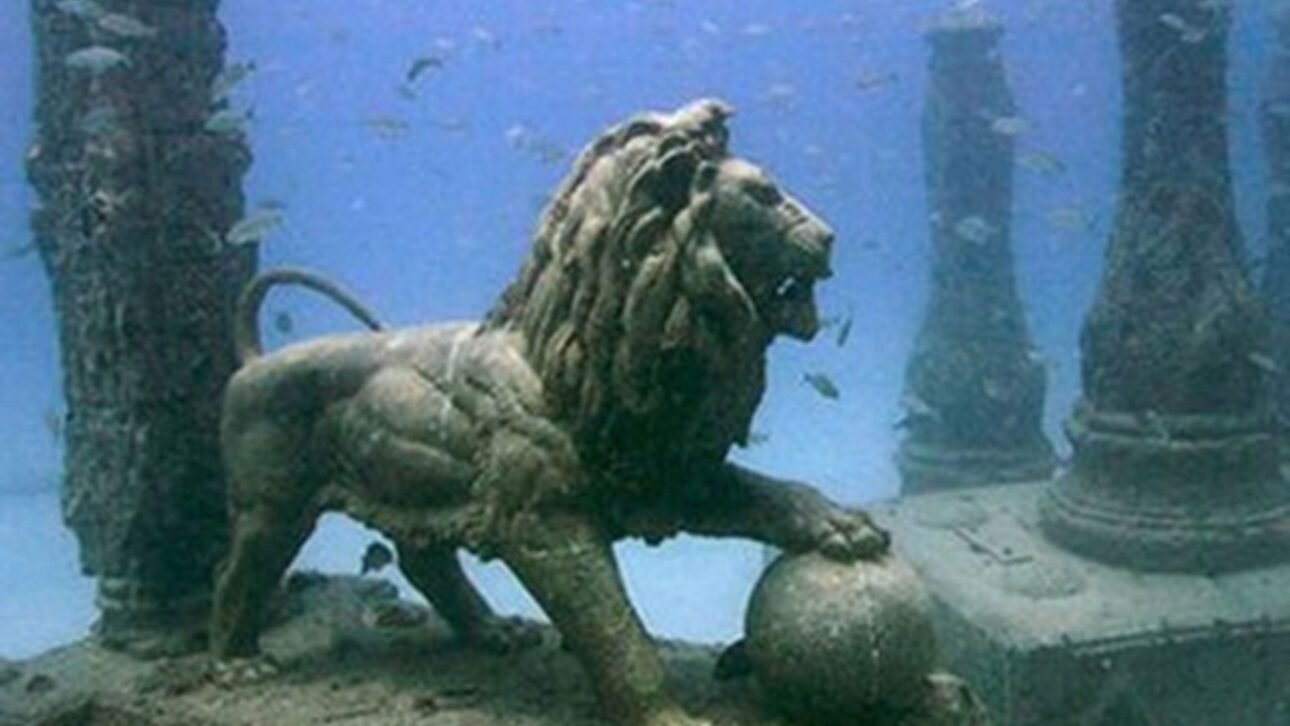
The main suspicion of researchers is that part of these submerged ruins is part of the palace complex used by the Ptolemaic elite.
It was in this environment, both political and religious, that Cleopatra VII would have lived the end of her reign.
One point draws special attention, the sunken island of Antirhodos.
There, researchers associate the remains with palaces and temples, including structures linked to the cult of the goddess Isis. The region is among the most promising places to understand the Alexandria of the queen.
Even so, none of this is a closed certainty, but rather a set of clues pointing in a direction.
A Treasure That Is Not Made of Gold
Those imagining chests of jewels and coins at the bottom of the sea will be disappointed. The great treasure of Alexandria is of another kind.
For archaeologists, what is worth gold are the fragments capable of reorganizing history. A broken column can reveal the size of a temple.
An inscription can show whom those people worshipped.
Even the position of a structure tells a story.
It helps to understand how the city functioned before being overtaken by water.
This care shows how archaeology has changed, because instead of simply removing pieces from the seabed, researchers today use mapping, specialized diving, and digital reconstructions to preserve the context of each find in these submerged ruins.
A Mystery That Still Holds Answers


Even with everything that has already been found, the relationship between Alexandria and Cleopatra remains full of questions.
There is not yet an answer for everything that lies in that submerged region, but each trace reinforces the significance of these underwater ruins in the history of ancient Egypt.
And the queen’s palace is not the only hidden attraction there.
The same bay holds remains of the legendary Lighthouse of Alexandria, one of the Seven Wonders of the Ancient World. In the end, there are two Alexandrias in one.
One lives on the surface, with streets, buildings, and movement. The other rests at the bottom of the sea, holding clues of a past that can still change what is known about Cleopatra.
The submerged ruins of Alexandria prove that some of humanity’s greatest stories are still being rediscovered.
Each block removed from the sand is a chance to glimpse a little more of the world in which Cleopatra lived.
And, as the excavations progress, the sea gradually returns secrets that seemed lost forever.
And you, would you be curious to dive and see up close these ruins at the bottom of the sea of Alexandria? Do you think they will one day confirm Cleopatra’s palace? Tell us in the comments what fascinates you most about this story, and share this article with that friend who is passionate about ancient Egypt and the mysteries of Antiquity.