Portuguese
  Spanish




The Lao Capital Balances History, Youth, and New Cultural Flows While Facing Economic Challenges, Tourist Expansion, and Social Changes That Shape the Way of Living, Working, and Moving in One of the Least Discussed Cities in Southeast Asia
Vientiane often appears as a little-known destination in Southeast Asia, even though it brings together a combination of serene daily life, cultural growth, and social changes that are becoming increasingly visible. The capital has a discreet fame, but reveals aspects that help to understand the moment lived by Laos.
Little Recognized Identity
Aditta Kittikhoun often deals with questions about his origin because many confuse Laos with neighboring countries.
He grew up in the United States, where his father worked at the Lao diplomatic mission to the UN, which facilitated his command of English and his return to the country.
-
The Arctic is no longer just a frozen region and is becoming a new military board with the opening of maritime routes, expansion of bases, nuclear icebreakers, and competition among Russia, NATO, the United States, and China.

-
U.S. Dismisses Brazilian Foreign Ministry’s Military Risk Warning as “Absurd,” Cites Brazilian Criminal Gangs Operating in the U.S. Since May 2026
-
Ukraine War Impacts Brazilian Fuel Supply: Russian Diesel Imports Drop 65% in June, Brazil Turns to US and India Amid Market Concerns

-
Chinese Nuclear Submarine Launches Simulated Warhead Missile in Pacific, Heightening Regional Tensions Amid Naval Drills with Russia Near Qingdao; New Zealand and Papua New Guinea Warn of Persistent Chinese Military Presence




Currently, Kittikhoun runs a media and creative marketing company in Vientiane, which has about 850,000 inhabitants.
He claims that the city offers comfort and good coexistence. He also says he raises his three children there because he appreciates the tranquil atmosphere and wishes to stay there for a long time.
Young and Discreet Capital
Although it emerged on the banks of the Mekong River centuries ago, Vientiane has reached 50 years as the capital of the Lao People’s Democratic Republic.
It is the youngest among communist capitals, alongside Beijing, Havana, Hanoi, and Pyongyang.
The city does not repeat the intense pace of Bangkok because it receives fewer tourists and lacks coastal access.
Moreover, it does not have skyscrapers, has limited public transportation, and operates with a small airport, with only six gates and short-distance regional flights.
International brands are rare. Thai and Chinese chains dominate the market, although units of Starbucks and a DoubleTree by Hilton have recently emerged.
Tourist Attractions and Climate of the Capital
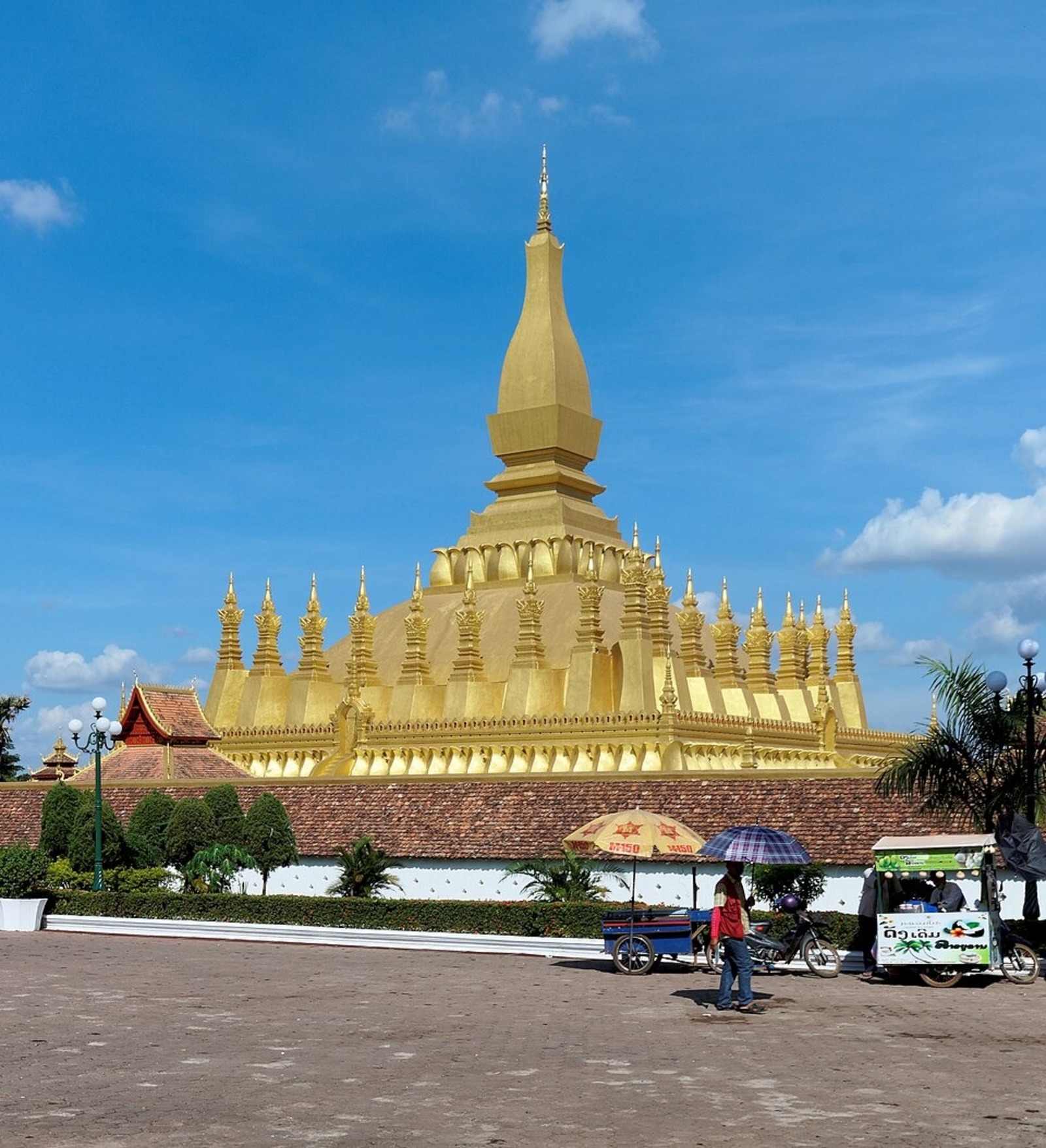
The city offers attractions like the Patuxai Victory Monument and the Wat Si Saket temple, known for thousands of Buddha sculptures and paintings.
Heat is often the first impression for visitors because the climate follows the hot and humid pattern of Southeast Asia, with a long rainy season.
Motorbikes cross streets near Buddhist shrines and government buildings with brutalist architecture.
In squares and parks, groups gather to eat grilled meats, accompanied by the well-known bottles of Beerlao.
The red and dark blue flags, with a white circle in the center, appear at food stalls and on trees. This visual reinforces the national identity that stands out in the daily life of the city.
Economy and Challenges
The economy of Laos has grown in the last decade, but it faces obstacles because high inflation, currency devaluation, and falling real wages push workers into self-employment, according to the World Bank.
The pandemic impacted the country. Additionally, the tourism sector suffered another blow after the deaths of six travelers due to contaminated alcohol at a hostel in Vang Vieng.
Many young people seek opportunities in Thailand because they understand and speak the local language. The linguistic similarity and greater job opportunities in the hospitality sector reinforce this movement.
Kittikhoun explains that manual labor goes abroad while highly qualified professionals remain in Laos and are in high demand.
Signs of Change
World Bank projections indicate an economic growth of about 3.5% this year. There has been a slight wage increase, but inflation and housing prices still make it difficult to access homeownership.
For filmmaker Kiyé Simon Luang, who spent years in France before returning to Laos, there is a new cultural enthusiasm among the youth.
He follows the independent music scene and sees transformations in how Laotians understand success and development.
Tourism and Internal Connections
Inbound tourism is growing as many visitors pass through Laos on combined trips throughout Southeast Asia.
However, Vientiane is not the main destination. The preference is usually for Luang Prabang, a historic city and UNESCO World Heritage Site.
China is currently the largest tourist market due to the high-speed railway that connects Vientiane, Vang Vieng, and Luang Prabang. The train ride between Vientiane and Luang Prabang takes two hours, something that previously took an entire day by road.
The route starts from Yunnan. Chinese tourists require a visa, but the requirement is waived for those who purchase a package with a Laotian agency.
Therefore, the number of Mandarin-speaking guides in border regions is increasing.
Living and Working in Vientiane
Sophie Steller, an Australian, arrived in Laos in 1999 to work with UNICEF. She decided to stay in Vientiane, even though she missed having a stable place to have cocktails on Sundays.
This gap motivated the opening of the Sticky Fingers cafe, where she became the owner.
Today, Steller explores Vientiane’s green areas by biking or boating. When she hosts visitors, she recommends Cope, an organization supporting victims of landmines.
Legacy of War
Between 1964 and 1973, the United States dropped about two million bombs on Laos. It is estimated that 80 million have not yet detonated. Non-profit organizations work on the safe removal of these explosives.
Tourism Growth
By 2025, about three million tourists visited the country, compared to 32 million who went to Thailand. Laos aims to reach five million visitors per year.
Despite the increase in tourists, locals claim that Vientiane preserves a manageable and serene lifestyle. For foreigners like Steller, the city remains a well-kept secret.
With information from CNN.