Portuguese
  Spanish


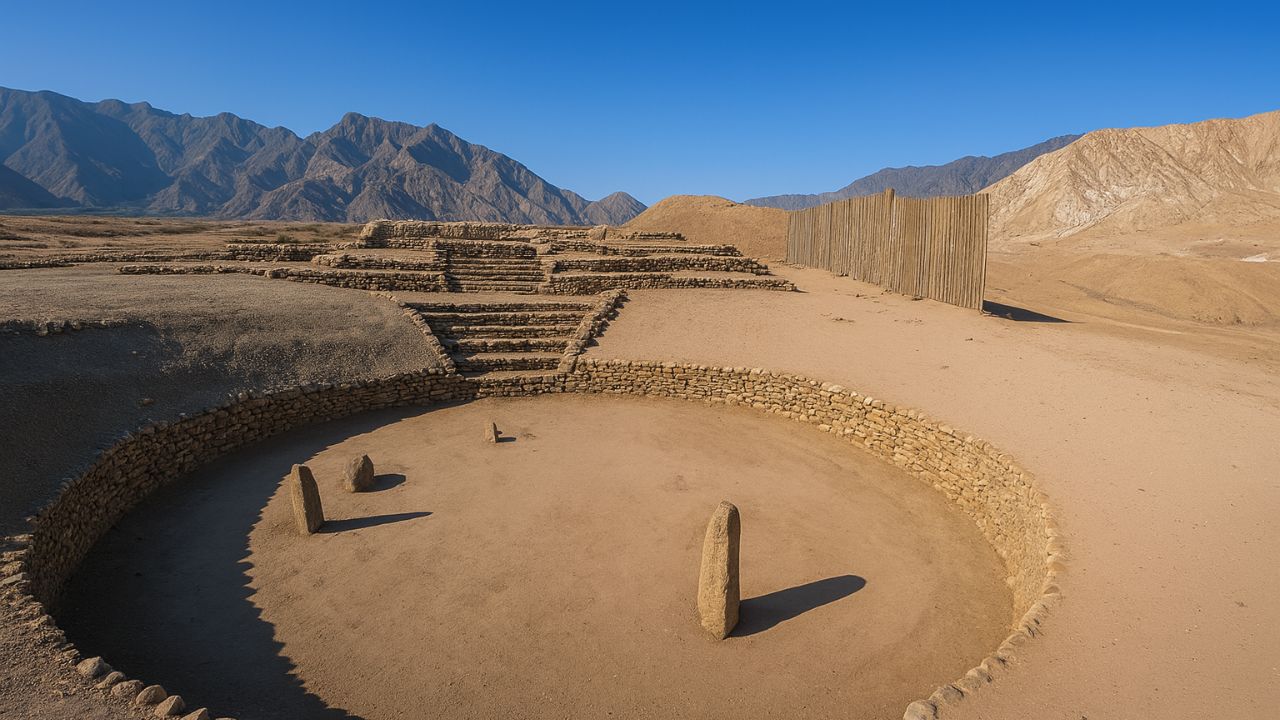


A Mysterious And Ancient City Emerges From The Sands Of Peru, Rewriting What We Know About The First Civilizations Of The Americas.
Located approximately 200 kilometers north of Lima, in the province of Barranca, the fascinating lost city of Peñico has been unearthed. With an impressive 3,800 years, dated between 1800 and 1500 B.C., this monumental discovery is not just another archaeological site. Peñico reveals itself as a crucial connection point between the coastal Pacific peoples, the Andes, and the Amazon. Its proximity to Caral, the oldest civilization ever recorded in the Americas, around five thousand years ago, further elevates its status and makes it an invaluable treasure for archaeology.
What Peñico Reveals To Us
Researchers dedicated almost eight years to the meticulous mapping and study of the remains in Peñico. They analyzed eighteen robust structures made of stone and clay masonry. Among the most captivating finds is a quadrangular hall adorned with representations of pututus. These wind instruments, made from seashells, were vital for communication and symbolized social prominence in ancient Andean societies.
A Strategic Link Of Trade And Knowledge
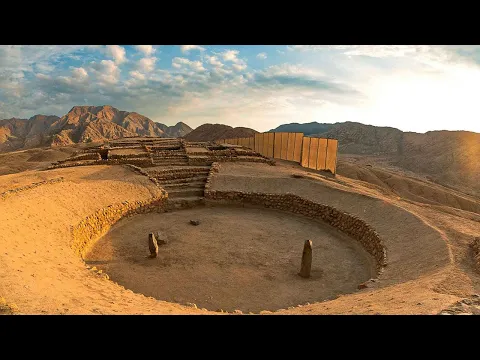

The strategic location of Peñico, positioned between the sea, the mountains, and the dense rainforest, made it a facilitating link for intense exchanges: products, knowledge, and cultural practices flowed through its routes. Archaeologist Ruth Shady, renowned director of the Caral Archaeological Zone, emphasizes the unique importance of the city. It can help us unravel the fate of the region’s civilizations after major environmental crises.
-
Artesian Well Becomes Lifeline for Small Brazilian Farm: Drilling Reaches 60 Meters, Finds Marble, Navigates Rock Fissures, and Strikes Fresh Water

-
Street Cleaner in Brazil Finds Discarded Books That Helped His Wife Pass Civil Service Exam and Become Police Captain
-
July’s Night Sky to Feature Planetary Alignments, New Moon, Venus at Sunset, Buck Moon, and Two Meteor Showers

-
Fisherman Catches 18kg Catfish Near Brazil’s Itaipu Lake, Among Largest Recorded in Recent Years



Ancient Rituals And The Art Of A Forgotten People
The excavations in Peñico have continued to surprise, revealing ceremonial artifacts, delicate clay sculptures, and intricate beaded necklaces. All these clues point to the performance of rituals of profound importance. The unique architectural details and the sculptures of human and animal figures demonstrate a remarkable artistic skill. The persistent presence of the pututus in various finds reinforces the importance of ritual communication and celebrations in the lives of these peoples.
Reconstructing Andean History
The discovery of Peñico goes far beyond a mere archaeological site. It exponentially expands our understanding of the complex social and religious dynamics of ancient Andean civilizations. Peñico proves that the exchanges and alliances were incredibly sophisticated long before the arrival of Europeans. The findings in Peñico are crucial for reconstituting the stages of human occupation in Peruvian territory, allowing for the identification of organizational patterns, beliefs, and economic and cultural practices. This incredible discovery not only enriches Peru’s historical collection but also reinforces its paramount importance for understanding the origins of complex societies in the Americas.