





 Portuguese
  English
  Spanish
  4 min of reading
  0 comments


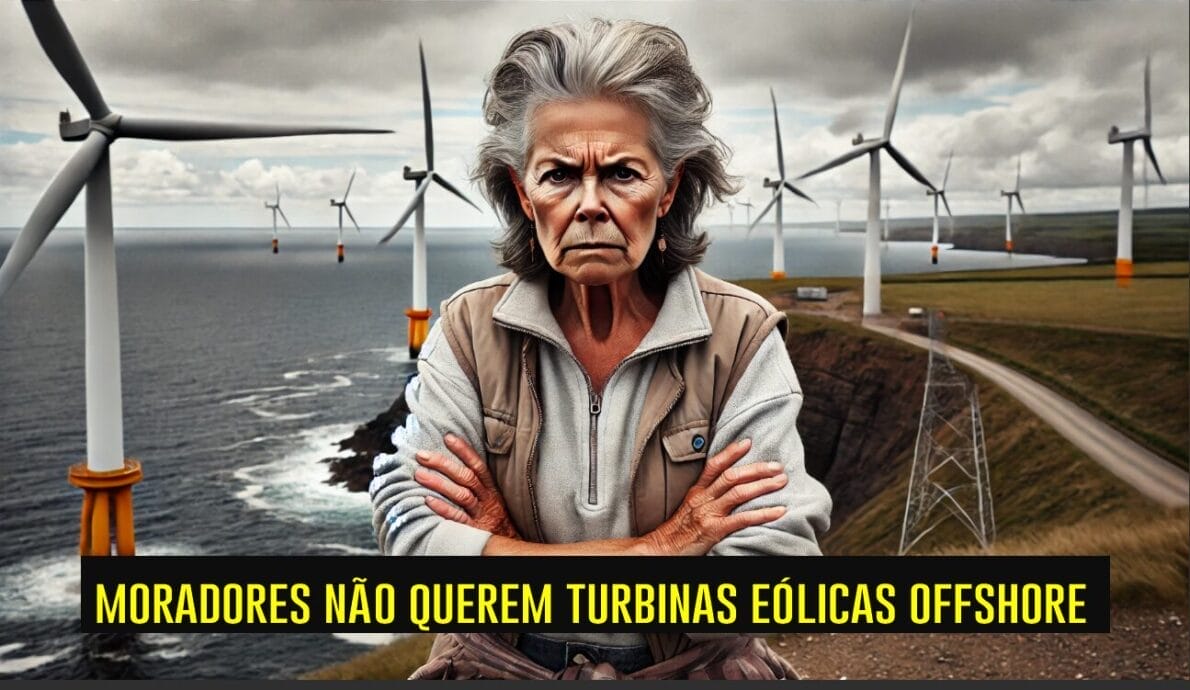
The Installation Of Thousands Of Offshore Wind Turbines In Great Britain Is Leaving Residents Outraged. Discover The Reasons For This Dissatisfaction And The Impact Of This Construction On The Country And Local Communities.
The United Kingdom is about to see a major expansion in the installation of offshore wind farms, with new giant turbines being planned for the coastal areas of Cornwall, South Wales, and the Scilly Isles.
The initiative, promoted by the Crown Estate, aims to boost renewable energy production and transform the country’s energy matrix, but the proposal faces criticism from local fishermen, who are concerned about the negative effects on their activities.
The Crown Estate, which manages the seabed of large areas of the United Kingdom on behalf of the monarch, is at the forefront of this ambitious project that will open parts of the Celtic Sea for the generation of renewable energy.
-
Instead of leaving waste pickers working without structure, a project in Montenegro was approved under the Recycling Incentive Law to support 28 families, expand selective collection, and transform waste into income in Rio Grande do Sul.

-
A Brazilian city decided to treat waste as currency, created an app that gives points for recyclables, and included cooking oil, coffee capsules, electronics, and even large appliances in the environmental account.
-
While many people change tires and forget the destination of the old rubber, Brazil sent 384,391 tons of used tires in 2025 and revealed the hidden mountain that cars, buses, and trucks leave behind after driving.
-
The gravity of the Earth was factored into the calculation, and now scientists say that sea levels may rise more than many coastal cities imagined by 2100.



The region encompasses the coasts of Cornwall, Wales, and the Scilly Isles, as well as areas in Lincolnshire and Yorkshire, all known for their beautiful landscapes and tourism importance.
The plan is part of a partnership between the Crown Estate and Great British Energy, a new state organization created by Secretary of State for Energy Ed Miliband, aimed at accelerating the transition to renewable energy.
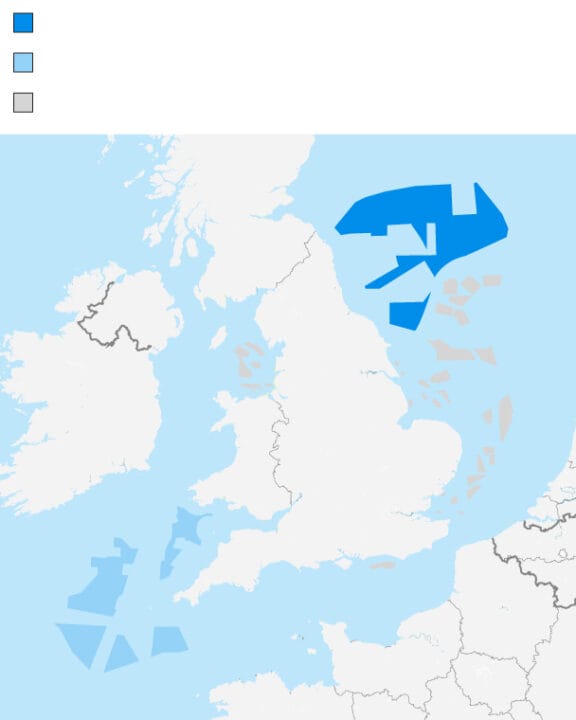
Currently, the United Kingdom has 2,800 offshore wind turbines, producing about 15% of the electricity consumed in the country, totaling 15 gigawatts (GW) of installed capacity.
However, the goal of the Crown Estate is to multiply this capacity, reaching up to 140 GW by 2050 – a nine-fold increase over current levels.
Significant Increase In Energy Capacity
The expansion proposal includes the construction of thousands of new wind turbines, each with an average height of 260 meters, making them visible from a distance of up to 56 kilometers.
Fintan Slye, director of the National Grid Electricity System Operator, celebrated the project, stating that it is essential to accelerate the development of offshore renewable energies. Juergen Maier, chairman of Great British Energy, stated that the project could provide enough energy for approximately 20 million households.
Despite optimism from the energy industry, many are questioning the impacts of this expansion, particularly concerning the aesthetics of coastal areas and the consequences for local communities.
Concerns about the change in landscape are relevant, as the turbines could transform views that are a significant part of these regions’ tourism appeal.
Impact On The Fishing Industry
One of the groups most affected by this expansion is the fishermen. According to Mike Cohen, CEO of the National Federation of Fishermen’s Organizations, existing wind farms have already harmed fishing in traditional areas, and the proposed expansion is expected to intensify this pressure.
For Cohen, the turbines hinder most types of fishing practices, increasing operational costs, such as fuel, and decreasing catches.
Moreover, he points to the lack of comprehensive scientific studies on the ecological impacts of these constructions at sea. “There is almost no scientific investigation into the ecological impacts of such marine constructions, especially at the proposed scale,” warns Cohen.
The expansion of wind farms could profoundly alter the marine ecosystem and, as a result, affect various fish species that sustain local fishing activities.
Fishermen also fear that constant boat movement and turbine construction will disrupt the migratory patterns of species they depend on for their livelihoods.
Competition For Resources At Sea
The growing demand for maritime areas is also a concern for authorities and experts. Gus Jaspert, marine director of the Crown Estate, highlighted the need for integrated planning to manage competition for resources in British waters.
In addition to fishing, other industries such as shipping, oil, gas, and even CO2 storage compete for the use of these areas.
“We need a plan that unlocks the true potential of our seas,” said Jaspert, emphasizing that the development of offshore wind energy could remove barriers to the rollout of renewable energies and provide more security for investors.
With the goal of significantly reducing carbon emissions and combating climate change, the United Kingdom has prioritized the expansion of clean energy sources. However, the challenge is to find a balance between economic development, environmental protection, and respect for communities that rely on the sea for their livelihoods.
The ambitious plans of the Crown Estate and the British government to drastically increase offshore wind energy capacity reflect the country’s commitment to transitioning to a low-carbon economy. However, the opposition from fishermen and the impacts on coastal landscapes and the marine ecosystem raise questions about how this expansion should be conducted.






Be the first to react!