






 Portuguese
  Spanish
  8 min of reading
  0 comments


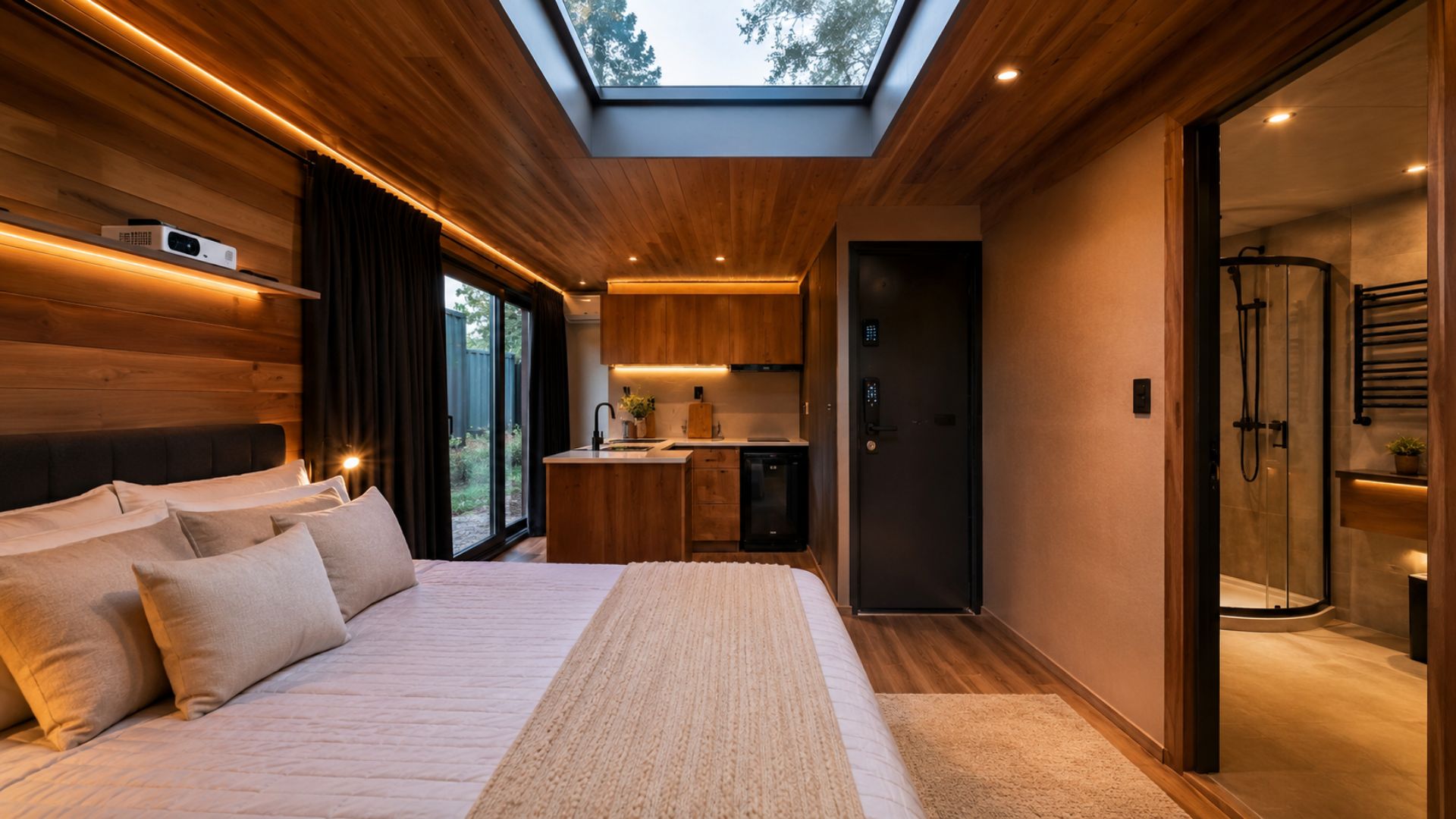
The Mestre dos Containers channel, led by Thales, completed a container studio apartment designed specifically for Airbnb use. The property is 6.26 meters long due to frame adaptation, features a 150 by 150 centimeter ceiling glass, an electronic lock, pre-arrangement for a projector instead of a television, and red eucalyptus finishing.
The combination of modular architecture and technology aimed at professional lodging has gained a curious and detailed example in Brazilian construction. The Mestre dos Containers channel delivered a container studio apartment specifically designed to host guests via Airbnb, featuring an electronic lock, a projector instead of a television, and even pre-installation for a towel warmer in the bathroom.
The construction was documented in a video led by Thales, responsible for the channel, who presents all the details of the property before transport to its final plot. The project stands out from other studio apartments in the same segment mainly due to its level of technical customization and the choice of materials aimed at a high turnover of guests.
The engineering behind the 6.26 meters of length

Even before the visible items, the project’s highlight begins with the container’s engineering. The unit uses what the channel calls a 20-foot HC, a model with a greater internal height than the market standard, a feature that enhances the feeling of space within the structure.
-
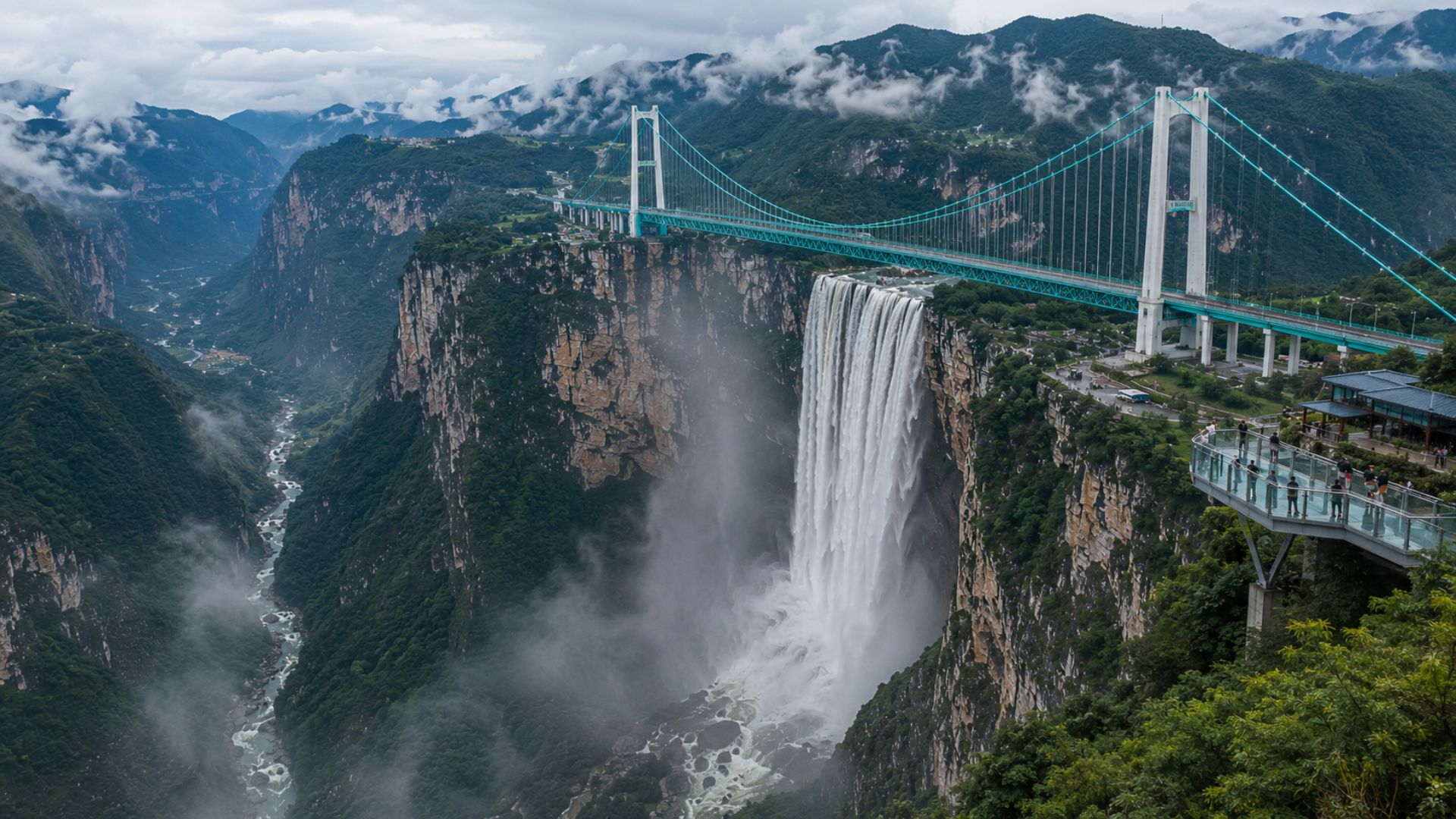
During the construction of the world’s highest bridge, the Huajiang Bridge in China, engineers discovered a giant aquifer and turned what would have been a serious problem into a 625-meter artificial waterfall, an engineering feat that no one had planned.

-
The river rose 15 meters overnight and devastated a village in Vietnam in 2025, and Japan responded with dams that hold back mud and stones, training 15,000 people for evacuation, and a sewage station for 1 million residents.
-
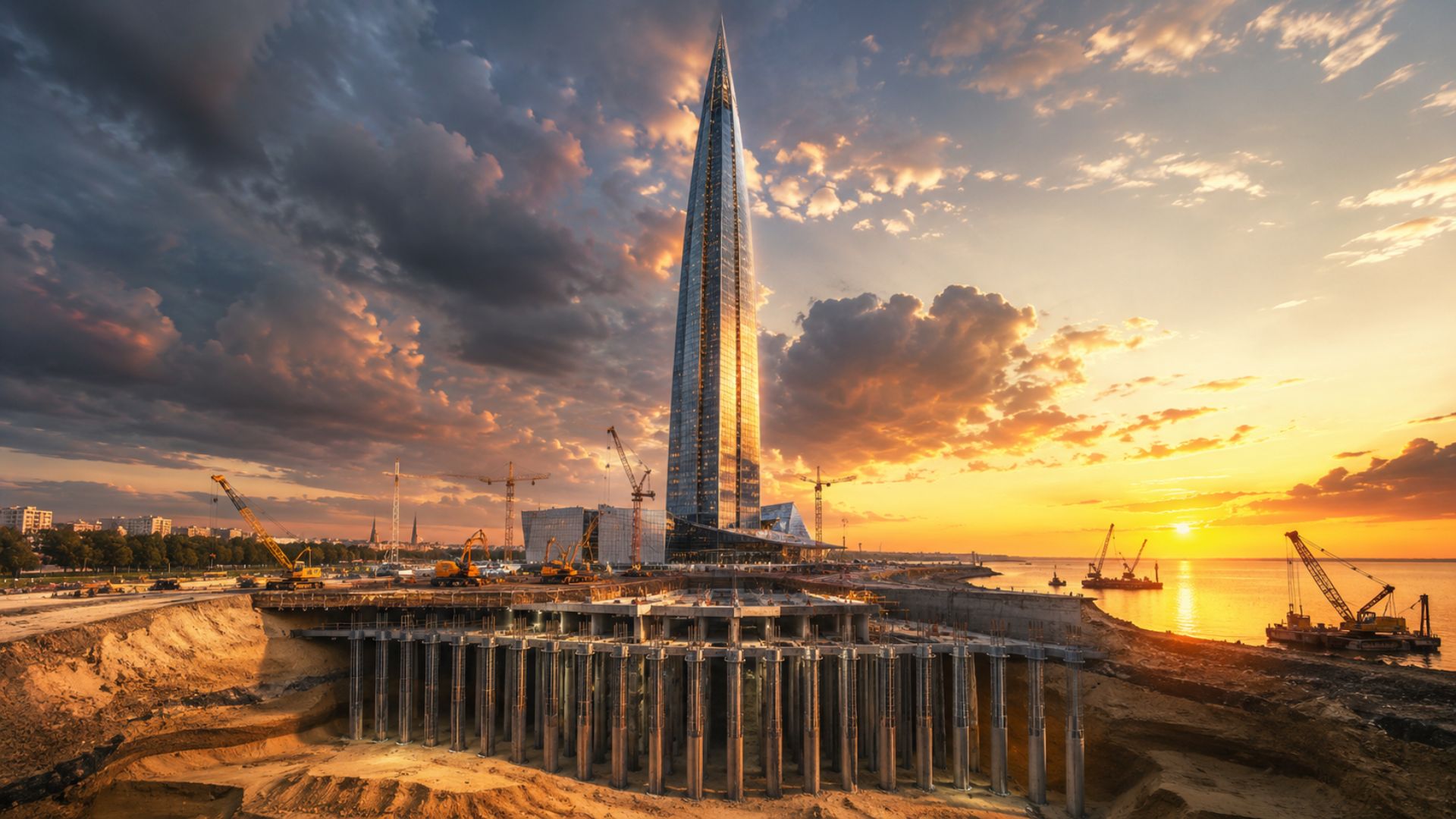
Russia erected the tallest building in Europe on ground as soft as quicksand, on the edge of the Gulf of Finland, with 264 piles of 25 meters, 30 thousand tons of steel, and 16,500 glass panels curved one by one in Saint Petersburg.
-
A mother of four sought a safer family environment, watched tutorials on the internet, built a 325 m² house with her family, and learned foundation, walls, plumbing, and electrical work without any professional experience.



The particularity lies in the manufacturing method. The team starts with a 40-foot HC container, cuts the piece in half, and redoes the frame, a handcrafted process that restores the original aesthetic of the standard container and also generates a gain of 26 centimeters in the unit’s total length.
This adjustment is what transforms the traditional 6-meter measurement into 6.26 useful meters for the internal layout. It may seem small, but in compact projects like studio apartments, every centimeter influences the utilization of custom-made furniture and the guest’s internal circulation.
The bottom corner is built from scratch by the team. It is open and structural, meaning it supports normal container transport, keeping the piece looking identical to an original, uncut unit, a characteristic that avoids the strange appearance typical of poorly executed container adaptations.
Why the tubular beam model was chosen

The choice of container type also followed technical criteria. The channel reported that the structure used in the container studio apartment is a tubular beam model, with a tube profile on the top instead of a flat bar.
The decision considers strength and durability. The tubular beam container has a more robust structure than the flat bar version, even though it is more expensive as an initial raw material, an advantage that weighs heavily in projects exposed to constant transport, winds, and rains in Brazilian coastal regions.
The price difference between the two models usually pays off in the long run. More fragile structures tend to present problems with torsion and fatigue over the years, especially in terrains subject to movement due to soil.
The exterior painting also received special attention. Two front luminaires mark the entrance, and the finish was chosen to match the visual standard desired by the client to host guests in an environment similar to a boutique hotel, which provides a competitive advantage on temporary rental platforms.
The electronic lock that differentiates access


The first technological novelty appears right at the door. The container studio apartment has a digital electronic lock, a feature specifically designed for the Airbnb business model, where different guests need access at different times.
This type of equipment offers several ways to open. The lock accepts fingerprint, numeric password, traditional key for emergencies, and even power bank charging in case the internal battery unexpectedly runs out, a combination that drastically reduces the risk of guests being locked out.
Integration with the hosting operation is direct. Instead of arranging in-person key delivery with each visitor, the host sends the access code via message, and the guest enters at the scheduled time, a model that has become popular in the sector.
For the tourist, the advantage is flexibility. Instead of coordinating specific times for key delivery, they arrive whenever they want, open with the received code, and begin their stay without any in-person contact, a format that perfectly matches the logic of current digital app rentals.
The innovation of the projector instead of the television
Perhaps the most striking change in the room’s configuration is the replacement of the traditional television with a projector. The choice is not just aesthetic, but functional for temporary accommodation use.
The installation was pre-prepared by the team during manufacturing. The container already has adequate wiring to receive the projector and a special blackout curtain on one of the walls, which serves as a natural screen for high-definition projection.
The advantage for the guest is the cinematic experience in a compact environment. Instead of watching series or movies on a small screen, they have a giant screen projected on the wall, a feature that often becomes a differentiator in comments on the host’s profile on the platform.
For the owner, there is also a gain in visual space. Without the fixed television panel on the wall, the living-bedroom becomes cleaner, more modular, and easier to organize for professional photos used in promoting the property on the app, a decisive factor in the competition for bookings in popular tourist destinations.
The glass on the ceiling and the blackout curtain under the bed
Another surprise of the project is above the bed. The container studio apartment has a glass installed on the ceiling, 150 by 150 centimeters, which creates a unique visual experience for those who lie down and look up during the day or at night.
This type of window is rare in Brazilian modular projects. During the day, it naturally illuminates the bedroom environment, and at night it offers the possibility of observing the sky before sleeping, a feature especially valued in rural or coastal destinations with low light pollution.
On the other hand, the glass on the ceiling creates real challenges for thermal and luminous comfort. Direct sun can heat the environment at specific times, which is why the team installed retractable blackout curtains that cover this opening when necessary.
These curtains match those installed in the other windows of the property. All are blackout, a feature that ensures complete darkness for guests who need to sleep during the day, a common format in destinations that receive visitors across different time zones or who have arrived tired from long flights.
The bathroom details and the bet on red eucalyptus
The bathroom follows the line of attention to final details. The environment features porcelain tiles, a complete washbasin, a Mariana model toilet from Icasa, a mirror, and items prepared for immediate use by the first guest.
An extra outlet in the bathroom was installed with a specific purpose. The point serves to accommodate a towel warmer, an item considered a luxury hotel standard that typically elevates the guest’s perception of accommodation quality.
The bathroom’s wood finish stands out due to the material choice. The sink was made of epoxy resin over red eucalyptus, a species that offers resistance to weather and humidity, in addition to a striking visual due to the wood’s natural reddish color.
The same wood appears in other parts of the studio apartment. The 120-centimeter side table, installed in the bedroom, and finishing details were made from the same eucalyptus, creating aesthetic coherence between the environments and reinforcing the property’s visual identity.
The kitchen with induction instead of gas and custom-made furniture
The kitchen presents another difference compared to the company’s standard models. Instead of a traditional gas stove, this project received pre-installation for an induction stove, with a specific 6-millimeter electrical cable and a dedicated circuit breaker.
The choice has several advantages for Airbnb operation. The induction cooktop is safer than the gas model, eliminates the need for gas cylinder installation in the property, and avoids risks of leaks or problems with inexperienced guests in domestic use.
The kitchen furniture was manufactured by the channel’s team, in the standard dubbed the company’s classic model. The green finish combines with the eucalyptus and creates visual contrast with the matte black ACM finish present in other parts of the container studio apartment.
Details such as a gourmet sink with a hand’s depth, built-in drainer, hot and cold water faucet, and integrated soap dispenser reinforce the professional operation character. Each item was chosen with intensive use by different people over time in mind, a common condition in properties listed on temporary accommodation platforms.
Pre-installations designed for total automation
The project also anticipates potential future automation needs. All switches received complete live and neutral wires, an essential technical feature for those who wish to install smart lighting systems later.
This care is important because it facilitates the installation of products such as Wi-Fi switches and connected sensors. Without both phases in the switch box, many automation devices do not function correctly, and subsequent adaptation often requires specific electrical renovations that increase the final cost of the project.
The internal lighting includes a track with directional spotlights, complemented by R16 luminaires above the table. These features allow the resident or host to adjust the lighting according to the use at each moment of the day.
Finally, there is also pre-installed external lighting and a switch reserved for future garden connections or extra points on the property. This type of technical foresight makes the property ready to receive upgrades without the need to break walls, a characteristic especially useful in modular structures like the container studio apartment, which has more sensitive electrical installations than traditional masonry.
And you, would you stay in a container studio apartment with an electronic lock, a projector instead of a television, a panoramic glass roof, and a red eucalyptus finish? Do you think this format can compete equally with traditional hotels on temporary rental platforms?
Tell us in the comments if you would book an Airbnb with this configuration for a couple’s or solo trip, if the glass roof would be an attraction or a problem for your sleep, and what you would like to see added to a future studio apartment made by the Mestre dos Containers channel. The discussion helps to understand how Brazilians are viewing the new modular accommodation options that emerge each year in the national tourism market.







Be the first to react!