






 Portuguese
  Spanish


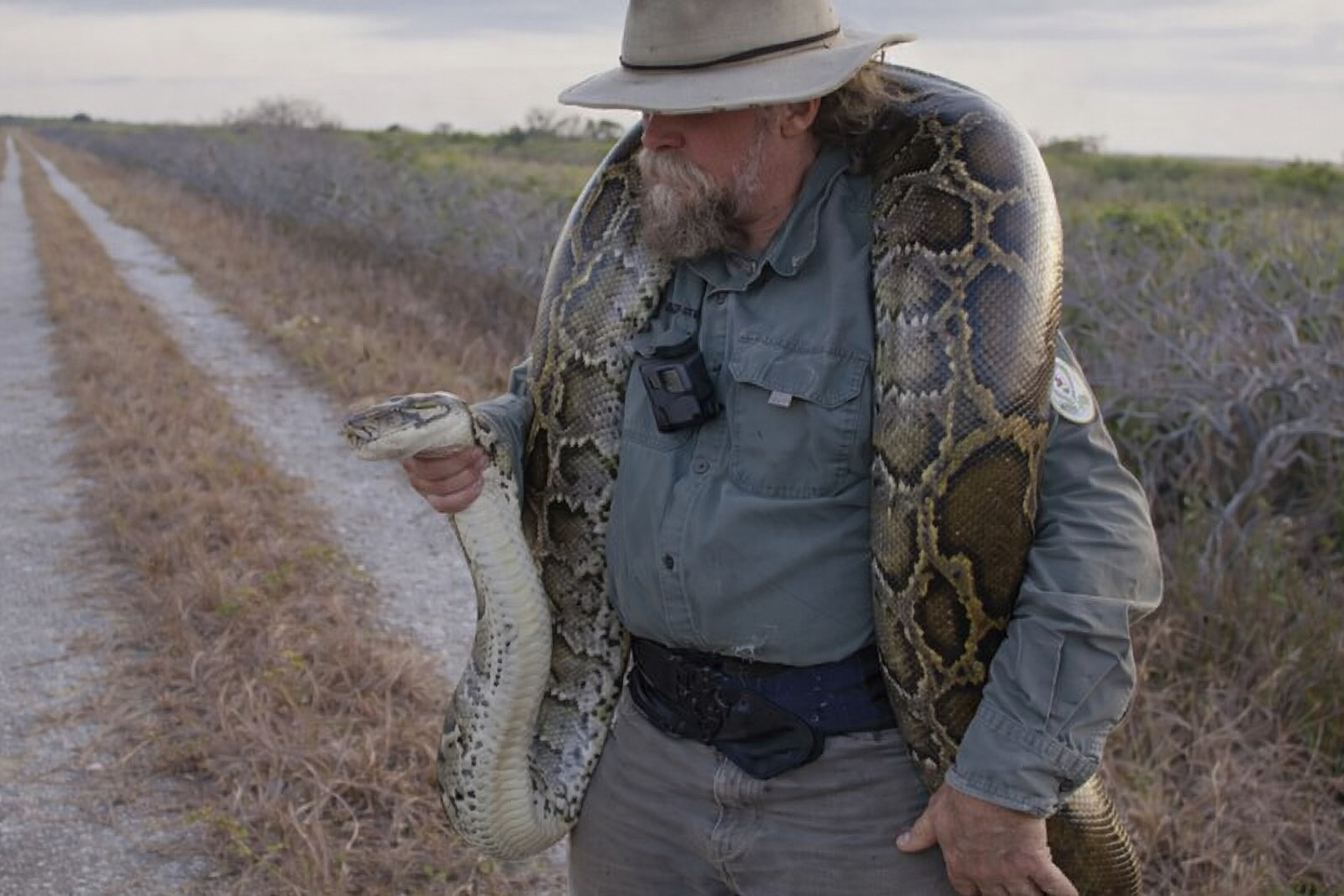


Sold As Pets In The United States And Released Into The Wild When They Grow Too Large, Burmese Pythons Have Found In The Everglades A Perfect Habitat, Causing A Silent Collapse Of Wildlife And Forcing Authorities To Adopt An Extreme Environmental Containment Program
The Everglades in Florida has become the stage for one of the most serious environmental crises caused by invasive species in the United States. Among dozens of plants and animals artificially introduced into the ecosystem, the burmese python has established itself as the primary threat. Without natural predators and with unlimited access to prey, the species has thrived uncontrollably, transforming the largest swamp in the country into an increasingly hostile environment for native wildlife.
This information was disclosed by documentary productions from HBO and data from the South Florida Water Management District, the agency responsible for the environmental health of the Everglades. According to official estimates, invasive species cost about US$ 120 billion a year to the U.S. economy. In the specific case of the burmese python, the impact goes beyond the financial and directly affects the ecological balance of an area classified as World Heritage Site and International Biosphere Reserve.
This imbalance began silently. Legally sold as pets in stores throughout the country, many pythons were abandoned when they reached sizes that were difficult to maintain. A snake measuring 1.8 meters already requires complex care, but individuals measuring 4.5 meters (15 feet) need regular feeding and pose evident risks to their owners. In Florida, where the tall vegetation of the Everglades is almost identical to that of Southeast Asia, the animal found ideal conditions to survive and reproduce on a large scale.
-
Brazil Conducts First Long-Distance Robotic Cancer Surgery via Public Health System, Spanning 2,700 km with Advanced Tech

-
Brazilian Engineers Advance 53.5-Meter Dam to Secure Water Supply for Up to 4 Months Without Rain in Brazilian State
-
Brazilian Farmer Ingeniously Builds Electric Mini Tractor, Home Wind Turbine, and Biogas System Using Scrap Parts and Solar Power
-
House Built with 1.5 Tons of Recycled Plastic Completed in 10 Days in India, Transforming a Waste Picker’s Life and Tackling Urban Waste


How The Burmese Python Dominated The Top Of The Food Chain

Since the 2000s, the Everglades National Park has recorded a significant collapse in populations of raccoons, opossums, rabbits, and even bobcats. This decline coincided with the expansion of the burmese python, which has come to occupy the top of the food chain in place of native predators.
Additionally, studies indicate that pythons consume up to 25 species of birds, including the American stork, which is classified as endangered. Without any natural control, the snake has begun feeding on whatever is available, amplifying the cascade effect on the entire ecosystem.
The problem gained international attention after the viral spread of a video showing a burmese python fighting and killing an alligator, a symbol of Florida. The scene exposed the level of environmental imbalance and reinforced the perception that the invasive species had become dominant in the swamps.
The Official Program That Pays Hunters To Control The Invasion

In light of this scenario, in March 2017, the board of the South Florida Water Management District launched an unprecedented program: to pay 25 highly trained hunters to remove as many pythons as possible from the natural environment. The strategy aimed to tackle the problem directly, especially during breeding periods.
Among the participants is Tom Rahill, leader of the group known as Swamp Apes. Since 2008, Rahill and his team have captured approximately 400 pythons, using camera probes, knives, and their bare hands. Outside the swamps, Rahill works with computers, which dismantles the traditional stereotype of a professional hunter.
The method involves identifying nesting areas, locating traces such as shed skins during the molting process, and following the direction indicated by the snake’s tail. When the animal is found, capturing it requires extreme coordination to immobilize the head and remove the python safely.
A Single Capture Can Prevent Dozens Of New Snakes

One of the most emblematic cases of the program involved the capture of a python measuring 4.5 meters and weighing 112 kilograms. The animal had to be transported by forklift for official weighing. During the autopsy, conducted the following day, 61 eggs were found inside it.
In practice, that operation represented the removal of 62 potential pythons from the ecosystem. Each pregnant female captured prevents the birth of dozens of new predators that could consume shorebirds, small mammals, and species already pressured by urban encroachment.
Although the number of snakes removed is still small compared to an estimated population of thousands, experts assert that the strategic removal of reproductive females generates a significant environmental impact. Still, the challenge remains enormous, as the Everglades continue to provide ideal conditions for the survival of the invasive species.
In your opinion, is hiring hunters to remove burmese pythons the best solution to protect the Everglades, or should the focus be on punishing more severely the owners who abandon exotic animals in the wild?





Proibir a venda,e punir os proprietários,por abandono,pq não procuram ajuda , pra um lugar adequado,para elas , ninguém gosta de morrer, mais gostam de matar como se resolvesse o problema,proibi essas vendas sai multando todos q adquirir pra venda e para comprar.
Tem que caçar e matar todas.
Proibir a venda de piton e a maior solução