





 Portuguese
  English
  Spanish
  3 min of reading
  0 comments


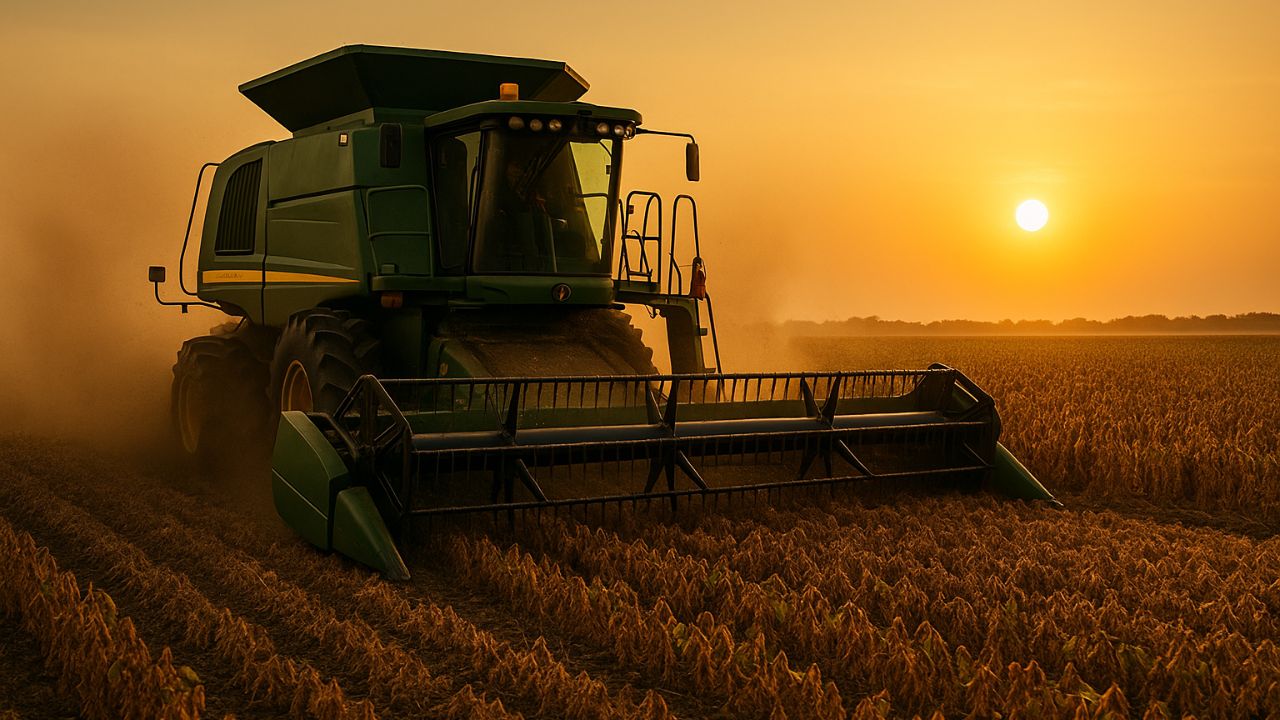
Know The History And Business Model Of The Largest Agricultural Cooperative In Latin America That Became A Dominant Force In Agriculture From The Interior Of Brazil.
In the dynamic agricultural landscape, Coamo Agroindustrial Cooperative emerges as a colossal force. Founded in Paraná, it is the largest agricultural cooperative in Latin America. Its trajectory shows how the union of farmers can generate impressive results. This is an in-depth look at the rise, model, and global position of this agricultural giant.
From The Union Of 79 Farmers To National Power
The history of the agricultural giant Coamo began on November 28, 1970. In Campo Mourão, Paraná, 79 farmers joined forces. The goal was clear: to seek better production, storage, and sales conditions for their products. The pioneering vision succeeded. The cooperative grew exponentially.
Today, Coamo has more than 32,000 members. The expansion was not only in the number of members. The cooperative also extended its geographical presence. It has units in Santa Catarina and Mato Grosso do Sul, in addition to Paraná. The management kept pace with this growth. Since 1975, the structure has been professionalizing to support the expansion and maintain efficiency.
-
Innovation developed by researchers in Mato Grosso converts plant ash into sustainable fertilizer and could revolutionize agribusiness by combining circular economy, waste reduction, and intelligent use of agricultural residues.

-
German machine with 1,100 horsepower that transforms diesel into electricity and distributes it to each of the four wheels arrives in Brazilian agriculture through Bahia and promises to do the work of a tractor, a sprayer, and a harvester all by itself.

-
Advancement in forest production leads eucalyptus to join the group of the most valuable products in the São Paulo countryside, strengthening a sustainable chain that combines income generation, industrial innovation, and renewable energy.
-
Veto on Brazilian meat opens crisis in the Mercosur-European Union agreement, exposes billion-dollar sanitary dispute, and shows who really has more power at the trade table


How Cooperation Transforms Agricultural Production
The success of the agricultural giant Coamo lies in its cooperative philosophy. The total focus is on the development of its farmers. Members receive support at every stage, from planting to harvesting. Proof of this is the distribution of the “surplus” (profits). In 2023, Coamo distributed R$ 850 million to its members.
Another pillar is strategic verticalization. The cooperative controls everything: planting, logistics, industrialization, and financial services. It transforms raw materials into higher value products, such as oils, margarines, coffee, and flour. Recently, it has started investing in the production of corn ethanol. This strategy increases profitability for the producer and strengthens the entire chain. A transparent and professionalized management, which protects the interests of the members, sustains the entire model.
Radiography Of An Agricultural Giant


The numbers from the agricultural giant Coamo are impressive and demonstrate its strength. In 2023, the cooperative achieved a record revenue of R$ 30.3 billion. The net profit was R$ 2.32 billion. In the same year, it received a volume of 9.96 million tons of grains from its members, an increase of 33.3% compared to the previous year.
For 2024, the revenue was R$ 28.82 billion. Although this represents a decline, the result is considered positive. The cooperative was able to mitigate the impact of falling commodity prices thanks to a strategic management of its stocks. This adaptability reinforces its position as the largest agricultural cooperative in Latin America.
Coamo In The Global Scenario: International Markets
Coamo’s operations extend beyond Brazilian borders. The agricultural giant exports grains, meal, and vegetable oils. Its industrialized products, such as soybean oil, margarines, and coffee, also reach abroad. Its destinations include around 30 countries in Europe, Asia, America, and Africa.
The internationalization strategy is robust. Coamo is shifting from selling to large trading companies to direct sales to the international market. This allows capturing more value and strengthening the brand. Logistics is ensured by access to strategic ports such as Paranaguá (PR), Santos (SP), and São Francisco do Sul (SC).
The Next Steps Of The Cooperativism Giant
Coamo faces market challenges with planning and investments. Price volatility and climate issues are constant risks. The cooperative’s response is to invest in expansion and diversification. A R$ 5 billion investment plan is underway.
The most ambitious project is the construction of a corn ethanol plant in Paraná. The investment is R$ 1.7 billion. The plant will generate 250 permanent jobs and add value to the production of its members. Other investments include expanding the soybean processing unit in Mato Grosso do Sul and new storage structures. These projects demonstrate that the agricultural giant continues to focus on sustainable growth, strengthening its members and the Brazilian agribusiness.




-

1 person reacted to this.