Portuguese
  Spanish


Eucalyptus production grows in São Paulo, boosts the São Paulo agribusiness, strengthens the forestry sector, and expands exports and income.
The growth of eucalyptus production has placed the crop among the highlights of São Paulo’s countryside. Data from the Institute of Agricultural Economics (IEA-Apta), released by Agência SP on June 6, 2026, shows that the activity recorded a 14% increase in production, while the Agricultural Production Value (APV) reached R$ 2.9 billion.
The result reinforces the importance of Eucalyptus in SP for the economy, exports, and regional development. In addition to supplying the paper and cellulose industry, the cultivation also serves segments such as renewable energy, civil construction, furniture production, and essential oils. Thus, the forestry sector increases its relevance within the São Paulo agribusiness, driving jobs, investments, and new opportunities for rural producers.
Eucalyptus in SP gains space among the greatest riches of the countryside
The advancement of the crop has been drawing attention due to the numbers recorded in recent years. Currently, Eucalyptus in SP occupies more than 77% of the entire area of planted forests in the state, totaling just over 1 million hectares.
-
Young Entrepreneur Expands from 50 to 1,400 Chickens, Proving “Happy Hens” Can Be a Viable Business

-
Small Farm in Brazil’s Minas Gerais Produces 403 Liters of Milk Daily, Sets Benchmark for Rural Producers
-
Man Revives 1930s Abandoned Trout Farm, Learns from Scratch, and Earns $1.1 Million Annually Selling Fish to Michelin-Starred Restaurants

-
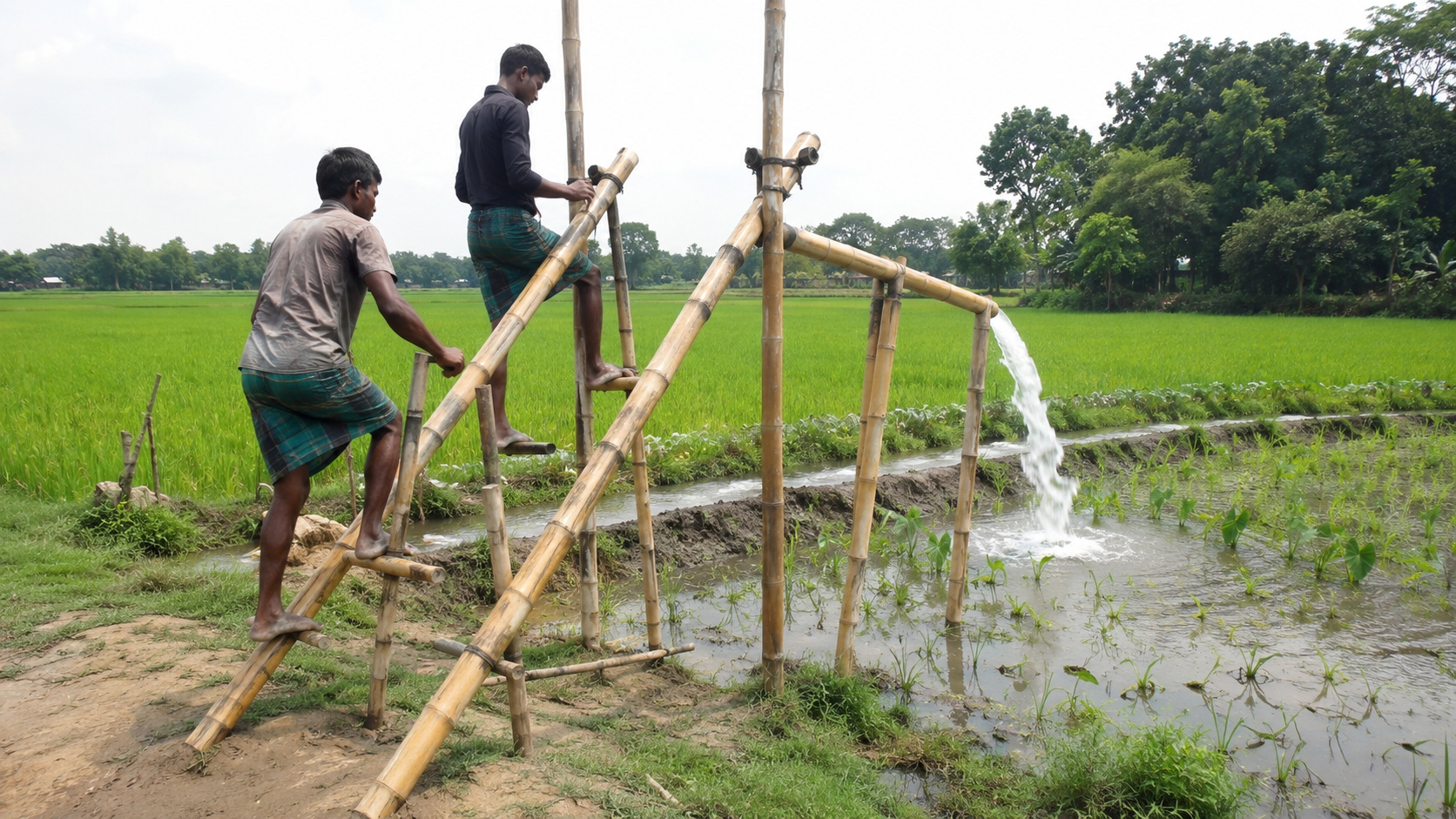
Bangladeshi Farmers Use Bamboo Levers to Pump Thousands of Liters of Water Daily Without Engines or Electricity



With this productive structure, São Paulo remains the third-largest national producer, behind only Minas Gerais and Mato Grosso do Sul. In the latest survey, production reached 23.9 million cubic meters, a growth of 14.6% compared to the previous cycle.
The performance demonstrates how the activity has ceased to be just an economic alternative to become one of the pillars of São Paulo’s rural development.
Eucalyptus production grows and strengthens the regional economy
The increase in eucalyptus production generates effects that go far beyond rural properties. The production chain moves transport companies, industries, service providers, and entire municipalities that depend on the activity to generate income.
The growth of the APV to R$ 2.9 billion shows the sector’s ability to add value and expand its participation in the state economy.
Among the main economic impacts are:
- Generation of direct and indirect jobs;
- Strengthening of municipal revenue;
- Stimulus to industrial investments;
- Increase in income in the countryside;
- Growth of exports.
This scenario helps to consolidate the São Paulo agribusiness as one of the most dynamic in the country.
Forestry sector supplies strategic industries and expands demand
One of the main strengths of the forestry sector is the diversity of applications for eucalyptus. The wood produced in São Paulo supplies various industrial segments and has growing importance in the national economy.
Among the main destinations of the production are:
- Paper and pulp;
- Biomass for energy generation;
- Charcoal;
- Civil construction;
- Furniture industry;
- Production of essential oils.
This variety reduces the dependence on a single market and helps to keep the activity economically strong even during periods of economic fluctuation.
São Paulo regions lead the expansion of forestry
The growth of the culture is mainly concentrated in the southwest of São Paulo, the central-west, and the Paranapanema Valley. These regions present favorable conditions of climate, soil, and availability of areas for planting.
Municipalities such as Agudos, Itapetininga, Itatinga, Angatuba, Botucatu, Lençóis Paulista, Bofete, Cabrália Paulista, Capão Bonito, Itararé, and Paranapanema appear among the main poles of the activity.
The presence of these productive areas contributes to the strengthening of local economies and to the consolidation of forestry as a strategic activity for the interior of São Paulo.
São Paulo agribusiness expands exports with forestry products
The advancement of São Paulo agribusiness can also be observed in foreign trade. Forestry products currently occupy the third position among the state’s exporting groups, behind only the sugar-alcohol complex and the meat sector.
In April 2026, the segment moved US$ 1.14 billion in exports, representing 13.6% of the total shipped by São Paulo.
Within this result, the highlights are:
- Pulp: 66.3% of the share;
- Paper: 27.9% of the share.
The numbers show the growing relevance of the forestry sector for São Paulo’s trade balance and for generating foreign exchange in the state.
Eucalyptus in SP advances with technology and high productivity
The positive performance of the activity is also linked to investments in technology. Eucalyptus in SP has a modern productive base, marked by the use of genetic improvement, forest monitoring, and increasingly advanced management systems.
Fernanda Abilio, president of the São Paulo Forestry Products Sector Chamber and executive director of Florestar, highlighted that the recorded growth reflects the segment’s ability to generate value, boost exports, and serve different industrial chains.
According to the sector representative, São Paulo brings together important factors such as high productivity, a consolidated industrial structure, and efficient logistics, characteristics that help maintain the competitiveness of the activity.
Eucalyptus production gains support from sustainability-focused research
The expansion of eucalyptus production also has the support of the Secretariat of Agriculture and Supply through research developed by APTA Regional.
The studies conducted at the Brotas, Itapetininga, and Tietê units aim to increase productivity, sustainability, and profitability of rural properties.
One of the main focuses is on the ILPF system (Crop-Livestock-Forest Integration), a model that combines trees, crops, and livestock in the same productive area.
Among the observed benefits are:
- Recovery of degraded areas;
- Better soil utilization;
- Diversification of income sources;
- Increase in productive efficiency;
- Reduction of environmental impacts.
Forestry sector contributes to renewable energy and animal welfare
In addition to industrial production, the forestry sector also plays a significant role in generating renewable energy. Biomass from eucalyptus is used in different production processes, reducing dependence on fossil fuels.
Another benefit identified by the research is related to the thermal comfort of animals. In integrated systems, trees help reduce the effects of excessive heat on livestock.
This condition favors better physiological and productive responses, especially in Nelore cattle, demonstrating that the activity can generate economic and environmental gains simultaneously.
A chain that unites economic development, innovation, and sustainability
The numbers show that Eucalyptus in SP is experiencing a phase of consistent growth. With over 1 million hectares cultivated, production of 23.9 million cubic meters, and a VPA of R$ 2.9 billion, the activity has consolidated itself among the most important in the São Paulo countryside.
By strengthening the São Paulo agribusiness, expanding exports, and boosting the forestry sector, eucalyptus cultivation demonstrates that it is possible to combine income generation, technological innovation, and sustainability. The trend is for this chain to continue gaining relevance in the coming years, following the growing demand for renewable raw materials and solutions linked to the low-carbon economy.