Portuguese
  Spanish


Honda introduced the Riding Assist in 2017, with the robotics of its humanoid robots, while Yamaha bets on the Motoroid, which controls its own center of mass with the help of artificial intelligence. Both bikes balance themselves but remain prototypes, still without a release date for stores.
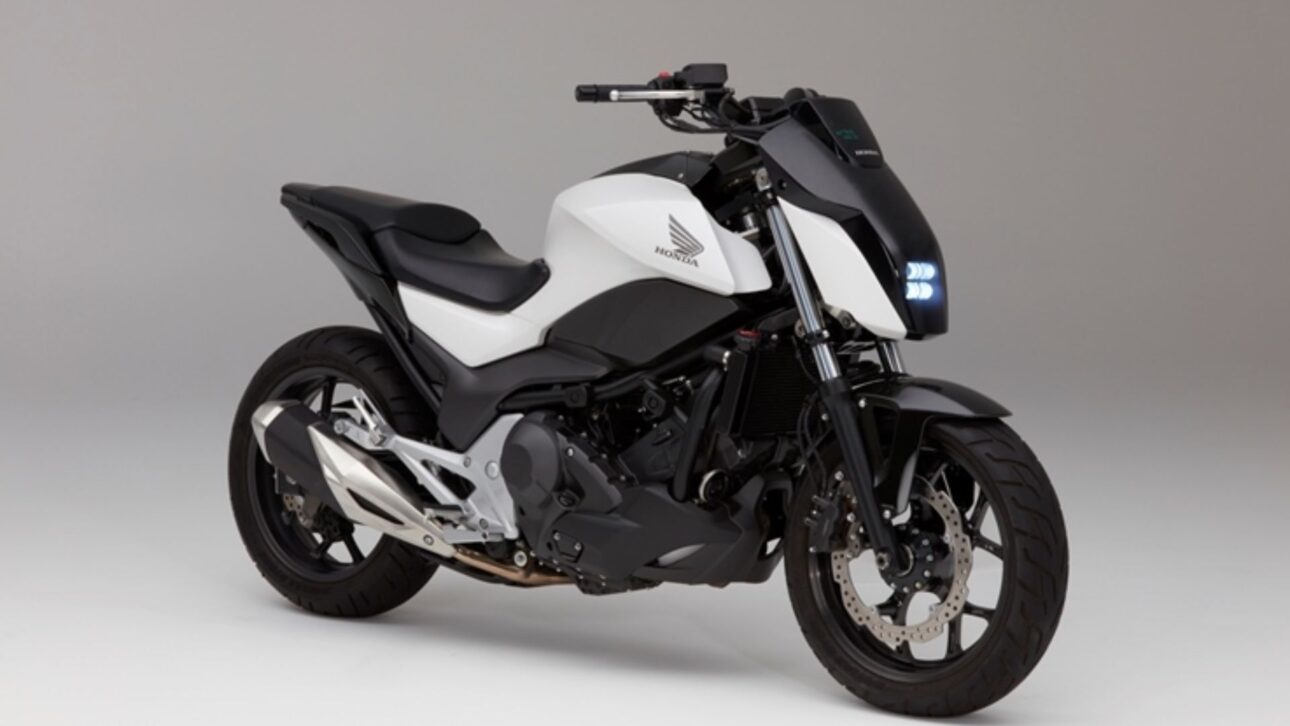
The bike that stands on its own, without anyone holding it and without the rider touching the ground with their feet, has stopped being fiction and turned into a functional prototype in Japan. The idea appears in two well-known machines, the Honda Riding Assist, revealed at the CES technology fair in 2017, and the Yamaha Motoroid. Instead of relying on the strength and reflexes of the rider, these bikes use robotics and artificial intelligence to keep themselves balanced at low speeds and even when stationary.
The focus is not on going faster, but on solving the most fragile moment for any motorcyclist. Most low-speed falls occur during maneuvers, in stopped traffic, or when parking, especially with heavy models. In these moments, it is the rider’s body that holds the machine, and this is exactly where the systems that keep the bike upright with or without someone in the saddle come in. It is worth noting from the start: these are prototypes and concepts, not products for sale.
Why a bike falls, and when it is more dangerous
At cruising speed, the set stabilizes easily, thanks to the gyroscopic effects of the moving wheels and small steering corrections.
-
Kia K4 Launches in Portugal with 7-Year Warranty, Targets Volkswagen Golf with 1.0 Turbo Engine, Unavailable in Brazil

-
Uber Women Expands Across Brazil: Female Riders Can Now Choose Women Drivers, Schedule Rides, and Set Automatic Preferences

-
Brazil Plans to Launch Ethanol-Fueled Hybrid Cars in 2026 as an Alternative to Fully Electric Vehicles

-
Hyundai HB20S 2026 Surpasses Onix with Turbo Engine, Fuel Efficiency of 15.2 km/l, and Over 750 km Range, Leading Compact Sedan Sales in Brazil with 5,205 Units Sold.


The problem lies at low speed and at a complete stop, when these effects disappear and the machine simply leans to one side.
This is the scenario where the risk that engineers wanted to tackle lies.
Parking, moving slowly in traffic, or maneuvering a heavy bike requires constant balance from the rider, who supports their feet and adjusts the weight all the time.
The proposal from Honda and Yamaha is to transfer this work to the motorcycle itself, reducing the chance of a silly fall precisely when the speed is too low for physics to help.
Honda Riding Assist, balance without gyroscope
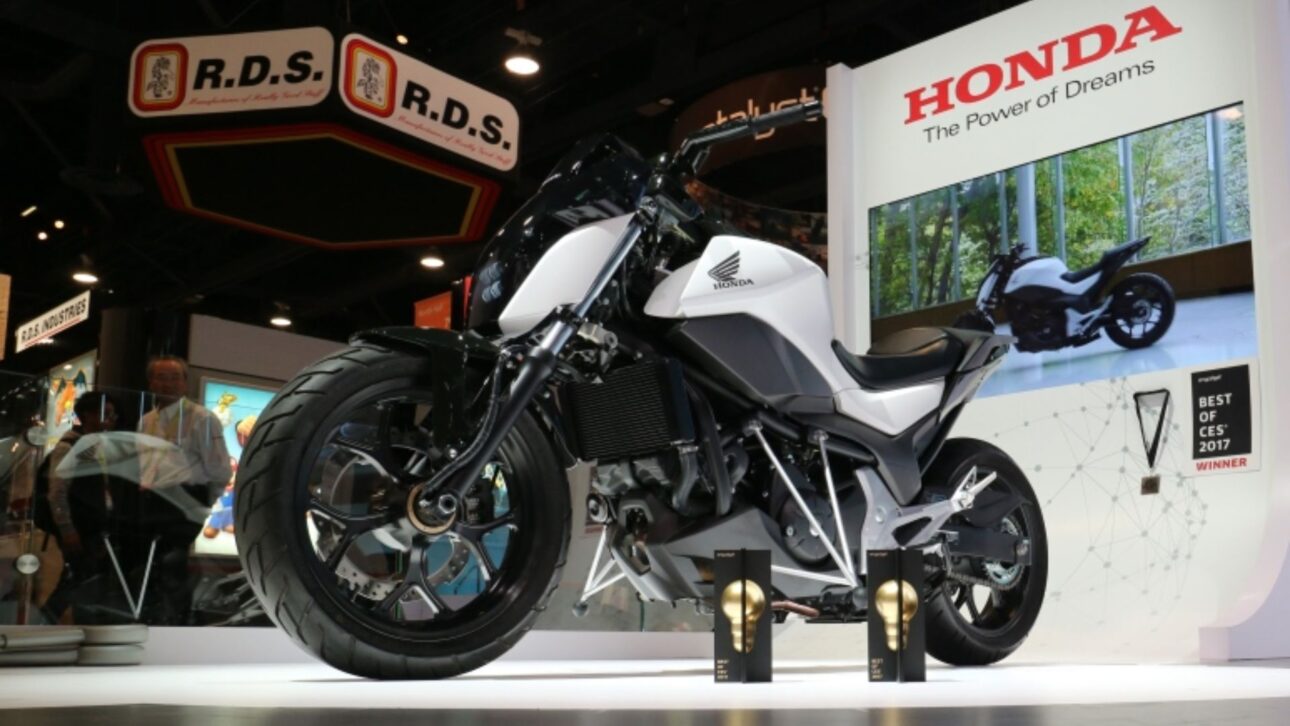
The solution was born in the company’s robotics laboratory, the same as the humanoid robot ASIMO and the UNI-CUB mobility device.
According to Honda, the option was deliberate not to use gyroscopes, which would be heavy and change the motorcycle’s behavior, instead relying on the control of the steering geometry itself.
In practice, the system acts on the front of the motorcycle.
At walking speed, below about 5 km/h, it alters the steering column angle, and at an even slower pace or stationary, it makes micro-corrections on the handlebars from side to side, keeping the machine upright with or without a rider.
In demonstrations, the Riding Assist managed to follow an engineer at a walking pace and remain upright without a side stand.
Honda later showed the electric version Riding Assist-e, at the Tokyo Motor Show in 2017, and in 2021, a second generation that cooperates with the rider’s steering.
Yamaha Motoroid, the motorcycle that recognizes the owner
Yamaha took a different technical path with the Motoroid, a concept presented in 2017 and updated in the Motoroid 2, shown in 2023.
Unlike Honda, the motorcycle does not have a traditional handlebar and balances itself through an active mass center control system, where the chassis and rear arm articulate to counterbalance the weight and keep the machine upright.
The Motoroid 2 was presented as a functional prototype, not just as a model.
What draws attention is the layer of artificial intelligence.
According to Yamaha, the motorcycle uses facial and gesture recognition to identify the owner from a distance and lift itself off the stand, as if it were an electronic companion.
The proposal is a machine that reacts to the rider’s body and commands in real-time, more an exercise in the relationship between human and vehicle than a product ready for the street.
From the showcase to the street, what is real and what is still a concept


The most important point is to separate what exists from what is a promise.
Neither Honda nor Yamaha have put their self-balancing bikes up for sale, and neither has announced mass production.
These are prototypes and concepts that prove the technology works, but they still have no price or store date.
There is still an alternative path in the market, that of the American Lit Motors, which bets on a closed electric vehicle stabilized by gyroscopes, precisely the approach Honda chose to avoid.
It is also advisable to deflate some of the noise around the topic.
Viral videos often mix these real bikes with turbine flying motorcycles and with concepts like the Dodge Tomahawk, whose speed of over 480 km/h was never actually tested and remained only theoretical.
Honda and Yamaha’s self-balancing bikes are the concrete and demonstrable tip of this wave, while many of the machines that promise to fly remain closer to marketing than the garage.
The bike that stands on its own shows how robotics and artificial intelligence are arriving on two wheels through the door of safety, not just speed.
The prototypes from Honda and Yamaha solve an old and real problem, low-speed balance, even though they remain, for now, as engineering demonstrations.
The future of two-wheeled mobility is already being tested, even if it’s not yet around the corner.
And you, would you trust a bike that balances itself without needing to put your feet on the ground? Do you think this type of technology would make a difference in traffic safety in a country with so many motorcycles like Brazil? Leave your opinion in the comments, respecting different views, and share this article with those who enjoy motorcycles and technology.