






 Portuguese
  Spanish
  5 min of reading
  0 comments


With Strategic Reserves And Cutting-Edge Infrastructure, Trinidad And Tobago Consolidates Its Leadership In Oil And LNG In The Caribbean, Boosting The Local Economy And Expanding Its Regional Influence As The Largest Exporter Of Natural Gas In The Caribbean
Trinidad and Tobago, a small archipelago with about 1.5 million inhabitants, surprises the world with its geopolitical and economic significance. Located on the northeast coast of Venezuela, it is now the largest exporter of liquefied natural gas in the Caribbean and Latin America, with an economy heavily driven by the energy sector. What was once just a spot on the Caribbean map has become a strategic hub for supplying oil and gas to major economies such as the United States, Europe, and countries in Latin America. This accelerated growth has transformed Trinidad and Tobago into a true energy giant, with a Gross Domestic Product that consistently grows quarter after quarter.
Trinidad And Tobago Oil: Understand How The Island Became A Giant In The Sector
Since the mid-20th century, Trinidad and Tobago has been exploring its natural reserves, initially focusing on oil and later expanding to natural gas. Currently, about 40% of the country’s GDP comes from the oil and gas industry, which also represents 80% of its exports.
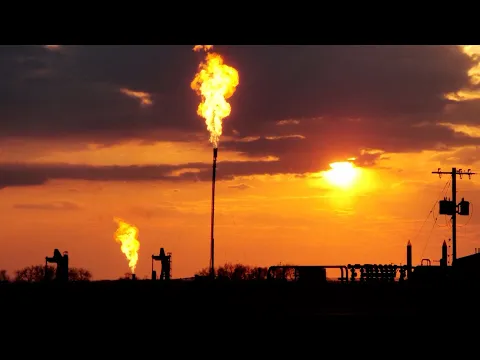

The development of gas production in Trinidad accelerated in the last two decades, with the construction of modern liquefaction plants, refineries, and export ports. The entry of multinationals like Shell, BP, and BHP, which established operational bases in the country, reinforced the technical and operational capacity of the local industry.
-
Oil returns to the center of concerns with tension between the US and Iran

-
IEA reduces forecast for global oil demand in 2026 after impacts of the Middle East crisis

-
Bank of Japan raises interest rates to 1%, reaching the highest level in over three decades
-
ANP halts LPG reform, and Sindigás sees technical caution as a decisive point for safety, investments, and the future of the cylinder in Brazil.



This favorable environment positioned the country as a strategic player in the global energy sector, particularly in the supply of liquefied natural gas, an energy source deemed essential for the global energy transition.
Trinidad And Tobago Natural Gas: Understand The Island’s Role In LNG In The Caribbean
Currently, Trinidad and Tobago is the largest exporter of natural gas in the Caribbean, with absolute prominence in the production and export of LNG. The country exports LNG to over 20 countries, including the United States, Spain, Chile, Argentina, and even Japan at peak demand times.
The Point Fortin terminal, in the southwest of the island, is the center of this operation. It is where the extracted natural gas is cooled, liquefied, and prepared for transport on LNG carriers, being one of the most efficient terminals in the Americas.
The country’s logistical capacity, combined with its strategic location, allows Trinidad and Tobago to act as a regional hub for LNG in the Caribbean, playing a critical role in the region’s energy supply and even influencing political and commercial decisions of its neighbors.
NGC Trinidad And Tobago: The Backbone Of Trinidad And Tobago’s Economy
The state-owned National Gas Company of Trinidad and Tobago (NGC) is the heart of the country’s energy infrastructure. Responsible for the transportation, processing, and commercialization of natural gas, the NGC also leads expansion, innovation, and sustainability initiatives within the sector.
The NGC operates a complex network of pipelines that interconnect offshore fields to processing and export centers, and it is also a partner in bilateral projects with neighboring countries like Venezuela and Guyana. This operation not only boosts the economy of Trinidad and Tobago, but also attracts investments and international partnerships.
Challenges Of Gas Production In Trinidad: Decline Of Old Fields And New Strategies
Despite advancements, the country faces significant obstacles. Various mature fields, responsible for a significant part of historical production, are in decline. Between 2010 and 2020, there was a drop of more than 25% in daily natural gas production. This led the government and companies in the sector to seek new exploration frontiers.
The main bet now is on offshore reserves in deep waters, and more recently, on agreements with Venezuela to import gas and process it locally. This move is seen as a strategic play to maintain export capacity and leverage the already installed infrastructure, consolidating Trinidad and Tobago’s role as a regional energy platform.
Regional Partnerships Strengthen LNG And The Position Of Largest Exporter Of Natural Gas In The Caribbean
The agreement between Trinidad and Tobago and Venezuela, announced in 2023, allows the island to utilize Venezuelan gas from the Dragon field, off the Venezuelan coast. This gas will be processed and exported through Trinidadian facilities, utilizing the already developed expertise and infrastructure.
This type of regional cooperation is vital to ensure energy security in the Caribbean, as well as to open new economic opportunities for both countries. The ability to refine, liquefy, and export gas becomes a competitive differential that reinforces Trinidad and Tobago’s leadership role in the sector.
Diversification Of The Economy Of Trinidad And Tobago: Beyond Oil In The Caribbean
Trinidad and Tobago also invests in diversifying energy production. Besides LNG, the country is one of the world’s largest producers of ammonia and methanol, used in the chemical, agricultural, and fuel industries. These industrial plants, located mainly in Point Lisas, generate jobs, technology, and new export markets.
This movement strengthens the economy of Trinidad and Tobago, reducing its dependence on gas as a single product and expanding its relevance in global industrial sectors.
The Future Of Oil In The Caribbean Passes Through Trinidad And Tobago Natural Gas
In a global scenario of energy transition, with pressures for cleaner sources, Trinidad and Tobago demonstrates that it is possible to align efficient production with environmental responsibility. The country invests in carbon capture technologies, improvements in industrial processes, and partnerships for renewable energy development — although natural gas remains the flagship.
By consolidating itself as the main platform for oil in the Caribbean, the island amplifies its influence, even while being geographically small. It is an example of how energy policy, modern infrastructure, and strategic vision can transform a small territory into an economic powerhouse.
Trinidad And Tobago Oil And LNG: Global Impact And A Model To Follow
Trinidad and Tobago is living proof that size is not everything. With vast gas reserves, modern infrastructure, and a strategic vision, the country has become an energy powerhouse in the Caribbean. The role of the NGC, the strong presence of multinationals, and agreements with neighboring countries solidify the archipelago as the largest exporter of natural gas in the Caribbean, with a direct impact on its constantly growing GDP.
By facing challenges such as declining production with innovation and regional diplomacy, Trinidad and Tobago shows how it is possible to maintain relevance in a competitive and changing market. The future of the energy sector in the Caribbean undoubtedly passes through this small island — which has risen to prominence in the world.






Be the first to react!