






 Portuguese
  Spanish




A New Revolutionary Brick Promises to Change the Construction Industry by Eliminating the Need for Cement in Masonry. With an Efficient Connection System, This Innovation Can Reduce Costs, Accelerate Work, and Make the Sector More Sustainable.
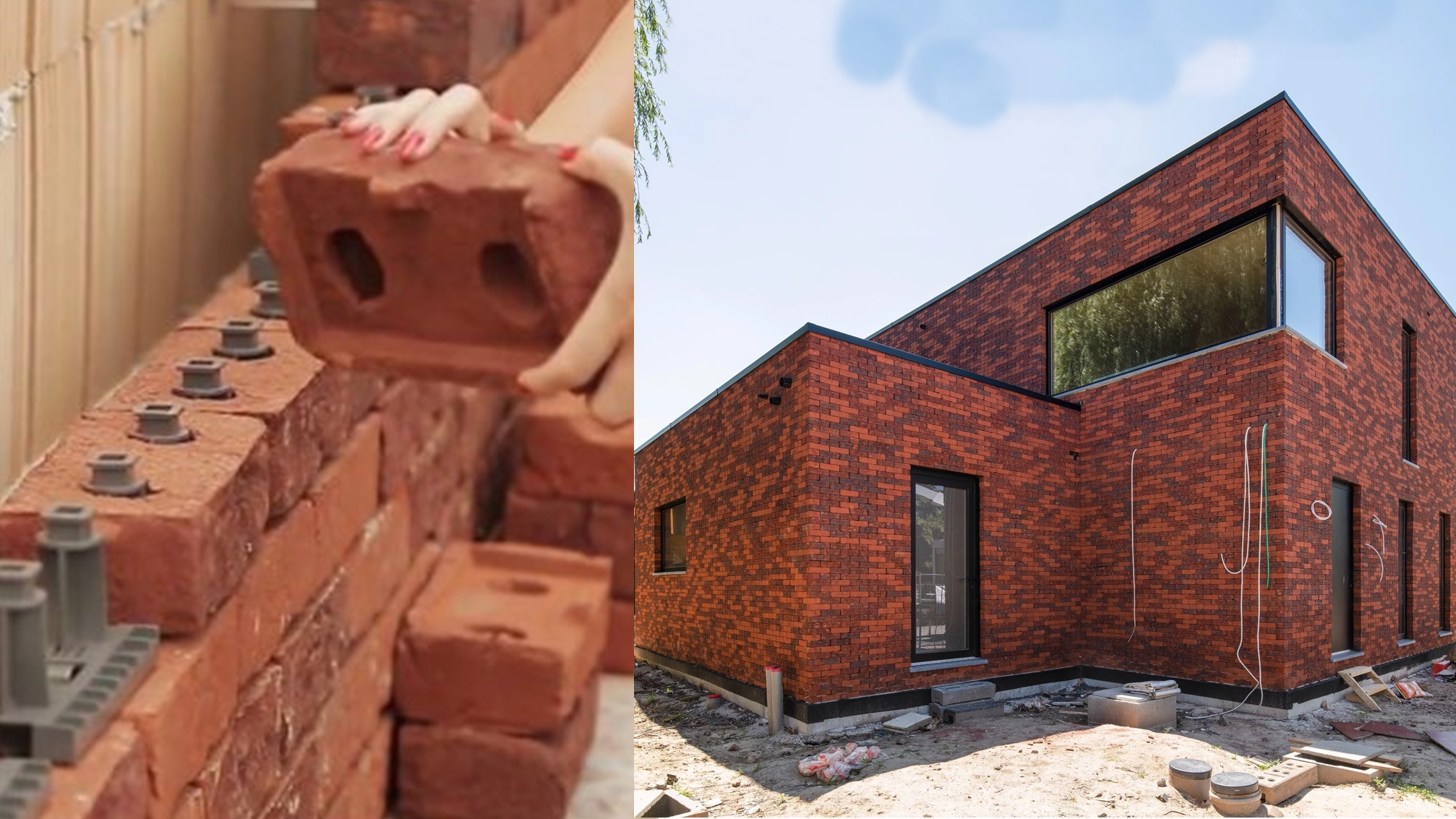
The construction industry is constantly seeking solutions to reduce its environmental impact. Within this context, Facadeclick emerged, an innovative Belgian masonry brick that eliminates the need for cement and reduces material waste.
Simple and Efficient Assembly of the Brick
The Facadeclick allows for the construction of walls without glue or cement, using high-density polyethylene plastic connectors.
The bricks feature two central holes, through which they are fixed on top of each other with plastic clips.
-
New Anti-Humidity Paint Reduces Mold and Fungus by Controlling Condensation, Enhancing Indoor Protection and Paint Durability Without Major Renovations

-
Polystyrene Panel Technique Goes Viral for Tackling Household Mold and Persistent Dampness
-
Innovative Building Material: EPS Construction Revolutionizes with Faster Builds, Less Waste, and Enhanced Thermal Comfort

-
Correct Floor Screed Thickness and Strategic Use of Reinforcement Mesh Key to Preventing Cracks and Enhancing Durability Without Significant Cost Increase


For structural reinforcement, safety screws are added, and foam is injected into the wall, ensuring better thermal and acoustic insulation.
Despite the lack of cement, a layer of this material must be applied to the base of the wall to ensure stability.
The assembly is simple and can be done quickly, reducing construction time.
Environmental and Economic Benefits
The innovation brings sustainable advantages. The Facadeclick significantly reduces construction waste, as the bricks can be reused and recycled.
Additionally, by avoiding the use of cement, the need for a highly polluting material is minimized due to CO2 emissions in the manufacturing process.
In financial terms, the system also represents savings. Since the installation of the bricks is straightforward, labor time and associated costs are reduced.
Even without requiring technical specialization, the presence of an experienced professional is recommended for supervising the assembly.
Expansion and Acceptance in the Market
The technique has attracted interest in the construction sector. In 2020, ten buildings, seven in Belgium and three in the Netherlands, were constructed using this system, totaling approximately 10,000 m² of façades.
The acceptance of Facadeclick led other contractors to adopt the solution in future projects, including schools and apartments.
The founder of the company revealed that a construction company plans to build five single-family homes with this technology.
Among the factors attracting the interest of professionals are the reuse of the bricks, the low cost of materials, and the speed of construction.
To expand the product offering and better meet architects and clients, the company has established partnerships with brick manufacturers. This collaboration allows for a wider variety of materials to meet different construction needs.
The Facadeclick represents a modern approach to masonry, combining efficiency, sustainability, and economy.
With the growing demand for low-impact environmental construction, this system could gain even more space in the sector.


Parece mto com tijolo solo-cimento. Mas será queimado?
Tijolo ecológico já não é mais ou menos isso aí?
Pode sair mais barato na hora da construção mas com o tempo ele se deteriora e se desmancha todo, experiência própria onde a empresa não deu garantia