Portuguese
  Spanish


The Hope Rise project, by ZED PODS with the Bristol City Council and YMCA, created zero-carbon social housing on land the city didn’t even know it had: the air above parking spaces
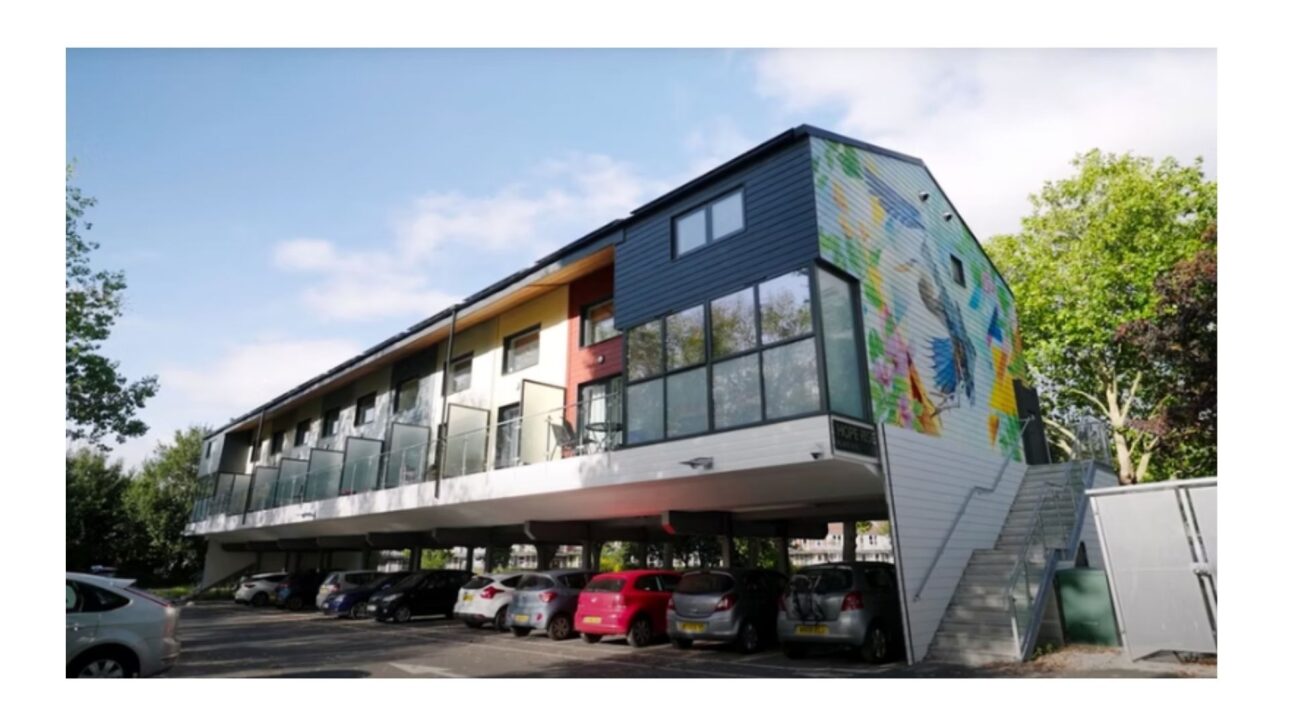
Modular housing proved in England that no city needs new land to build: just look up. In January 2021, young people at risk of homelessness moved into the 11 homes of Hope Rise, in Bristol, England, a housing complex mounted on steel stilts above a functioning public parking lot. No parking space was lost: cars continue to park underneath the houses.
How do you build a building above a parking lot without closing it? The answer is off-site construction: the modules arrived ready from the factory and were fitted onto a steel podium in a single weekend, transforming the airspace of a common municipal lot into a residential address.
The land that was hidden above the spaces
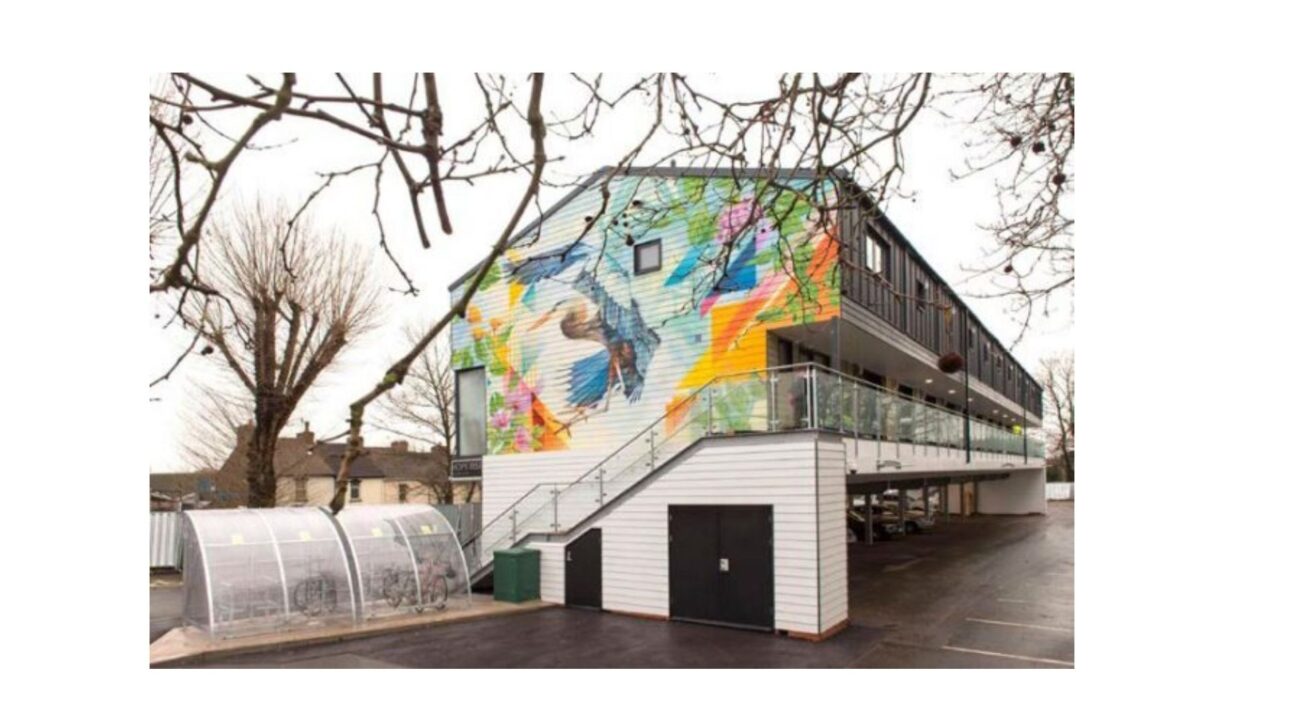
Every city has public parking lots occupying valuable land, and Bristol decided to charge rent for the air above them. According to ZED PODS, Hope Rise is a 2-story building erected on a steel podium in an existing parking lot on Chalks Road, in the St George neighborhood, retaining all public spaces. The ground remained a parking lot; the sky became housing.
-
New York Converts Massive Landfill with 150 Million Tons of Waste into a Giant Park, Concealing Decades of Consumption Beneath Green Hills

-
Experts Share 5 Practical Ways to Detect Hidden Wiring in Walls Before Drilling, Using Simple Techniques and Affordable Devices to Prevent Electrical Damage and Unexpected Costs

-
Brazilian Architect Wins International Award for Empowering Ugandan Women to Build Their Own Homes
-
Singapore Constructs Massive Waste Island with 7 km Dike to Combat Space Shortage



This logic changes urban mathematics. The most expensive square meter of any housing project is the land, and here the land was already public and already occupied by another function. The modular housing on stilts stacked two uses at the same address, without expropriating anything and without removing the existing service from those who used it.
The modular housing that arrives 90% ready from the factory
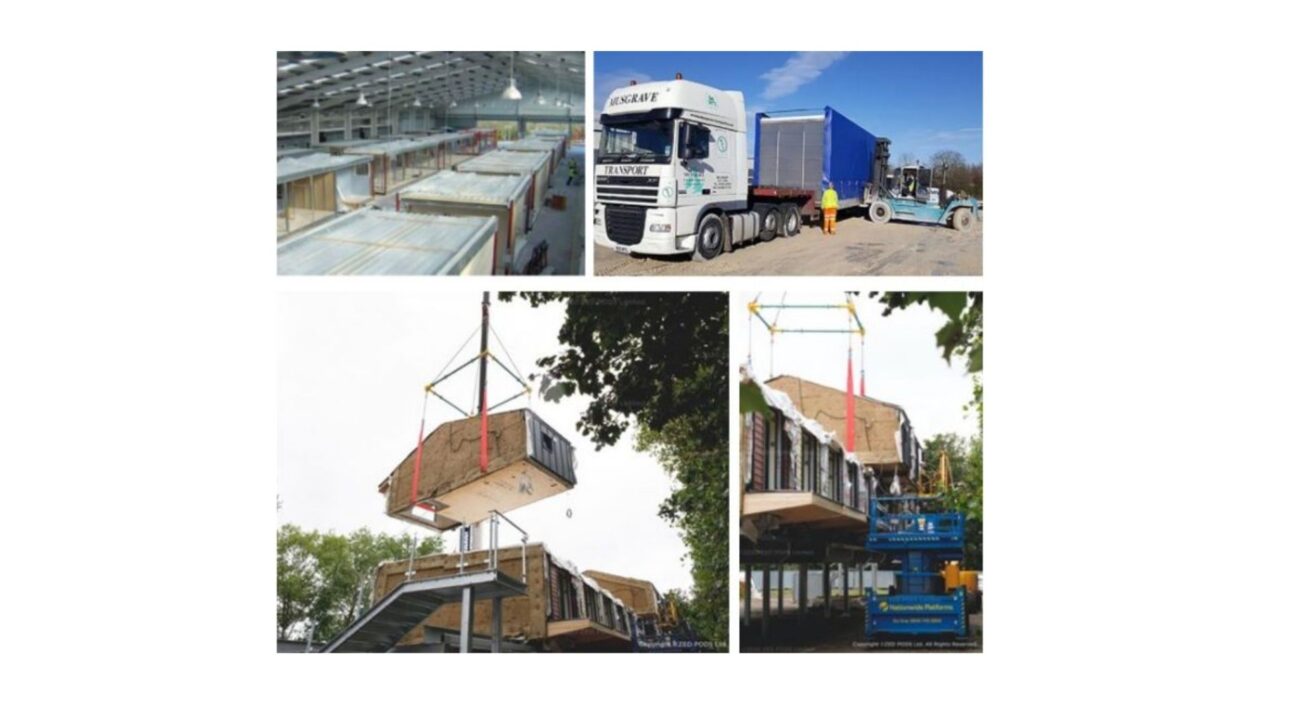
image: Zedpoods.com
The secret of speed is in the factory. According to ZED PODS, the modules were completed up to 90% in a factory environment, with bathrooms and kitchens installed in just 8 weeks, and the complete units were positioned on the podium over a weekend. While the neighborhood slept, an entire housing complex was fitted over the parking lot.
The comparison with traditional construction is brutal. A conventional building of the same size would take over the street for months, with noise, debris, and the parking lot closed. Prefabrication reverses this: the construction site is inside the factory, and the city only sees the final moment of assembly.
Zero carbon with surplus energy on the roof
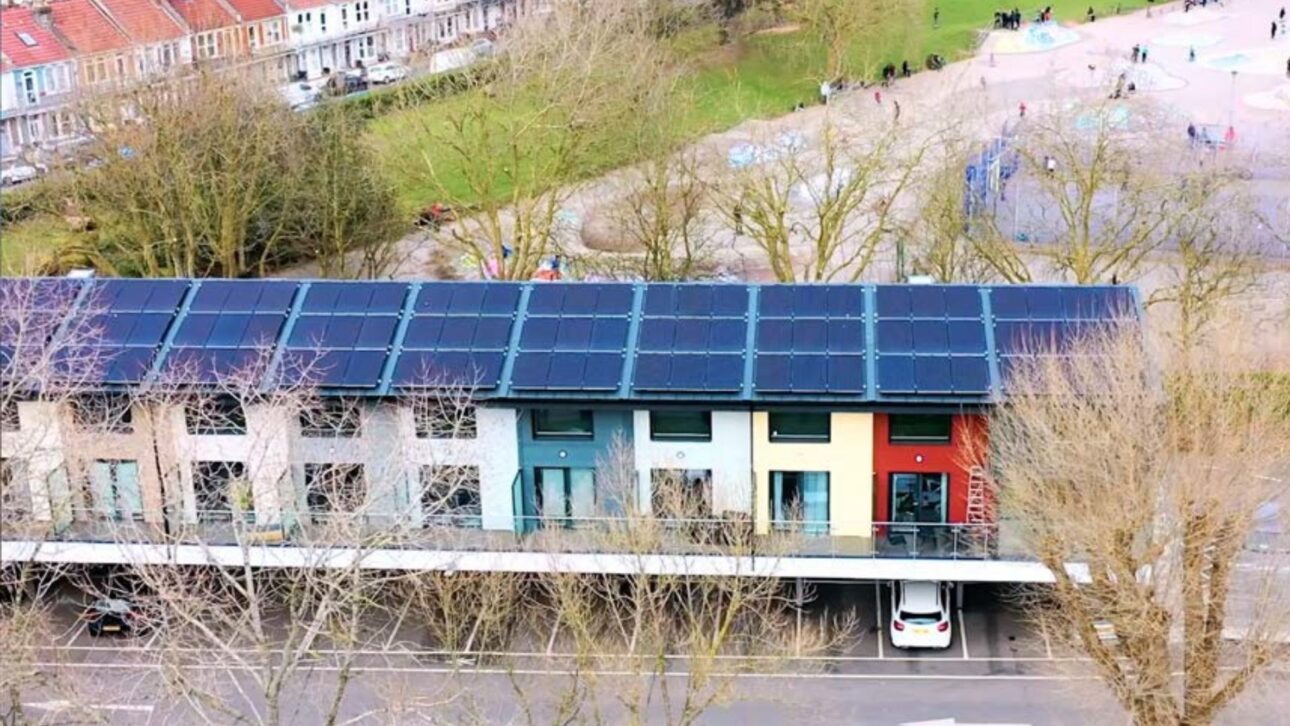
image: Zedpoods.com
The complex is not only fast, it is self-sufficient. According to ZED PODS, the development operates with zero emissions and carries 105 photovoltaic panels on the roof, which generate enough energy to cover the annual demand of the residents; the evaluation made after occupancy confirmed that 104% of the annual energy consumption was generated on-site. The houses produce more energy than they consume, and the residents’ electricity bill practically disappears.
For social housing, this detail is decisive. It’s no use handing the keys to a low-income young person if the energy bill drives them out later. By eliminating the operational cost of electricity, the project protects exactly the resident who has no room in the budget, and transforms the roof into a permanent source of energy income for the complex.
Who lives in the 11 houses
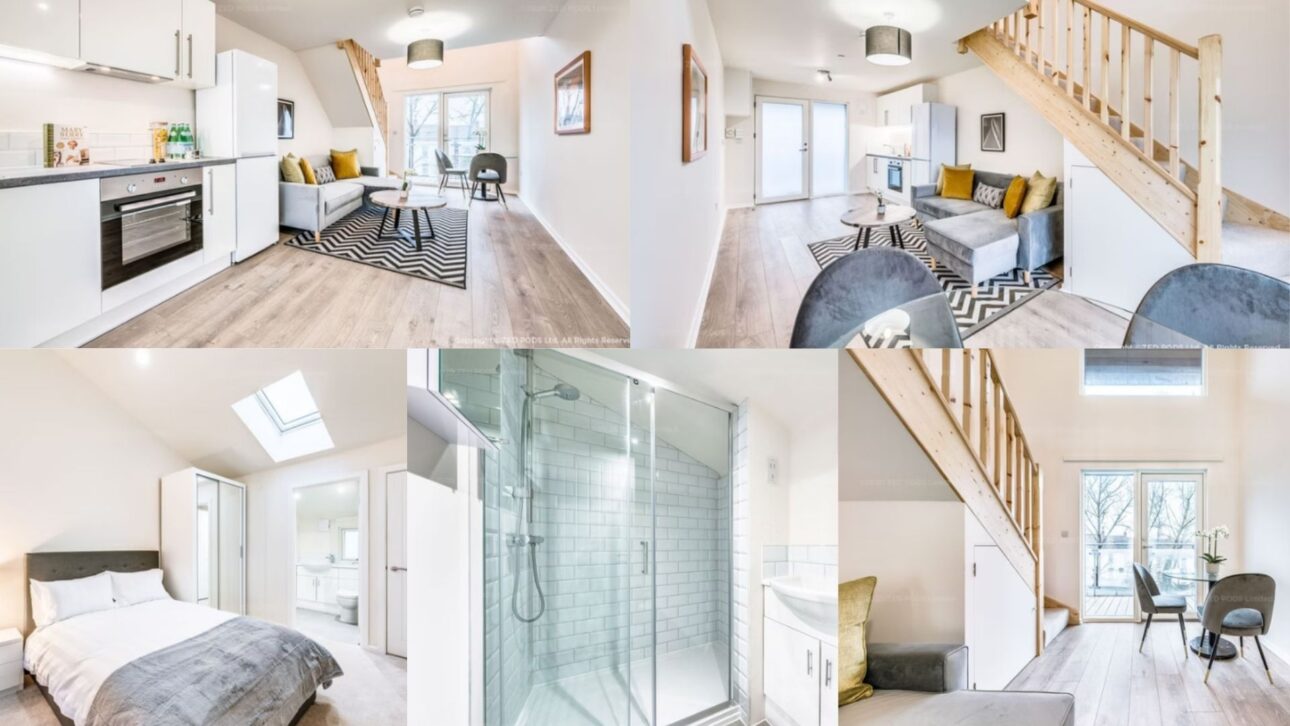
image: Zedpoods.com
The target audience was defined before the project. According to Constructing Excellence, the 11 affordable and low-carbon apartments serve young workers and vulnerable families, with priority given to those referred by YMCA Bristol, and 2 of the houses were reserved for residents with roles as community coordinators, responsible for supporting the well-being of neighbors. It’s not just a roof: the social design of the complex already comes with a built-in support network.

According to ZED PODS, the units are 100% social rent, meaning they are priced well below market value and aimed at those on the housing waiting list. It’s the kind of arrangement that keeps young people in their first job instead of letting them slip onto the streets.
From concept to key in just over 2 years
The project’s timeline is short by public construction standards. According to Constructing Excellence, the idea went from a model house displayed at the Bristol Housing Festival in October 2018 to the move-in of the first residents in January 2021, when the complex became the first of its kind completed in the UK using modern construction methods. Just over 2 years separated the exhibition prototype from the keys in the hands of the residents, even with the pandemic in between.
Constructing Excellence notes that the project navigated the logistical and supply chain disruptions of COVID-19 without derailing. The explanation lies in the method: when 90% of the work takes place in a factory, the project is less exposed to weather, site delays, and health restrictions.
Awards, COP26, and the world stage
The experiment did not go unnoticed. According to ZED PODS, Hope Rise was presented at COP26 and accumulated awards, being described as the UK’s first 100% accessible and zero-carbon development in operation. According to Constructing Excellence, the project won the entity’s regional innovation award in 2021, in the southwest of England. A neighborhood parking lot became an international showcase for housing policy and clean construction at the same time.
The recognition matters because it unlocks replication. Municipalities are risk-averse, and an award-winning modular housing, audited after occupancy and showcased at a climate conference is much easier to approve in the next city council.
The calculation that Brazilian cities should make
Brazil faces a chronic housing deficit and, at the same time, public parking lots occupying flat land, served by streets, water, electricity, and transport in the middle of cities. Hope Rise shows that these two problems can solve each other without the municipality buying a new square meter. The airspace above the parking spaces is a stock of urban land that practically no Brazilian city accounts for.
Modular housing is still in its infancy here, but the method is exactly what Brazilian mathematics demands: quick construction, predictable cost, already available public land, and zero electricity bill due to solar energy, in a country with much more sun than England.
There is also a positive side effect that rarely enters the equation: the factory. Each modular housing program requires a local production line, with welders, carpenters, electricians, and engineers working under a roof, in regular shifts, away from the improvisation of the traditional construction site. In other words, besides tackling the homeownership queue, the model creates qualified industrial jobs in the city that adopts it, the same movement that transformed off-site construction into an industrial policy flag in European countries.
What remains from Bristol’s lesson
Eleven houses may seem few compared to any housing queue, but the value of Hope Rise lies in the precedent: it became proof that it’s possible to create an address where there was only asphalt and car space, in weeks and not years, generating more energy than consumed. The question the project leaves is uncomfortably simple: how many housing complexes fit above the public parking lots in your city?
If a medium-sized English city found land where no one saw it, the housing problem might be less about space and more about imagination, and this is a raw material that costs nothing to import.