Portuguese
  Spanish


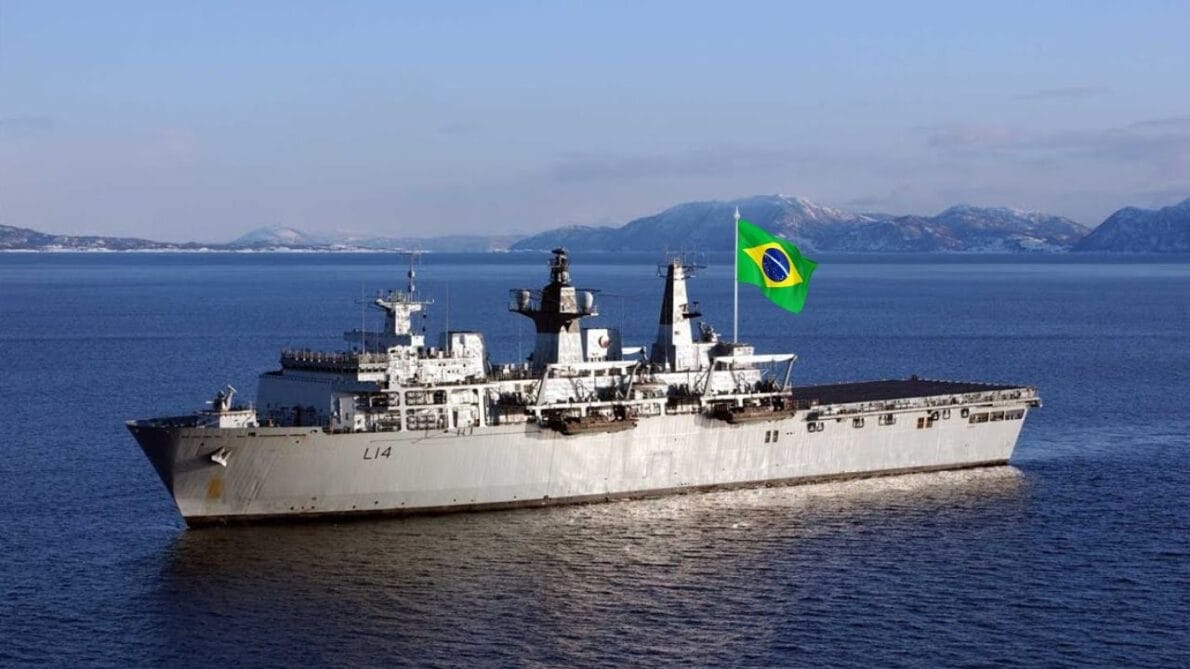

The Brazilian Navy Is Eyeing A New Landing Ship From The Royal Navy. The Idea Is To Replace One Of The Largest Recently Decommissioned Surface Ships.
The Commander Of The Brazilian Navy, Marco Sampaio, Announced That By 2028, 40% Of The Naval Force May Be Decommissioned, Which Has Raised Concerns. The Navy Is Responsible For Defending The Blue Amazon, A Vast Maritime Area Rich In Natural Resources, And Brazil Is Also Advocating At The UN To Expand Its Maritime Territory, Making A Robust Defense Of National Wealth Essential.
In Recent Years, The Brazilian Navy Has Faced Several Challenges, Including The Decommissioning Of Three Submarines In 2023 And The Commissioning Of Two New Submarines From The Prosub Program. Additionally, The Nuclear Submarine Álvaro Alberto Began Construction In June Of This Year. To Fill The Gap Left By The Decommissioning Of One Of Its Largest Ships, The Brazilian Navy Is Seeking New Vessels From Countries Such As France And The United Kingdom.
The Brazilian Navy Has Shown Interest In Acquiring The Landing Ship HMS Albion


The Brazilian Navy Has Shown Interest In Acquiring The Landing Ship HMS Albion From The Royal Navy. Initially, The British Navy Agreed To Transfer The Ship To Brazil, But Later Decided To Keep It Until 2030. The HMS Albion Returned To Devonport In June Of Last Year, Entering A Reduced Readiness State. The Plan Is For The HMS Bulwark To Take Over Albion’s Role At The Front Line In 2024, But The Albion Is Expected To Remain In Extended Readiness Until 2029, With Possibility Of Resuming Operations After Refurbishment.
-
The U.S. Navy Conducts Submarine Tests in Idaho Lake to Detect Underwater Noises Hidden by the Ocean

-
Nuclear Submarine USS Alexandria Retired After 35 Years, Having Completed Over 1 Million Miles in Missions

-
MODEC Introduces New Hull Design for FPSO Gato do Mato to Produce Up to 120,000 Barrels of Oil Per Day in Brazil’s Pre-Salt Region
-
This Massive 12-Meter, 21-Ton Underwater Drone Can Operate Autonomously for Up to Five Days


The HMS Albion Is An Amphibious Landing Ship, Essential For The UK’s Amphibious Force Projection Capability. Built By BAE Systems, It Is The Lead Ship Of The Albion Class, Which Also Includes The HMS Bulwark. Since Its Entry Into Service, The HMS Albion Has Played A Crucial Role In Various Naval Operations And Humanitarian Missions. It Can Transport Up To 405 Troops, 67 Light Armored Vehicles, And Operate Two Helicopters Simultaneously.
The Navy Is Involved In The Construction Of 500-Ton Patrol Vessels And New Tamandaré-Class Frigates
The Brazilian Navy Considers This Acquisition An Opportunity To Improve Its Troop Landing Capability. The Navy Is Involved In The Construction Of 500-Ton Patrol Vessels And New Tamandaré-Class Frigates, With The First Expected To Be Launched Soon. Each Ship In The Navy Is Designed For A Specific Mission, And The Need For New Amphibious Landing Vessels Is Urgent.
With The Interest In Purchasing The HMS Albion, The Brazilian Navy Hopes To Strengthen Its Fleet And Ensure Efficient Defense Of The Blue Amazon. Acquiring This Modern Landing Ship Could Be A Solution To The Logistical And Defense Challenges The Country Faces.