Portuguese
  Spanish


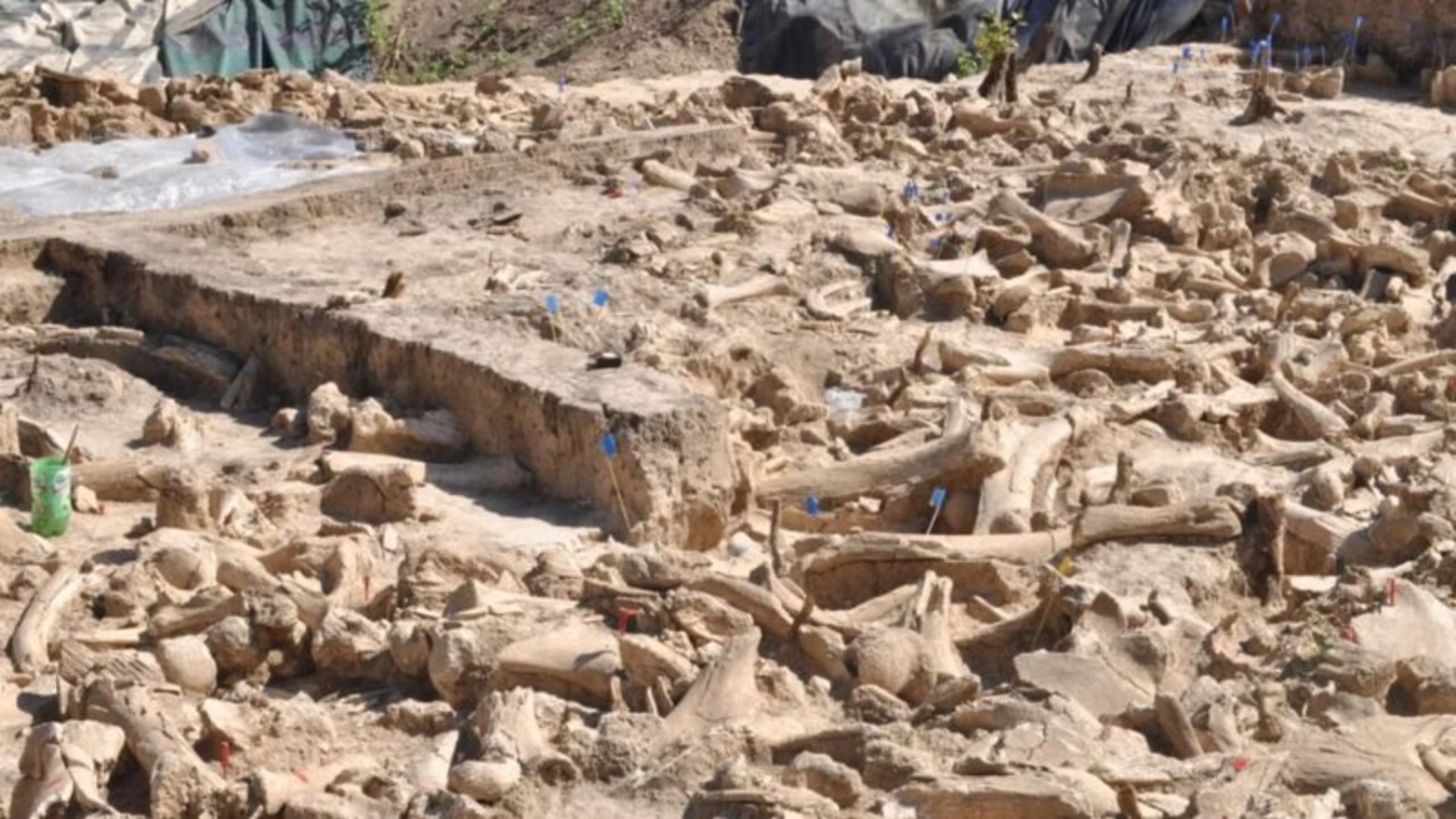


Discovery in Russia in 2014: The 12-Meter Circular Structure Made with Bones of at Least 60 Mammoths Challenges Functional Interpretations and Expands Understanding of Paleolithic Social Organization
In 2014, archaeologists identified a 12-meter circular structure built with bones of at least 60 woolly mammoths in the forest steppe of Russia, in Kostenki. The find revealed complex architectural choices made by hunter-gatherers 25,000 years ago, expanding understanding of extreme human adaptation.
Discovery and Archaeological Context of the Mammoth Bone Structure
The structure was identified in 2014 in the region of Kostenki, an area known for housing numerous Paleolithic sites distributed along the Don River in western Russia.
According to Alexander Pryor, an archaeologist at the University of Exeter, the investment of time and effort indicates central importance for the groups that built it.
-
Polar Air Mass to Hit Brazil: Temperatures to Plummet in Nine States, Near Freezing in the South with Frost Risk Until Monday

-
Chinese “dark factories” produce electric cars 24/7 with minimal human intervention, as Zeekr assembles 800 units daily, raising concerns in Brazil.

-
Spectacular Green Aurora Seen from Space Illuminates International Space Station, Captivates French Astronaut

-
In Tasmania, a Beach Features a Natural Stone Mosaic Formed by Earth’s Cracks Millions of Years Ago



The study led by Pryor was published in 2020 in the journal Antiquity, detailing dimensions, composition, and possible functions of the monumental bone structure.
Evidence of fire found inside the circle indicates regular activities, suggesting functional and planned occupation, rather than a mere casual accumulation of bones.
Vegetal food remains and pits containing mammoth bones near the circle reinforce the hypothesis of processing and possible storage of food.
“Obviously, a lot of meat is obtained from a mammoth,” Pryor stated in a release reported by Science Alert, while discussing the investigated dietary practices.
Hypotheses About Function
Researchers believe that the grandeur of the construction exceeds strictly practical needs, opening up space for social or symbolic interpretations of the site.
Pryor highlights that rituals may coexist with subsistence activities, making it plausible for a structure to have multiple functions integrated into Paleolithic daily life.
The lack of consensus reflects interpretative limits, as material evidence rarely clarifies intangible cultural meanings with absolute precision.
Structures made with mammoth bones were already known in Eastern Europe, but on much smaller scales, typically with only a few meters in diameter.
Excavations conducted in Kostenki in the 1950s and 1960s revealed similar houses, dated up to 22,000 years ago.
The structure discovered in 2014 is about 3,000 years older, making it one of the oldest and most extensive examples of this type of construction.

Dimension and Planning
Zooarchaeologist Marjolein Bosch from the University of Cambridge emphasizes that the size suggests long-term planning.
According to Bosch, the structure may have functioned as a landscape landmark, meeting point, or reusable refuge in harsh weather conditions.
Pryor considers its use as everyday housing unlikely, stating he cannot imagine a functional roofing system for such scale.
Composition of Animal Remains
Smaller mammoth bone houses often feature varied animal remains such as reindeer, horses, and foxes, indicating diverse local diets.
In the new structure, however, almost all remains are of woolly mammoth, a detail considered one of the most intriguing elements of the site.
Anthropologist Pat Shipman from Penn State University noted that this complicates interpreting it as prolonged habitation.
This construction is the first of its kind to show clear evidence that wood was burned inside it, in addition to bones.
Pryor explained that large fragments of charcoal indicate the presence of trees in the landscape, despite hostile environmental conditions.
The narrow growth rings in the charcoal suggest difficult growth, compatible with riparian forests that could survive along the Don River.
Bosch observes that fire operated as a multifunctional tool, providing heat, light, and support for processing food and materials.
Vegetal tissue fragments were identified by floating in water and sieving, as reported by Smithsonian Magazine.
Pryor highlighted that this is the first evidence of plant consumption in these structures, with tissues similar to those of modern roots and tubers.
Origin of Mammoth Bones
The presence of bones from more than 60 mammoths raises questions about systematic hunting, mass natural deaths, or a combination of both possibilities.
Shipman suggests that local topographical features may have concentrated herds, facilitating natural or opportunistic deaths near river crossings.
She states it is unlikely that humans killed so many animals simultaneously, given the social intelligence of proboscideans, even in modern contexts.
Some bones were arranged according to original anatomical positions, indicating transportation while soft tissues still adhered.
Bosch explains that this implies early access to carcasses, before carnivores completely cleaned the available remains.
Shipman questions whether the bones were processed or merely accumulated, highlighting the logistical difficulty of moving a dead mammoth with almost no meat.
Regional Importance of Kostenki
According to Lioudmila Lakovleva from the French National Center for Scientific Research, the settlement includes multiple bone structures and functional areas.
Pryor reinforces that Kostenki was a focal point of human occupation throughout the last Ice Age, representing concentrated investment in the landscape.
He mentions evidence of freshwater springs that remained liquid year-round, attracting animals and consequently human groups.
Adaptation and Survival
For Pryor, the site reveals sophisticated strategies of climate adaptation, intensive use of local resources, and collective planning in an extreme environment.
The project offers a concrete view of how humans faced severe phases of the last glacial cycle, transforming adversity into social organization.
According to him, it is essentially a story of human survival, constructed with bones, fire, landscape, and choices that still intrigue researchers.
With information from Adventures in History.