






 Portuguese
  Spanish
  4 min of reading
  0 comments


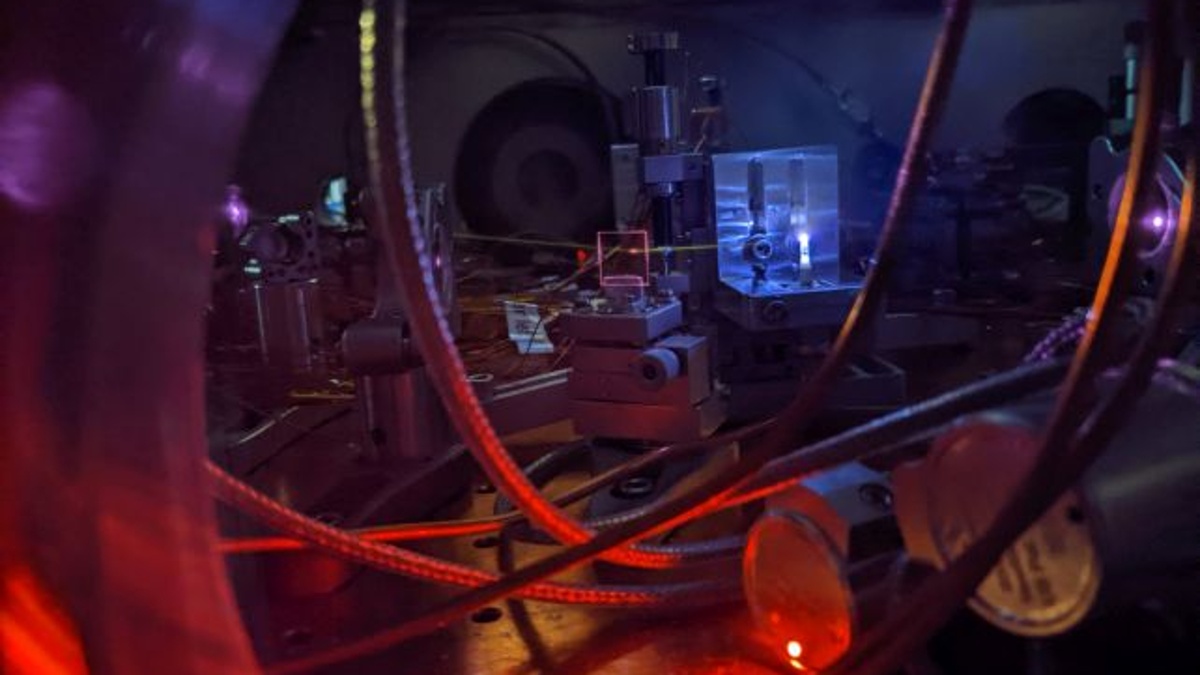
Physicists announced a historic breakthrough in time measurement by developing the first functional prototypes of nuclear clocks, devices that use oscillations within the atomic nucleus to measure time with extreme precision. The results were presented in June 2026 by two independent teams: one led by researchers from the Technical University of Vienna (TU Wien) in Austria, and another formed by scientists from the National Institute of Standards and Technology of the United States (NIST), in collaboration with international universities and research centers.
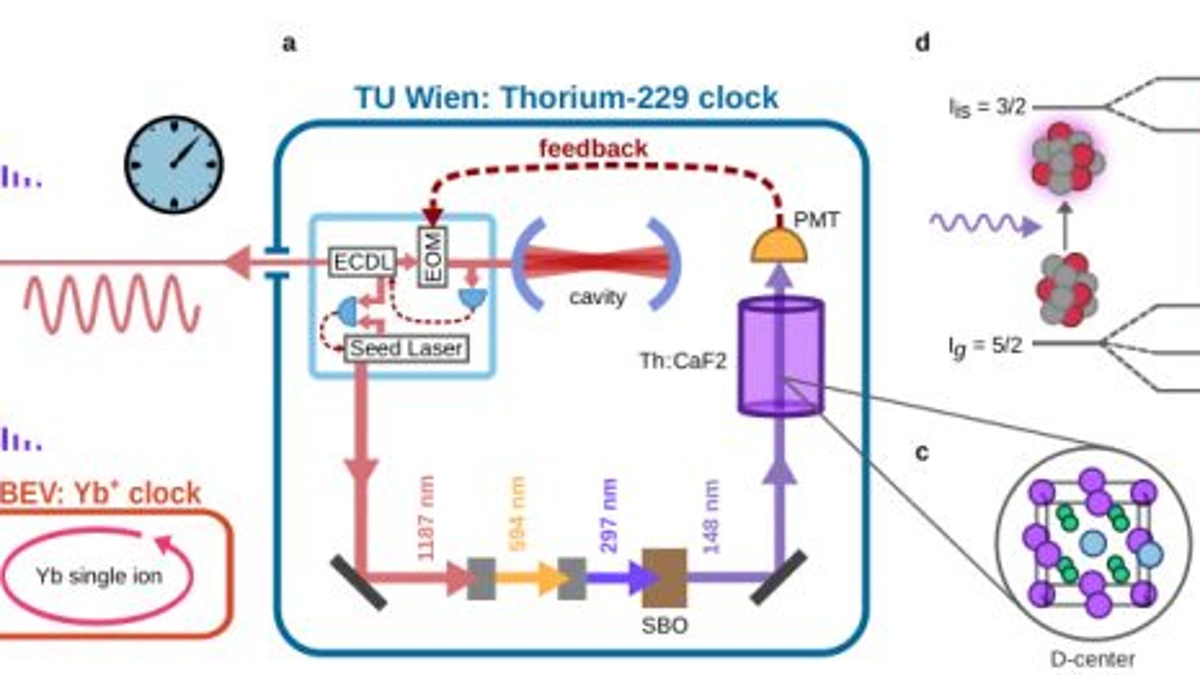
The advances were published by two research teams that worked independently. The group from the Technical University of Vienna (TU Wien) managed to develop a system based on crystals containing thorium-229 to measure nuclear oscillations with high precision. Meanwhile, scientists from NIST in the United States achieved similar results using a complementary approach. Together, the works represent the first concrete step towards the construction of fully operational nuclear clocks.
Moreover, the new devices promise to surpass, in the future, the precision of current atomic clocks, which are considered today the most accurate instruments ever created by science.
What differentiates a nuclear clock?
Traditional atomic clocks measure time by observing the movements of electrons around atoms. Thanks to this technology, systems like GPS, telecommunications, and global networks operate with extreme precision.
-
Alcohol consumption will decrease in the next decade, says a study revealing a silent transformation in the habits of millions of people worldwide.

-
Family trades chayote for 100,000 chickens, abandons agricultural tradition after decades, and transforms property in the interior of SP into a reference for demanding exports like those to China and other global markets.

-
ID for people with diabetes? Project approved by the Chamber provides for identification on the document, new rights in the SUS, and changes in schools and at work.
-
What many people consider a weed has become a bicycle in the hands of a Chilean. José Tomás transforms coligüe, a native bamboo that grows up to five times faster than pine, into bikes, canes, and cutlery.



However, the new clocks use a different strategy. Instead of monitoring electrons, they track transitions that occur within the atomic nucleus itself, where protons and neutrons reside. Since nuclei are much smaller and less susceptible to external interference, researchers believe they could offer even greater levels of stability and precision.
Thorium-229 made the technology possible
For decades, scientists considered it impossible to build a practical nuclear clock. After all, most atomic nuclei require enormous amounts of energy to change state.
However, the isotope thorium-229 presents a rare characteristic. Its nucleus has an extremely low energy transition, which can be stimulated by advanced lasers. Therefore, it has become the main candidate for the creation of the first nuclear clock in history.
Furthermore, recent research has allowed this transition to be measured with unprecedented precision, removing one of the main obstacles that prevented the construction of the device.
Two teams achieved the goal
According to recently published studies, two independent teams have managed to develop functional versions of the technology.
The researchers used crystals containing thorium atoms and high-precision laser systems to monitor nuclear oscillations. In this way, they transformed the atomic nucleus into a stable time reference, capable of acting as a true clock.
Additionally, one of the teams has already conducted experiments comparing the new nuclear clocks with some of the most precise atomic clocks in the world.

Technology may surpass atomic clocks
Although the current prototypes are not yet more precise than the best existing atomic clocks, scientists consider the achievement a starting point.
Now that the technology works in practice, researchers can focus efforts on improving the systems. Consequently, experts believe that future versions may reach levels of precision never achieved before.
Moreover, atomic nuclei are less influenced by magnetic fields, temperature variations, and other environmental disturbances. For this reason, they offer important advantages for extremely delicate measurements.
Applications go far beyond time measurement
The benefits of this technology are not limited to the creation of more precise clocks.
Scientists intend to use nuclear clocks to investigate fundamental questions of physics. Among them are possible variations in the universal constants of nature, such as the intensity of the forces that govern matter.
Additionally, the devices can aid in the search for evidence of dark matter, one of the greatest mysteries of modern science. According to researchers, some types of measurements performed by nuclear clocks already demonstrate sensitivity superior to that of many current atomic clocks.
Advancement may impact future technologies
In the long term, the new technology could also benefit areas such as satellite navigation, telecommunications, space exploration, and advanced computing.
Currently, GPS systems directly depend on the precision of atomic clocks. Therefore, any improvement in time measurement can increase the accuracy of location and synchronization of global networks.
Furthermore, future space missions could use nuclear clocks to perform more accurate measurements in extreme environments, where small temporal differences make a big difference in scientific results.
A new era for physics
The construction of the first nuclear clocks marks the beginning of a new phase in the science of time measurement.
Besides representing an impressive technological achievement, the advancement offers a novel tool to explore phenomena that remain unexplained. Therefore, many experts consider the achievement one of the most important developments in modern physics in recent years.
As researchers continue to refine the prototypes, the expectation is that nuclear clocks will become essential instruments for answering some of the biggest questions about the functioning of the universe.






Be the first to react!