Portuguese
  Spanish


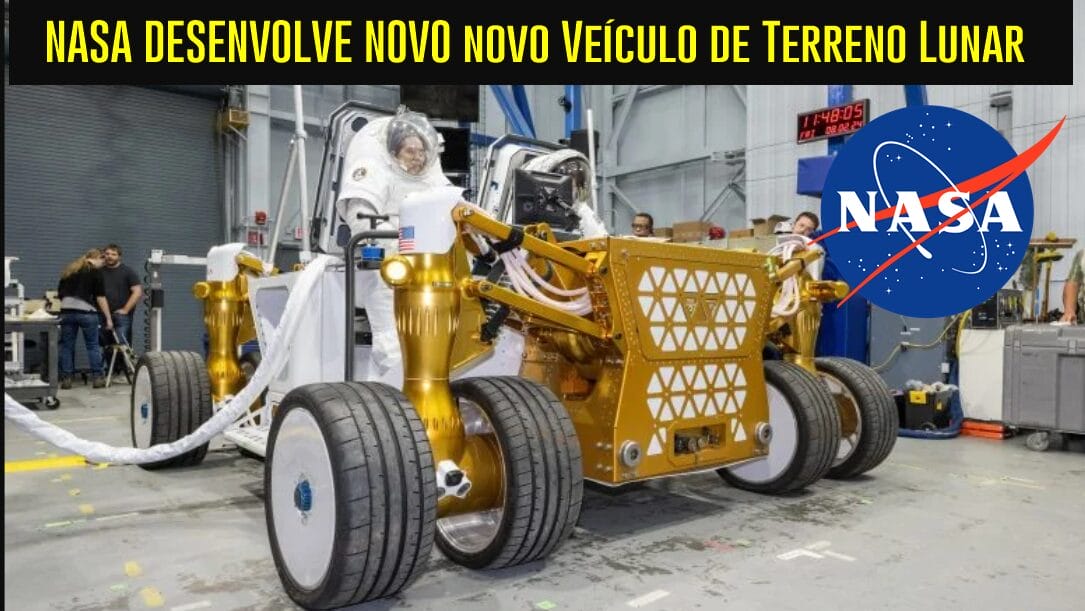

NASA Is Developing A Lunar Terrain Vehicle (LTV) For The Artemis Missions, Expanding Astronauts’ Exploration Capability On The Moon And Facilitating Detailed Scientific Research
NASA is once again poised to redefine lunar exploration with the development of a new Lunar Terrain Vehicle (LTV), which will be a crucial element in the Artemis missions.
This vehicle will allow astronauts to conduct scientific research in areas farther from the lunar surface, promoting broader and more detailed exploration.
The LTV is part of a larger initiative that aims not only to advance lunar exploration but also to open doors for future missions to the planet Mars.
-
Brazilian Innovator Transforms 1962 Mercury Comet with Nissan Leaf Electric Motor, Achieving 125 km Range for Under $6,000

-
China Tests Giant 582-Ton Magnets to Contain Plasma Hotter Than the Sun’s Core, Aiming to Cut Superconductor Costs and Generate First Electricity from “Artificial Sun” by 2030
-
Seventh Grader Builds Nuclear Fusion Machine at Home, Aiming for Guinness World Record

-
Ancient Ritual Circle, Hidden for 5,000 Years, Discovered in Scotland’s Machrie Moor Using Sensors, Revealing a “Phantom Stonehenge”



The Artemis Campaign and The LTV: More Than Just A Simple Rover
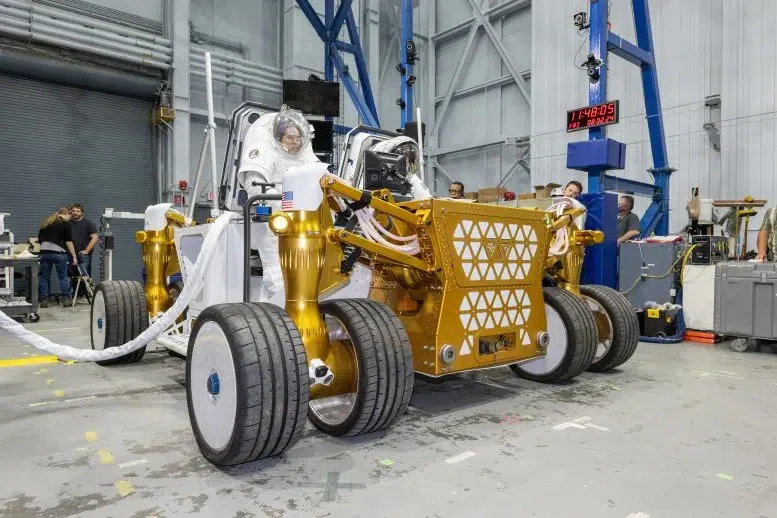
The return of astronauts to the Moon, expected to occur in the upcoming Artemis missions, will feature a non-pressurized LTV capable of transporting humans and operating remotely.
This vehicle will be used, starting with the Artemis V mission, to expand astronauts’ operating areas, allowing them to explore new regions of the lunar surface and collect important data for the scientific community.
The team of engineers at NASA’s Johnson Space Center in Houston is already working on a prototype called the Ground Test Unit (GTU).
This rover, although it will not go to the Moon, will be essential for testing different lunar vehicle concepts and ensuring that the final LTV meets all necessary requirements for a successful mission.
The Development of The GTU: Testing The Foundations For The Future

In April 2024, as part of the Lunar Terrain Vehicle Services (LTVS) contract, NASA selected three suppliers – Intuitive Machines, Lunar Outpost, and Venturi Astrolab – to develop capabilities for the new lunar rover. The GTU, which is a prototype in testing on Earth, plays a crucial role in this process, allowing NASA and its partners to test the vehicle’s capabilities and adjust their designs.
The goal of the GTU is to serve as a testbed to evaluate fundamental concepts such as the crew compartment design, rover maintenance, and integration of scientific payloads.
As Jeff Somers, head of engineering for the Ground Test Unit, pointed out, “The GTU will help NASA teams test and understand all aspects of rover operations on the lunar surface before the Artemis missions.”
This means NASA will be able to make more informed and intelligent decisions about which innovations and adjustments should be implemented in the final vehicle.
Collaboration and Technological Innovation
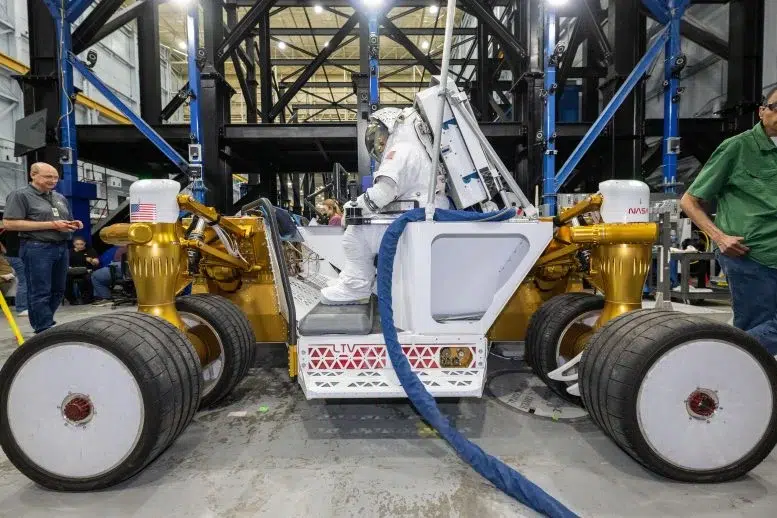
The suppliers involved in the development of the LTV have the opportunity to test their technologies and work in partnership with NASA to optimize their designs.
The final vehicle will be designed to support two astronauts and will include remote control features, as well as advanced operating modes such as supervised autonomy and self-leveling.
Having a prototype tested on Earth is a significant advantage, as it allows technical teams to experiment directly with the rover.
This accelerates the development process, providing valuable data that will be essential to ensure the success of future missions.
Additionally, NASA already has a history of developing lunar vehicles since the 1970s, with the Apollo Lunar Roving Vehicle, and is applying those past experiences to create a new generation of more advanced and functional rovers.
The GTU is a clear example of this, and it will allow NASA to learn new ways to ensure that astronauts live and work safely and productively, both on the Moon and, eventually, on Mars.
Expanding Scientific Opportunities and A Future Beyond The Moon
The impact of the new LTV will be immense not only in terms of mobility but also in its contribution to science. With the rover, astronauts will be able to cover greater distances and access unexplored areas of the lunar surface, increasing the scientific value of each mission.
This will allow for the collection of more diverse data, providing unprecedented insights into lunar geology, the history of the solar system, and the potential for future missions.
Another key aspect of the Artemis missions is their inclusive and international nature. NASA will send astronauts to the Moon, including the first woman and the first person of color, as well as an international partner.
This global collaboration highlights the importance of space exploration not only as a technological advancement but also as an effort that involves the entire world.
These missions will also serve as a springboard for humanity’s next great adventure: Mars.
The experience gained on the Moon will be crucial for the success of crewed missions to the red planet, and the development of the LTV is a key piece in this puzzle.
In summary, NASA’s New Moon Rover represents more than just a technological advancement – it symbolizes the next step in the journey of space exploration, opening new frontiers for science, innovation, and the future of humanity among the stars.