Portuguese
  Spanish


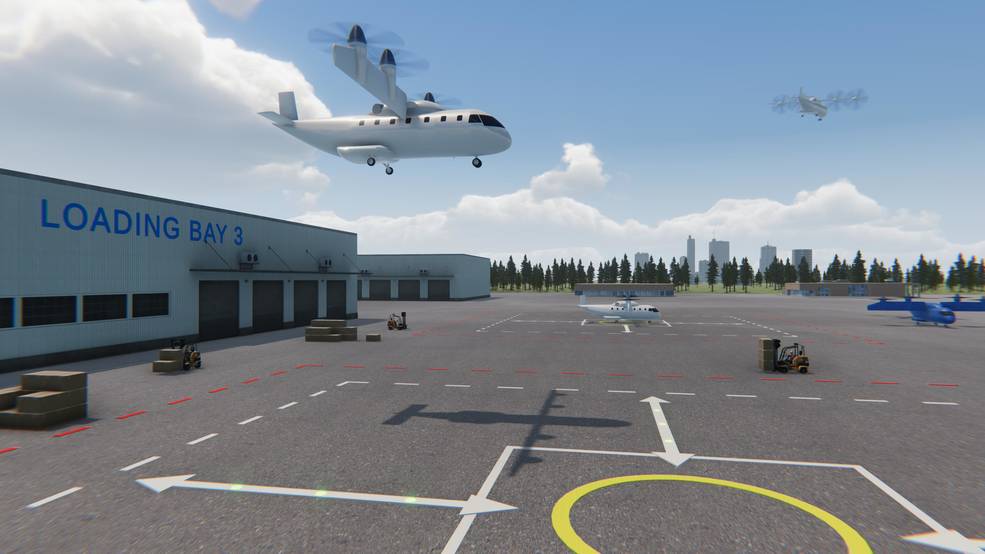

Today, we can receive orders faster than ever, thanks to online orders and quick delivery services. The demand for this fast delivery approach continues to grow, and new cargo transport methods must be found to keep pace.
NASA (the American aeronautics and space agency) emphasizes that it has the means to revolutionize the cargo transport industry by developing faster and cleaner transport methods, utilizing large cargo delivery planes and small package delivery drones.
NASA is working with Elroy Air and Reliable Robotics to learn more about these Advanced Air Mobility (AAM) cargo delivery vehicle prototypes. The partnership is focused on developing knowledge about these vehicles as they are being built and tested.
-
Latin America’s Largest Port Invests $400 Million in Rail System with Trains Up to 2.4 Kilometers Long
-
New Smart Radar Begins Issuing Fines to Solo Drivers in Carpool Lanes, Uses Cameras to Count Occupants, Changing Traffic Enforcement Rules on Busy European Roads

-
Why can the crane operator only obey the correct signalman on the construction site: among dozens of workers, a hand raised by the wrong person can confuse the maneuver and turn a load of tons into an immediate risk.
-
What changes with the new public transportation rules that can reduce pressure on fares and pave the way for zero fare in Brazil?


“We are interested to see how new aviation operations compare to conventional cargo transport because we believe they do not have the same issues,” says Kurt Swieringa, Deputy Project Manager of Technology for the ATM-X (Air Traffic Management eXploration) project.
NASA is investigating how these new vehicles will fit into the existing airport environment and U.S. airspace as a whole. Many cargo and package flights can be moved using a large number of aircraft.
The NASA AAM mission, expected to integrate new air traffic management systems into airspace, would require additional confidence in digital communications and autonomy to safely integrate these new operations into the airspace.
The AAM is likely to be able to move more packages by air, addressing areas of research in air traffic management, automation, aircraft design, and safety assurance and combining them into a practical operation. Government agencies, the industry, and the public must work together to safely integrate this new class of aircraft.
NASA’s goal is to create new air transportation systems that are safe, accessible, and economically sustainable, charting new air transportation systems with industrial and community partners and the Federal Aviation Administration (FAA).
Automated aircraft could travel between cities and within city areas, among other cities, or to other places currently accessible by car. These new features would allow passengers and cargo to travel on demand in innovative and automated aircraft across the city, between neighboring cities, or to other locations currently accessible by car.
SOURCE: NASA