Portuguese
  Spanish


Agronômica Penitentiary, in Florianópolis, is at the center of the City of Culture project, with a theater for up to 2,500 people, but its total deactivation still depends on new vacancies in the prison system between 2027 and 2028.
A penitentiary with about 2,600 people deprived of liberty in the heart of Florianópolis could give way to the so-called City of Culture, a project that foresees the requalification of the Agronômica Complex and its integration with the Integrated Culture Center in an area of 173,000 m². The proposal was publicly debated in recent weeks and involves a long-term concession, new cultural facilities, open leisure areas, and an urban transformation in one of the most sensitive and valued regions of the Santa Catarina capital.
According to the portal nd+, the detail that transforms the story into something much bigger than a simple change of land use is that the project still does not depend solely on political will or architectural design. The complete release of the area is stalled at a decisive point: without new vacancies in the prison system, the State cannot remove the inmates from the Agronômica Complex, and therefore, total deactivation remains pushed to a gradual horizon between 2027 and 2028.
The strongest detail lies in the size of the area and the scale of the planned theater
The most striking data is the scale of the transformation. The Santa Catarina government has already presented the location as an area of 173,000 square meters destined for the future City of Culture, integrating the current penal complex and the CIC. Within this redesign, one of the most striking points is the discussion of a new theater with a capacity for something between 2,000 and 2,500 people, almost tripling the current structure of the Ademir Rosa Theater.
-
Traditional Mortar to Decline by 2026: ACIII-E Solution for Large Porcelain Tiles Offers Better Adhesion and Reduces Risk of Loose Pieces in Floors and Facades

-
72-Year-Old Man Spends Six Years Building a Rotating House for His Wife, Completing a Full Turn in 22 Seconds

-
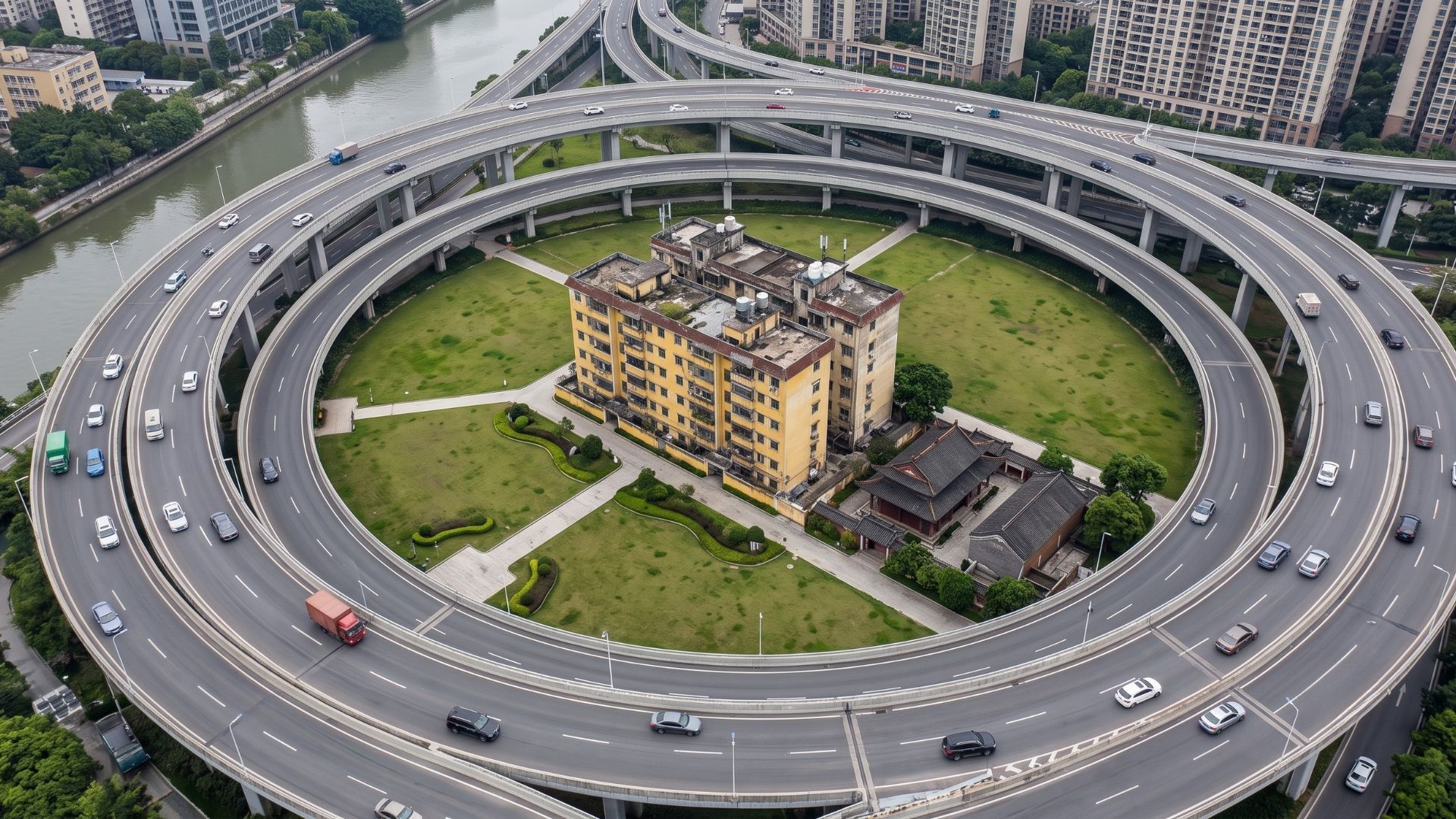
Chinese Residential Building Surrounded by Circular Overpass After Residents Reject Compensation
-
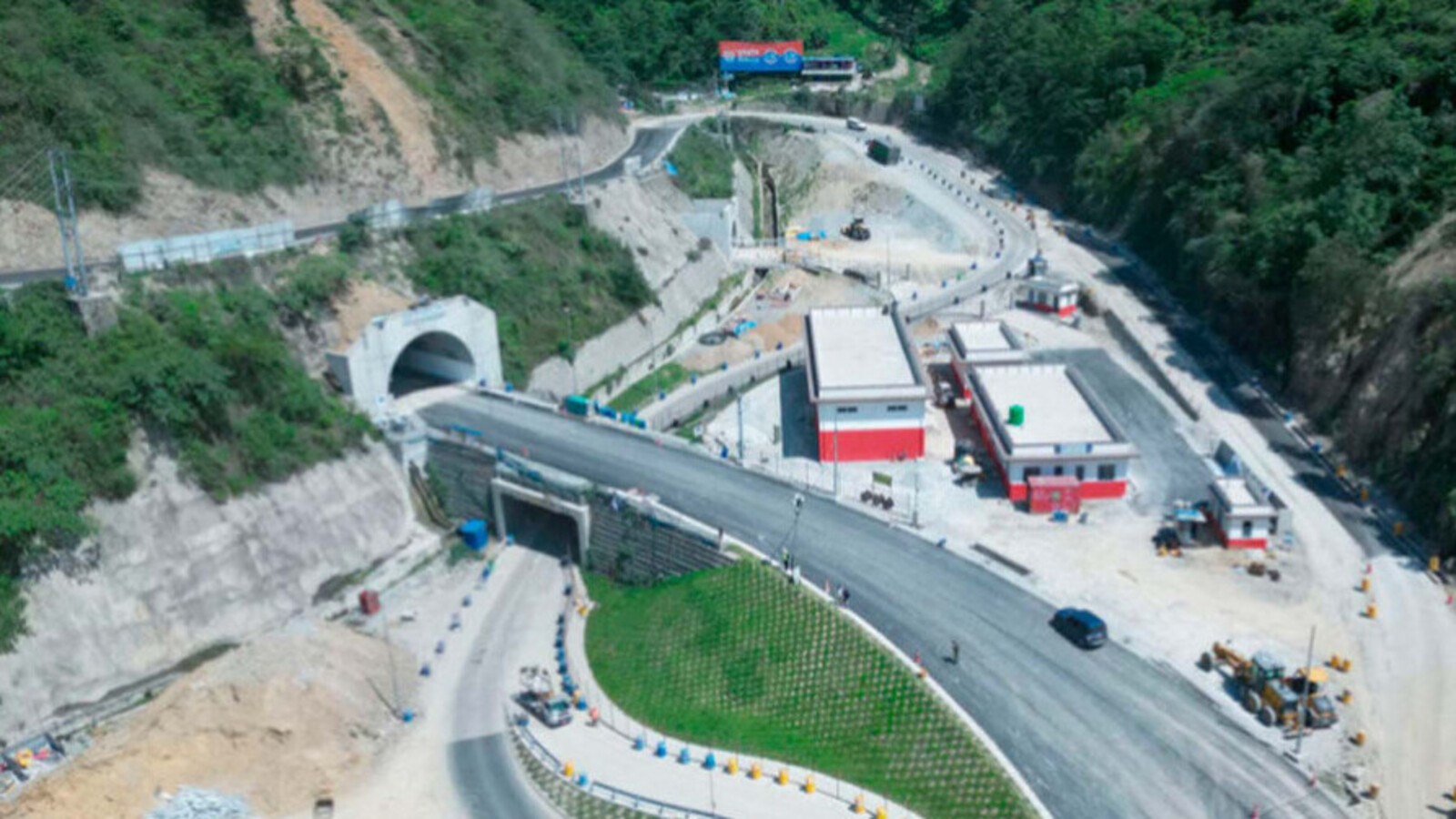
After 79 Months and $145 Million Investment, Nepal Set to Open First 2.7 km Road Tunnel to Ease Traffic in Kathmandu Valley


This scale completely changes the interpretation of the land. The space that today symbolizes incarceration and pressure on the prison system is now being considered as a pole of urban attraction, with the potential to concentrate large events, exhibitions, tourist circulation, and new daily uses in a noble area of Florianópolis.
The curious turn is that the site of a prison could become a kind of new cultural hub for the capital

The most unusual aspect of the project is precisely the inversion of its vocation. The area that houses prisons, a custody hospital, and security structures could be converted into a complex for culture, leisure, sports, gastronomy, and tourism, with cafes, restaurants, exhibition spaces, social areas, and a multifunctional agenda integrated with the CIC.
It is this change of meaning that gives strength to the agenda. It is not just about demolishing old walls to erect something new, but about replacing one of the addresses most marked by the prison logic in Florianópolis with a facility designed for public presence, meetings, events, and the circulation of residents and visitors.
The broader context shows that the project is already underway, but not yet fully cleared to proceed
The state government had already been moving in this direction since 2025, when it officially presented the City of Culture proposal after a technical visit by secretaries to the Agronômica Complex. At the time, the State described the project as a complete revitalization of the area, focused on culture, leisure, sports, and tourism. In 2026, the discussion gained new momentum with a public hearing in Alesc and detailed studies on the concession and exploration of the area for up to 35 years.
At the same time, the partial demolition of the old penitentiary had already begun in December 2025, signaling that the reconfiguration of the space is no longer just in the realm of ideas. Even so, the physical progress of the project does not resolve the main operational bottleneck, which continues to be the transfer of prisoners to other units.
Why this transformation could change the perception of Florianópolis’ expanded downtown area
Few projects in Florianópolis simultaneously combine strategic location, territorial scale, and symbolic weight like this one. Agronômica occupies a central, valuable area surrounded by important public facilities. If the conversion truly materializes, the capital could gain a new axis of urban, cultural, and tourist revitalization with the power to reconfigure the use of a region currently marked by walls, surveillance, and access limitations.
The change also affects the city’s image. Instead of maintaining an old prison structure, described by the State itself as inadequate for contemporary security demands and penal architecture, Florianópolis would project a showcase of public use and creative economy on that same land.
What still needs to be confirmed before the City of Culture ceases to be a promise
Despite the project’s appeal, there is still no way to set a final timeline for its delivery. The State admits that the total deactivation of the unit depends on the opening of new vacancies in the prison system and that the detailed schedule can only be presented when this condition progresses. The current horizon remains gradual, between 2027 and 2028, precisely because the removal of inmates still faces operational obstacles.
It also remains to be seen how the market will react to the concession model and what definitive design will be chosen for the theater, museums, social spaces, and other planned facilities. The project is already large enough to attract attention, but it still depends on technical, prison, and economic ties to move from the narrative of transformation and fully enter the execution phase.
Ultimately, what makes this story so powerful is the coexistence of two completely different times on the same land. On one side, an still active penitentiary, with 2,600 inmates and no fixed date for total emptying. On the other, the promise of a 173,000 m² mega-complex with a monumental theater, tourism, culture, and open urban life. The City of Culture already exists as a vision of the future, but its real turning point still depends on something far less symbolic and much more concrete: space in the prison system for the prison to finally leave the map of Agronômica.