Portuguese
  Spanish


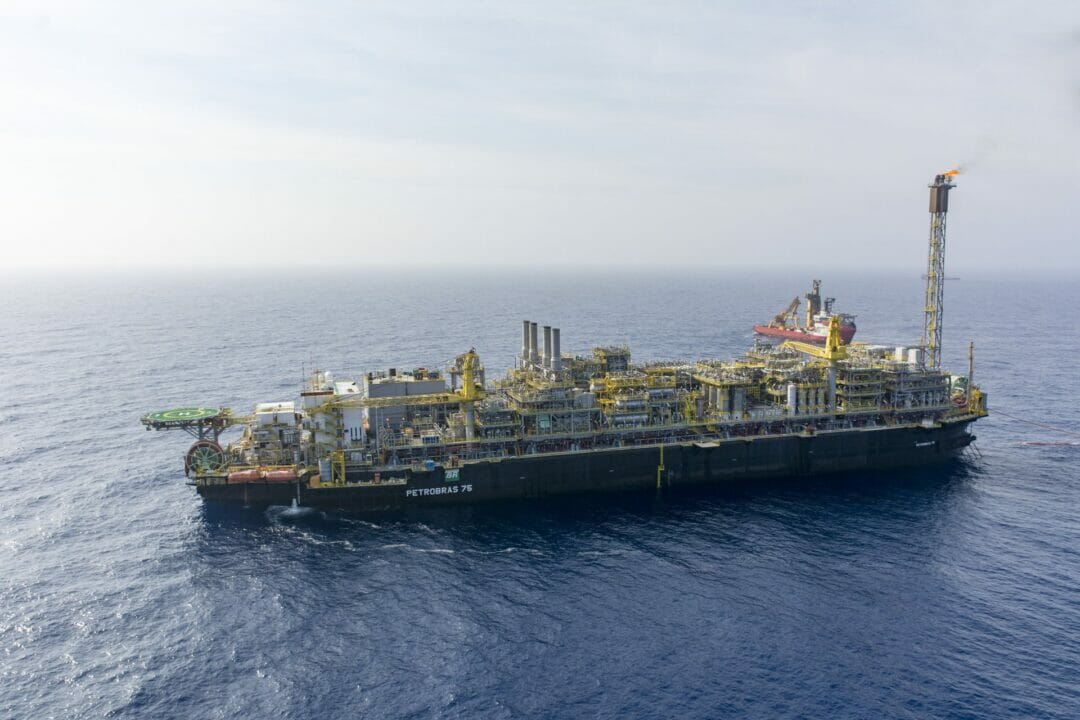

Petrobras’ Strategy to Advance in the Pre-Salt Takes a New Direction with Decarbonization Measures, Achieving Significant Milestones in Fields like Búzios and Tupi.
In a press release today (06), Petrobras reported that it has been making progressive advances in the decarbonization of its operations in the pre-salt. In 2022, the company achieved emissions below the global average in the fields of Búzios and Tupi, in the Santos Basin, which represent about 51% of Petrobras’ production.
The carbon efficiency of oil and gas production by Petrobras in the pre-salt is due to a portfolio of projects focused on operational excellence and, consequently, on reducing greenhouse gas emissions. These projects, which incorporate state-of-the-art technologies, have achieved efficiency in energy generation on platforms, resulting in reduced fuel gas consumption and associated emissions. The initiatives aimed at reducing flaring, controlled venting, and leaks (fugitive emissions) are also significant.
Another important project that reduces emission intensity in oil and gas production in the pre-salt is the carbon capture, utilization, and geological storage technology (CCUS). This solution, developed by Petrobras, which links CCUS to enhanced oil recovery (CCUS-EOR), has been essential to enable production from the fields in the pre-salt of the Santos Basin.
-
OPEC+ Boosts Oil Supply by 188,000 Barrels per Day in July 2026, Leading to Price Drop from $112 to $89 per Barrel in Under Two Months

-
TotalEnergies Signs 20-Year Deal to Purchase 2 Million Tons of LNG from Alaska, Boosting Project Viability
-
Turkey Deploys Çağrı Bey Drilling Ship to Explore New Oil Frontier Off Somalia’s Coast
-
Golden Pass LNG Ships First Liquefied Gas Cargo from the U.S., Completing $10 Billion QatarEnergy and ExxonMobil Investment




CCUS in the Pre-Salt: Largest in the World in Annual CO2 Re-injection Capacity
Petrobras’ CCUS in the pre-salt has gained momentum and has become the largest in the world in annual CO₂ re-injection capacity. Last year, Petrobras set a world record by reinjecting 10.6 million tons of CO₂ into the pre-salt reservoirs, equivalent to 25% of the total reinjected by the global industry in 2022, according to the Global CCS Institute. The cumulative reinjected volume, since Petrobras began operating this technology in 2008, reached 40.8 million tons.
By reinjecting gas into the reservoir, the efficiency of production increases and the intensity of GHG emissions, measured in emissions per barrel produced, decreases. The goal is to pursue a low-cost, low-carbon operation, ensuring the project’s competitiveness. Currently, the 23 platforms operating in the pre-salt fields are equipped with CCUS.
Petrobras’ Pioneering Efforts Recognized Internationally
The pioneering nature of Petrobras’ CCUS project in the pre-salt was recognized by the global organization “Carbon Sequestration Leadership Forum” (CSLF) in June of this year. It was the first time a Latin American company received this award, highlighting the significance of Petrobras’ CCUS project for the global industry and demonstrating its safety in geological CO₂ storage. In Brazil, Petrobras’ CCUS project received the Firjan Sustainability Award in 2020 in the Climate Change and Energy Efficiency category.
Petrobras’ intention is to leverage all this experience and knowledge with CCUS to develop new opportunities in the energy transition environment, contributing to reduce emissions not only from the company but from the country as a whole.