Portuguese
  Spanish


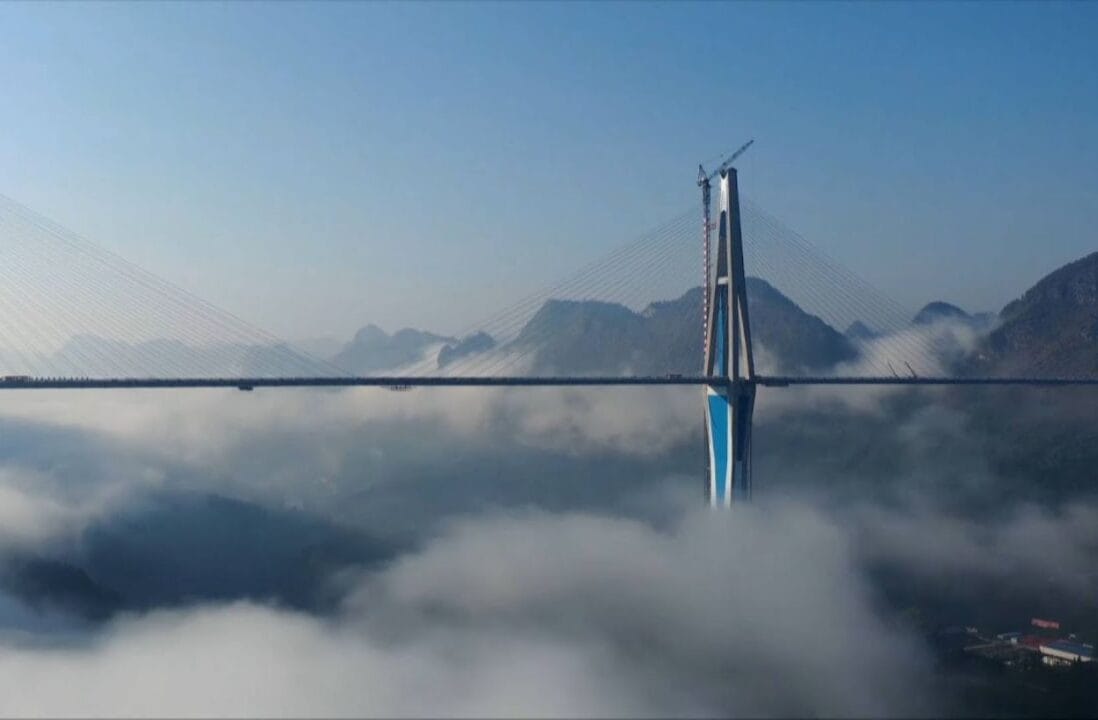

The Pingtang Bridge, Raised Over 330 Meters Above One of China’s Main Rivers, in the Province of Guizhou, Redefines the Limits of Civil Engineering and Attracts Eyes From Around the World. Inaugurated in 2019, This Masterpiece Not Only Facilitates Regional Transportation but Also Symbolizes China’s Technological Advancement and Passion for Architectural Greatness.
Located in Pingtang County in China, over 2,100 kilometers from Beijing, the cable-stayed bridge spans 2,135 meters in a region of stunning mountainous landscapes. With a maximum height of 332 meters, Pingtang establishes itself as the third highest bridge in the world, boasting a design that harmonizes technology and aesthetics inspired by local natural and cultural characteristics.
Since its conception, the project has stood out for its innovative solutions, such as the skirt-shaped cable technology, first used in Pingtang and subsequently adopted in other Chinese constructions. Additionally, the bridge is a crucial part of the Guizhou Expressway, which expanded to an impressive 8,331 kilometers by 2022, playing a vital role in the region’s infrastructure development.
The Bridge Made by China Is Not Just Beauty of Engineering


Pingtang has not only significantly improved transportation, reducing travel time and contributing to fuel economy, but it has also boosted local tourism and agriculture. With an investment of 1.5 billion yuan, equivalent to 210 million dollars, this construction reflects China’s commitment to sustainable growth and regional integration.
-
U.S. City Builds Tiny Home Village on Water Company Land to House 136 Homeless People: Inside the Social Housing Units

-
Woman Turns Shipping Container into Home, Embraces Rural Life to Cut Monthly Expenses to Just Over $330
-
France Revamps 530 Social Housing Units with Large Balconies and Glass Facades Without Demolishing Existing Buildings

-
Facing high rent, couple transforms parents’ garage into a fully functional apartment, creating a complete home at a fraction of the market cost.




Awarded with international recognitions, including the prestigious Gustav Lindenthal Award, the Pingtang Bridge is a testament to China’s ability to unite form, function, and finances in civil engineering projects that not only shape the landscape but also the lives of people.
How Chinese Engineering Transforms Geographical and Technical Challenges Into an Architectural Masterpiece
What surprised me most was the ability of Chinese engineering to transform geographical and technical challenges into an architectural masterpiece like the Pingtang Bridge. The impressive height of 332 meters, making it one of the highest bridges in the world, and the use of innovative technologies, such as the skirt-shaped cables, are remarkable feats.
The integration of the bridge’s design with the natural landscape and local culture, reflecting the “deep mountains and green waters” and the patterns of ethnic minorities, highlights a unique harmony between infrastructure and environment. This blend of technical innovation, aesthetic sensitivity, and positive social impact in the Guizhou region truly defines the Pingtang Bridge as a landmark in modern engineering.