Portuguese
  Spanish


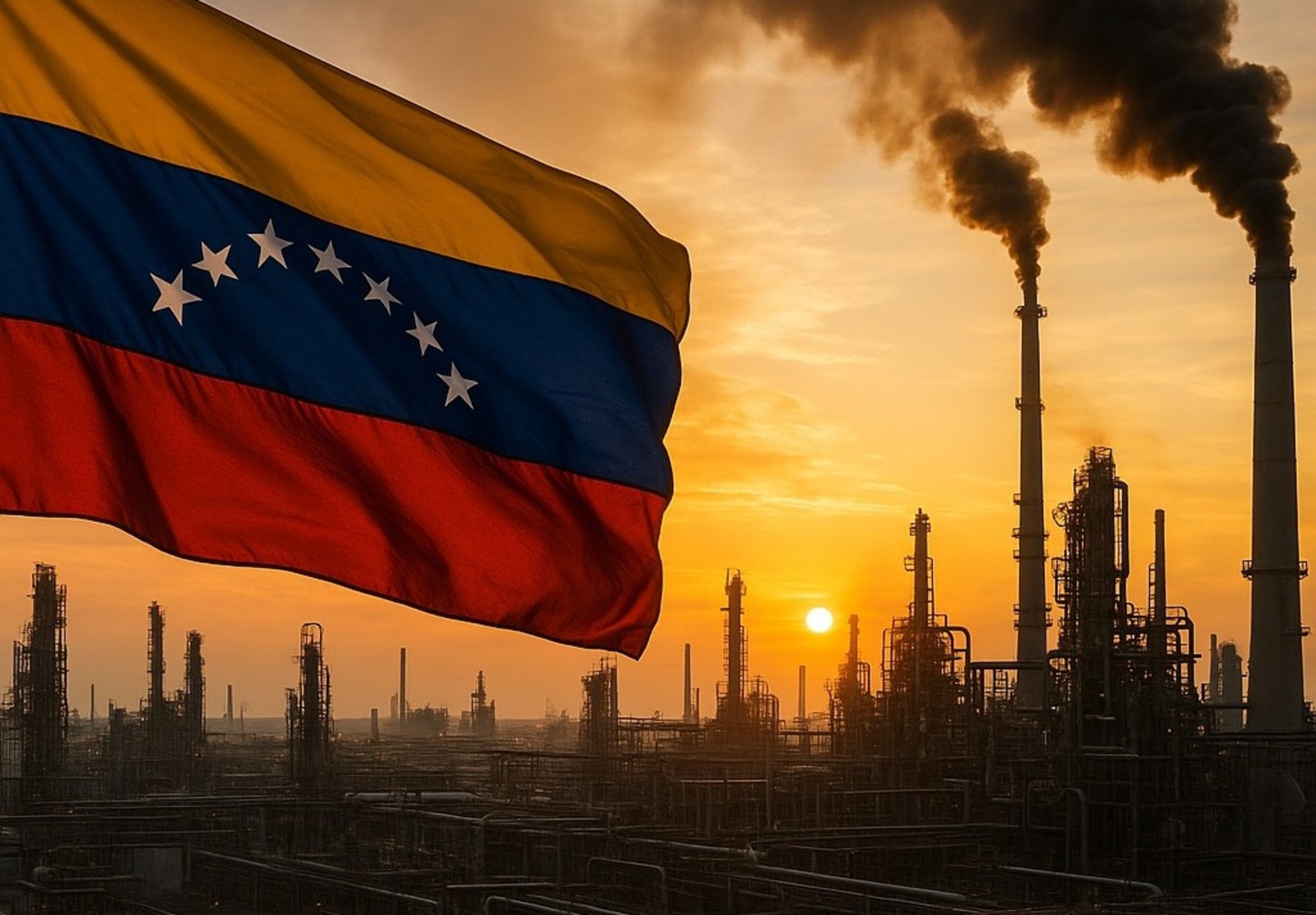


Even with the Orinoco Belt gathering 300 billion barrels, Venezuela produces little, faces technological limitations, and depends on external investments to react
Saudi Arabia is often remembered when talking about oil, as it has held leading positions worldwide for decades. However, Latin America holds extraordinary potential that remains far from the expected performance. Furthermore, its current production is 12 times lower, despite the enormous volume of available resources.
Venezuela is the biggest example of this contradiction. The country is home to the Orinoco Oil Belt, considered one of the largest reserves on the planet.
The state-owned PDVSA reported that the region gathers 300.878 billion barrels, surpassing Saudi Arabia’s 267 billion. This represents at least a 34 billion-barrel difference.
-
Oil Prices Rise as U.S.-Iran Tensions Heighten Concerns Over Global Supply and Energy Market Stability

-
Explosion at QatarEnergy Plant in Ras Laffan Kills 13 and Injures 66; Investigation Rules Out Sabotage

-
Brazil’s Búzios Oil Field Sets Record with 1.2 Million Barrels Per Day, Strengthening Global Leadership in Deepwater Production
-
Petrobras and Equinor Reach Agreement for 50% Stake in Itaimbezinho Block in Brazil’s Pre-Salt Campos Basin


Sharp Decline in Production
The problem appears when looking at daily production. Venezuela produces only 770 thousand barrels per day. At its peak, this number reached 3 million. Therefore, the contrast between potential and reality is evident.
This decline has placed the country in 21st position among the largest producers. Today it lags behind Colombia, Mexico, and Brazil.
Because it relies on heavy oil, Venezuela faces high costs and technological limitations that hinder more robust production.
Additionally, heavy oil requires more expensive processes from extraction to refining. This directly affects competitiveness.
Challenges of Heavy Oil
A report from Global Americans details that heavy oil is difficult to produce, transport, and refine.
Thus, Venezuela must sell it to refineries at much lower prices. This difficulty reduces margins and undermines investments.
Jorge Navarro, vice president of the Spanish Association of Geologists and Petroleum Geophysicists, explained the scenario in an interview with El Economista. According to him, the high viscosity and low gas content make oil recovery underground difficult.
The expert states that unconventional methods become necessary. He mentions steam injection and the use of diluents.
This also requires mixing with lighter oils before transportation, marketing, and refining.
Impacts of Years of Crisis
This set of factors reveals how the Venezuelan oil industry has degraded over the years.
Prolonged neglect, combined with corruption and economic collapse, harmed the operational capacity of refineries and limited any technological advancement.
Consequently, Venezuela cannot leverage the potential of the Orinoco Belt. Therefore, experts argue that the sector needs external support to regain lost efficiency.
Growing International Interest
The United States suspended sanctions related to Venezuelan oil, gas, and gold for six months.
This encouraged foreign companies to look for opportunities in the country. The movement sparked optimism because it reopened doors that had been closed.
The temporary suspension acted as a green light for investors. Still, Washington continues to use sanctions as a way to pressure Nicolás Maduro’s government.
In this scenario, companies from other countries can request individual licenses to operate in the sector.
An Uncertain Future, but with the Possibility of Advancement
This process indicates that there is a real chance of recovery, although the path is long. The opening for investments represents hope to modernize outdated structures and regain some of the lost potential.
Even so, many challenges remain. The country is trying to regain stability, but recovery depends on profound changes.
Uncertainty increased after the 2024 presidential elections, making the future of the Orinoco Oil Belt even more unpredictable.
For now, it remains to be seen if international interest will translate into concrete results for the Venezuelan industry.
With information from Xataka.