
Nigerian company repurposes electronic waste to manufacture solar lanterns and home energy systems for communities without reliable access to electricity.
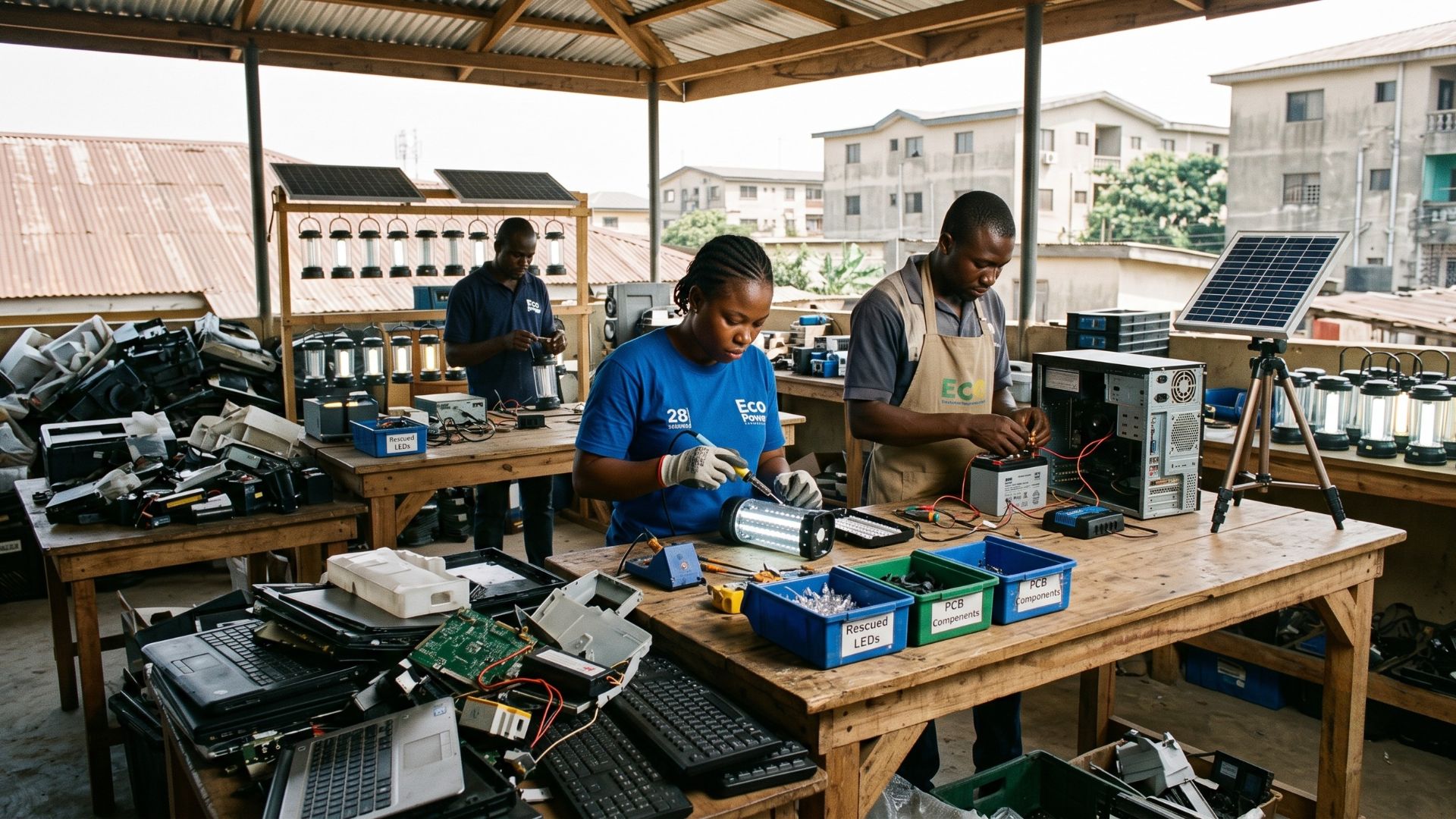
In a workshop located in Lagos, Nigeria, discarded electronic equipment is gaining a second life. Batteries removed from old laptops, parts from unusable computers, and glass recovered from broken televisions are now part of solar lanterns created to serve communities that experience daily blackouts and low electrical coverage. The initiative is by the startup QuadLoop, a clean technology company founded by Nigerian entrepreneur Dozie Igweilo, who decided to transform one of the continent’s biggest environmental problems into an alternative energy source for homes, small businesses, and rural areas far from conventional distribution networks.
Solar lanterns use up to 70% of materials from electronic waste
According to information released by QuadLoop itself, approximately 70% of the components used in their solar lanterns are sourced from repurposed electronic waste.
The strategy is part of a policy adopted by the company called “zero mining”, aimed at reducing the need for extracting new raw materials.
-
Young Innovators from Brazil Develop BioLuz: Generating Electricity from Plant Roots and Soil Microorganisms Using PET Bottles, Copper, and Zinc

-
Compact and Retro: Transparent Pocket Camera Weighs 65 Grams, Records in 4 Formats, and Costs 199 Yuan
-
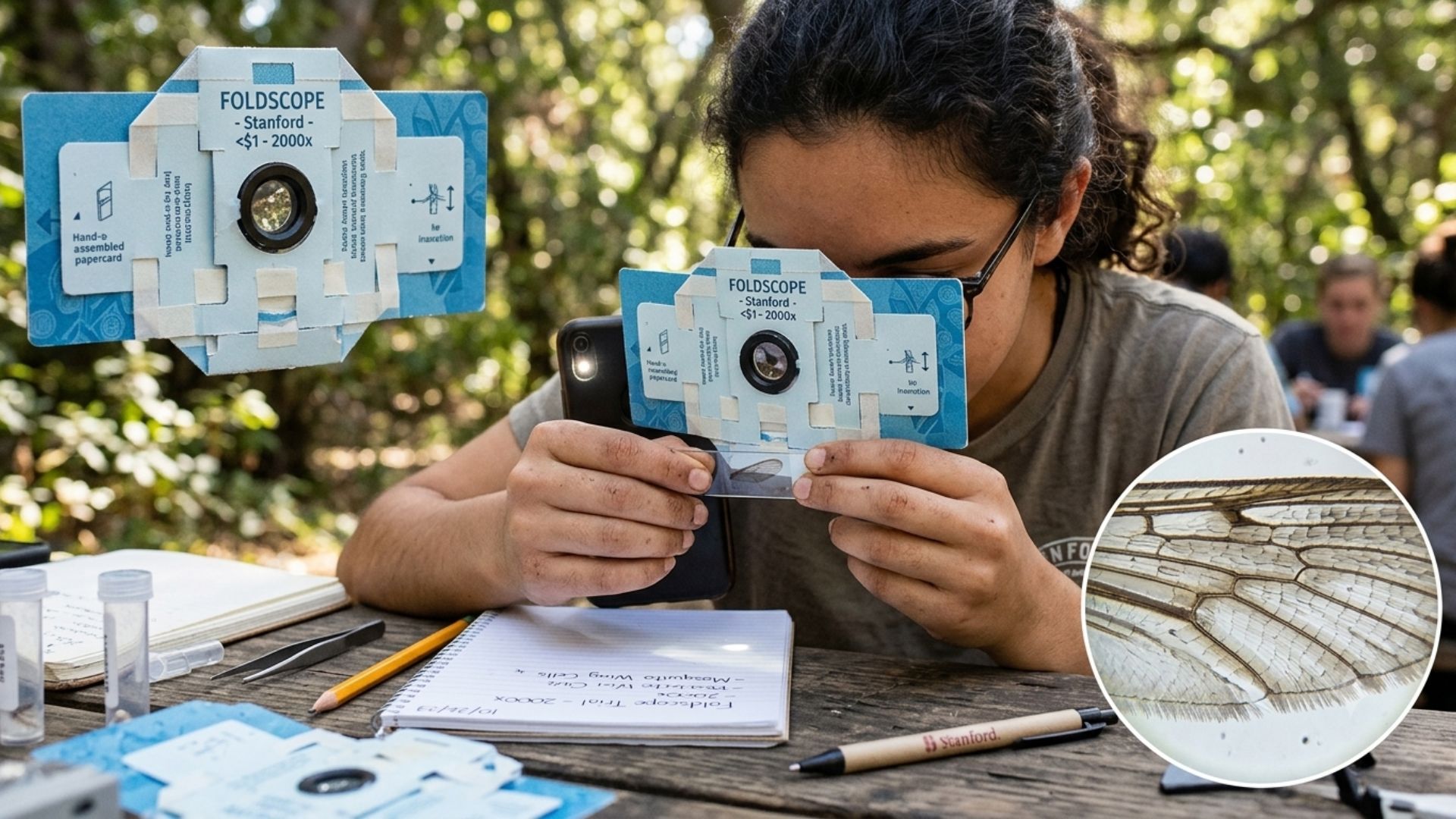
Bioengineer Develops Microscope That Magnifies Objects Up to 2,000 Times Using Just a Folded Sheet of Paper, a Tiny Lens, and Less Than $1, Bringing Lab Science Anywhere for Less Than the Cost of a Candy

-
Dog Walker in English Forest Uncovers 3,400-Year-Old Bronze Age Axe





Among the recovered materials are lithium-ion battery cells removed from discarded laptops, wires, screws, electronic components, and structures made with glass from old television screens and computer monitors.
The company’s main product line is the portable lantern called Ìdùnnú, a word that means “joy” in the Yoruba language, spoken by millions of people in West Africa. According to QuadLoop, the equipment also offers a USB port for charging cell phones and electronic devices.
Company emerged to tackle frequent blackouts and expand energy access in vulnerable communities
Nigeria has been facing electricity supply challenges for decades. Constant outages in the national grid force millions of people to resort to generators powered by fossil fuels, kerosene, and other expensive and polluting solutions.
A report by Reuters states that the lanterns produced by QuadLoop are mainly used by small traders, self-employed workers, and residents who need to keep economic activities running during periods without electricity.
In an interview with Reuters, Dozie Igweilo explained that the company’s goal is to gradually expand the use of recycled components, eventually producing increasingly sustainable and affordable equipment. Currently, QuadLoop claims it aims to source about 70% of its materials directly from the electronic waste stream.
Each lantern prevents up to 2.5 kg of electronic waste from ending up in landfills
In addition to providing clean lighting, the company highlights a significant environmental impact. According to data released by QuadLoop, each lantern produced prevents approximately 2.5 kilograms of electronic waste from being disposed of in landfills.
The company also claims that the use of these solutions reduces the reliance on kerosene-powered lanterns, decreasing carbon emissions associated with conventional energy generation.
The World Economic Forum highlights that the reuse of used laptop batteries represents an important alternative to expand energy access in regions where electrification is still limited.
According to the organization, the model developed by QuadLoop allows for the use of materials that would normally be treated only as waste.
Startup started with few units and now bets on home solar energy systems
According to a survey by the Observatoire Europe-Afrique 2030, QuadLoop started its activities in 2016 after months of research on electronic waste reuse. In its first year of operation, the company produced about 40 rechargeable solar lanterns.

In 2020, the startup received a grant of US$ 10,000 from the Nigerian Climate Innovation Centre, allowing it to expand production and increase the share of recycled materials, which rose from approximately 30% to 70% of the components used.
In addition to lanterns, the company is working on the development of solar home systems intended for the operation of fans, residential lighting, and small electronic devices in areas without reliable access to the power grid.
What was considered scrap now helps illuminate entire communities
Old computers, broken televisions, and discarded batteries typically represent a growing environmental challenge in various parts of the planet.
In Nigeria, however, part of this material has come to be seen as raw material for a new clean energy industry.
QuadLoop’s proposal demonstrates how relatively simple technologies can transform highly polluting waste into equipment capable of providing lighting, cell phone charging, and energy autonomy to regions that still experience frequent blackouts and limited infrastructure.