






 Portuguese
  Spanish
  4 min of reading
  0 comments


Electric Bandage Created in Switzerland Promises to Heal Wounds Up to 4 Times Faster, Without Drugs and Without Scars, Launching a New Era of Regenerative Medicine.
Swiss researchers have developed a technology that could redefine regenerative medicine: an electric bandage capable of dramatically accelerating wound healing. Unlike traditional methods that rely on medications, antibiotics, and lengthy treatments, the new device uses low-intensity electric currents to stimulate cellular regeneration.
The principle is not new: for decades, studies have shown that electricity can act as a biological catalyst, reorganizing cells and stimulating tissues to close more quickly. The Swiss innovation was to transform this concept into a practical, portable, and disposable bandage, which can be applied directly to the skin.
The Power of Bioelectricity in the Human Body
Our body naturally generates electric impulses. When an injury occurs, small bioelectric currents guide cells to the wound site, initiating the repair process.
-
Europe unveils armored tank with remote turret, 1,500 horsepower, and 120-millimeter cannon

-
Old hard drives may hide neodymium, dysprosium, praseodymium, and terbium, and a United States company is expanding its network with a new 93,000-square-foot facility to recover rare earths used in electric cars, artificial intelligence, defense, and renewable energy.

-
Giant crane lifts up to 3,000 tons, requires special logistics to reach the site, and can transform 18-hour operations into just 3 hours, speeding up the hoisting of oil platforms, refineries, and plants in giant industrial projects.

-
A discarded microwave may contain 22-carat gold in internal components; study recovered a 450 mg nugget from electronic boards.


The Swiss bandage enhances this phenomenon, creating a controlled electric field that accelerates cell migration and favors the formation of new tissues.
“We tested the bandages on diabetic mice, which are a commonly used model for human wound healing,” says Maggie Jakus, co-author of the study and graduate student at Columbia.
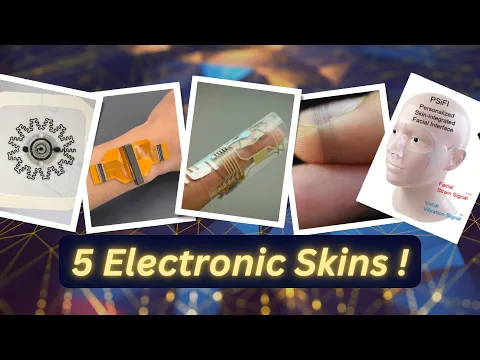

Experimental tests showed impressive results: wounds that would take almost two weeks to heal closed in just a few days when treated with the electric bandage.
In some cases, the healing time was reduced by up to four times. More than accelerating closure, the method also reduced scar formation, indicating a cleaner and more aesthetic healing process.
No Drugs, Focused on Regeneration
One of the most revolutionary aspects of the technology is the elimination of medications from the process. Instead of relying on topical antibiotics or healing ointments, the bandage acts as a biological stimulator.
This paves the way for safer treatments, avoiding adverse reactions, allergies, or bacterial resistance that have been concerning the medical community worldwide.
Moreover, the device is simple to use. Just apply it to the injured skin, and the moisture-activated electrodes begin to release controlled electrical impulses. There is no pain or discomfort, as the current is low intensity. The study was published in the journal Science.
Impact on Chronic Wounds and Burns
If the results are confirmed on a larger scale, the greatest impact may be seen in patients with chronic wounds, such as diabetics, bedridden individuals, or the elderly, who suffer from hard-to-heal ulcers. In such situations, delayed closure increases the risk of infection, amputations, and even death.
The electric bandage could offer a faster, safer, and cheaper solution, alleviating pressures on hospitals and reducing costs for healthcare systems. Additionally, patients with severe burns or deep cuts could also benefit from quicker and less traumatic recovery.
An Advancement That Challenges the Pharmaceutical Industry
The arrival of a technology that promises to heal wounds without the use of ointments or antibiotics raises a delicate question: how will this affect the pharmaceutical industry?
Healing products generate billions every year, and the global adoption of an electric bandage could displace entire markets.
For specialists, this revolution does not mean the end of topical medications, but a transformation in how they are used. In many cases, the electric bandage could be the primary treatment, with pharmaceuticals serving only as a complement.
The Future of Healing Without Scars
One of the most impressive results observed in tests was the significant reduction of scars. By stimulating orderly cellular growth, the bandage promotes more uniform regeneration, minimizing marks on the skin tissue. This opens new possibilities not only for medical treatment but also for areas such as aesthetics and plastic surgery.
Imagine a technology capable of reducing recovery time after surgery while simultaneously leaving fewer marks.
The impact would be transformative, both in terms of quality of life and self-esteem for millions of patients.
From Research to Clinical Use
The challenge now is to expand human testing, regulate clinical use, and prepare the market for large-scale production.
Because it is a relatively simple and low-cost device, experts believe it could be available in hospitals and clinics in the coming years.
If laboratory results are confirmed in medical practice, we are looking at one of the greatest advancements in regenerative medicine in recent times — a technological solution that combines efficiency, speed, and accessibility.
The Silent Revolution of Electricity on the Skin
The electric bandage developed in Switzerland is more than a medical innovation. It represents a paradigm shift: using bioelectricity as an ally of the human body, accelerating healing naturally, without dependence on medications, and with superior aesthetic results.
In a world where chronic wounds affect millions and overburden healthcare systems, the promise of healing four times faster, without pain and without scars, sounds almost like science fiction. But it is real — and it may soon transform the way humanity deals with its own regeneration.





-

-

-

-

-

14 people reacted to this.