Portuguese
  Spanish


At The Heart Of The Kennedy Space Center, A Huge Metal Structure Lifts Skyscraper-Sized Rockets With Millimeter Precision. Meet The VAB, NASA’s Launch Tower That Is An Aerospace Engineering Landmark And Supports Up To 7 Thousand Tons In The Air.
The Vehicle Assembly Building (VAB) is one of NASA’s most iconic launch towers. Located at the Kennedy Space Center in Florida, it was built in the 1960s to support the Apollo program, which was responsible for sending humans to the Moon. Its primary purpose is to assemble, vertically, the gigantic rockets that comprise American space missions. With a height of 160 meters and an internal volume of 3.6 million cubic meters, the VAB is one of the largest enclosed buildings on the planet that has changed aerospace engineering. Inside, rockets with multiple stages are assembled — such as the former Saturn V, the Space Shuttle, and currently, the brand new SLS (Space Launch System) from the Artemis mission.
More than just a warehouse, the VAB is a precision engineering launch tower, where each stage of assembly requires specialized equipment, giant cranes, and alignment systems with an error margin of less than millimeters.
Structure And Capacity: How The VAB Supports 7,000 Tons In The Air
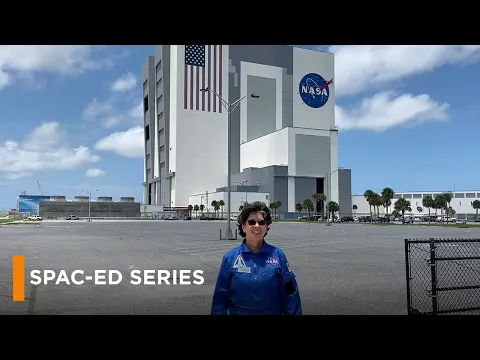

The Vehicle Assembly Building consists of:
-
From Above, This Italian Fortress City Resembles a Giant Star: Discover Palmanova, a UNESCO World Heritage Site Renowned for Its Architecture and Perfect Symmetry

-
AI-generated fake doctors deceive elderly in Brazil, health videos go viral with nearly 300,000 views, turning disease fear into a global audience and money machine.

-
Teenage Boy’s Soap Business Survives Wars and Centuries, Becoming Global Giant

-
Without a Road to School, Brazilian Vendor Carves 8 km Mountain Path Alone After Watching Children Struggle




- Four Vertical Assembly Bays, with a height of 160 meters;
- 88 Thousand Tons Of Structural Steel, designed to withstand hurricane winds and monumental loads;
- Two Bridge Cranes, capable of lifting Entire Rockets Of Up To 7,000 Tons;
- A Climate Control System With 10,000 Tons Of Cooling, which prevents condensation on sensitive components;
- Vertical Gates With 139 Meters In Height, the largest in the world, through which rockets exit towards the platform.
The structure is capable of suspending complete spacecraft, with all their stages, engines, tanks, and control systems — including payloads and crewed capsules — for long periods.
Why Does NASA Assemble Rockets Vertically?
A Aerospace Engineering Requires That Rockets Be Assembled Vertically For Several Reasons:
Simulation Of Launch Position: All forces of compression, gravity, and vibration must be tested exactly as they will occur during flight.
Alignment Of Systems: Sensors, propellants, and navigation instruments need to be calibrated to operate based on a vertical axis.
Space Economy: Stacking components vertically occupies less area and facilitates transport to the launch platform.
Modular Assembly: Allows for stages of the rocket to be connected from top to bottom, linking electrical and hydraulic systems more securely.
In the VAB, this assembly occurs with Millimeter Support, using lasers and computer sensors that guide the placement of the pieces, one by one, until the rocket is complete.
History Of NASA’s Launch Tower: From The 60s To The Artemis Mission
The Vehicle Assembly Building was designed in 1963 by the firm Morrison-Knudsen, under the direct supervision of NASA. In just three years, it was ready to house the colossus Saturn V, the 110-meter tall rocket that took Neil Armstrong to the Moon.
Over the decades, the VAB has undergone adaptations to:
- Receive The Space Shuttle Program In The 1980s And 1990s;
- Serve As An Integration Point For Satellites And Robotic Probes;
- And More Recently, For The Artemis Program, Which Aims To Return To The Moon With Updated Technology And, In The Future, Send Humans To Mars.
The SLS (Space Launch System), which will be used in Artemis, is currently the largest rocket in operation, with over 98 meters in height and 2,600 tons just at launch. Its assembly and verification occur entirely inside the VAB.
The Aerospace Engineering Behind A 160-Meter Tower
Constructing a structure like the VAB required a series of innovative technical solutions:
- Wind Dampening System: The tower withstands hurricanes with winds exceeding 220 km/h;
- Floating Reinforced Concrete Base, To Absorb Vibrations From The Cranes And The Rockets Themselves;
- Ventilation System That Renews The Internal Air Every Hour, Essential To Protect Electronic Components;
- Automated Bridge Cranes, With Sensors That Detect Misalignments And Vibrations In Real Time.
Additionally, the logistics of transporting parts — such as the RS-25 engines, the liquid fuel tanks, and side boosters — require extreme precision and 24-hour monitoring by engineers, electricians, and ground control technicians.
From The VAB To The Launch Platform: The Path Over The Crawler Transporter
Once assembled, the rocket is not launched right there in the VAB. It is transported to the Platform 39B by another engineering marvel: the Crawler Transporter, a giant “truck” on tracks that carries the rockets vertically for 6.4 km to the launch area.
The transport process takes Between 6 And 8 Hours, at a maximum speed of 1.6 km/h, and requires millimetric adjustments throughout the journey. Everything is monitored by mobile stations and engineers on the vehicle itself.
During this movement, the mobile tower (MLP – Mobile Launcher Platform), which supports the rocket since its assembly in the VAB, remains attached to the base of the launcher until ignition.
How Many Rockets Have Been Assembled In The VAB?
Since 1967, more than 160 Launches Have Departed From Rockets Assembled In The VAB, including:
- 13 Apollo Missions;
- 135 Flights From The Space Shuttle Program;
- Various Test Missions And Commercial Launches;
- And The Recent Launches Of Artemis I, And The Tests Of The SLS.
The structure has also been adapted to accommodate private companies that operate in partnership with NASA, such as Boeing and Lockheed Martin, in the development of reusable vehicles and orbital payloads.
Launch Tower Or Vertical Factory? The VAB Is Both
Although it is called a launch tower, the VAB functions, in practice, as a Vertical Rocket Production Line. Within it, each mission has a detailed assembly flow:
- Arrival Of Rocket Stages;
- Installation Of Engines And Tanks;
- Coupling Of The Capsule Or Payload;
- Hydraulic, Electrical, And Structural Testing;
- Preparation For Transport To The Platform.
This process can take weeks or even months, depending on the complexity of the mission. Everything occurs under strict protocols of safety, redundancy, and environmental control.
The Tower Of The Future: The VAB Adapted For The 21st Century
To meet the demands of the Artemis missions and future missions to Mars, the VAB has undergone modernizations:
- Replacement Of Old Cranes With Automated Systems;
- Upgrading Of Electrical Networks And Data Connections;
- Installation Of Artificial Intelligence Sensors To Predict Structural Failures;
- And Expansion Of Climate Control Systems To Handle New Fuels, Such As Liquid Hydrogen.
With these updates, NASA hopes to keep the VAB operating for Another 40 Years, As A Central Point Of U.S. Aerospace Logistics.
The NASA launch tower at the Kennedy Space Center is not just a steel and concrete structure: it is one of the greatest symbols of modern aerospace engineering. The VAB supports skyscraper-sized rockets, withstands tropical storms, and operates with error margins of less than 1 mm — all in the name of exploring the universe.
In times of returning to the Moon and plans for Mars, the VAB remains the starting point for humanity’s greatest adventures in space. A silent yet monumental tower that holds within its steel walls the glorious past and uncertain future of our presence beyond Earth.