






 Portuguese
  Spanish


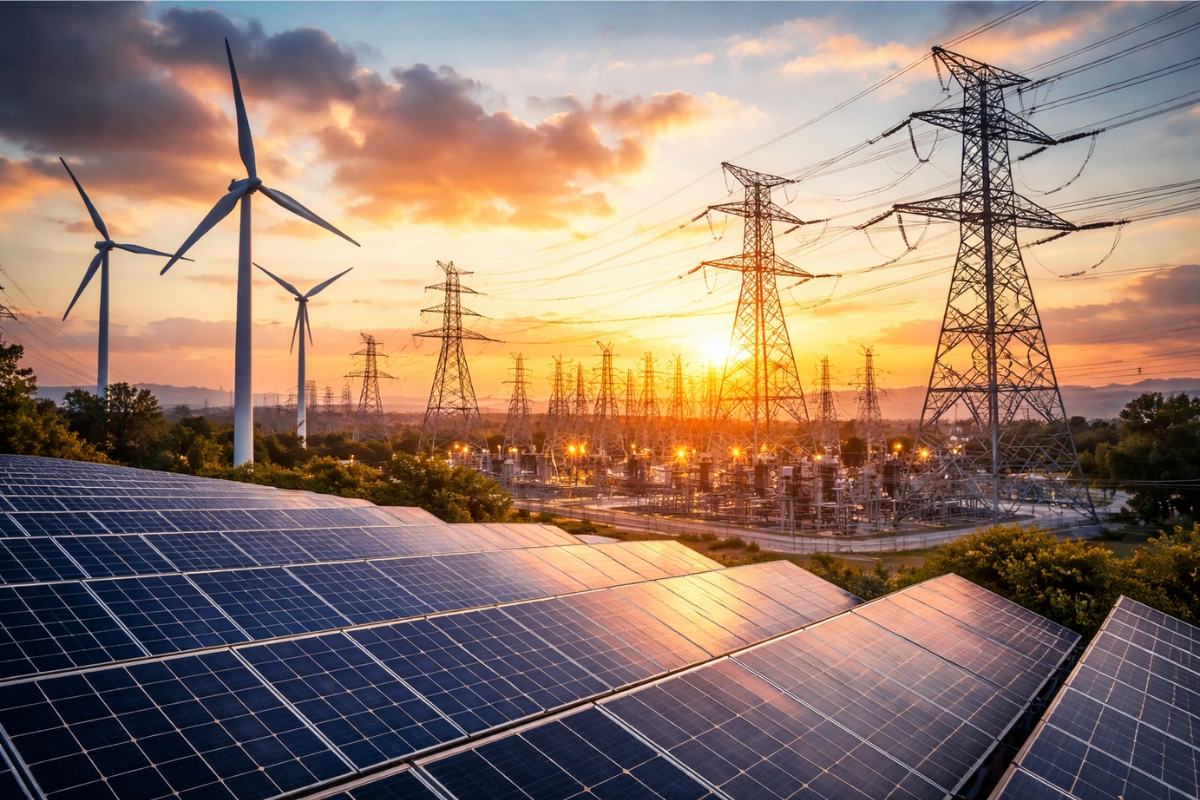


Bottlenecks in Global Power Grids Stifle Over 2,500 GW of Clean Energy Projects and Increase Renewable Generation Wastage. Find Out What the New IEA Report Says.
The world is racing to replace fossil fuels with clean sources, such as solar and wind. However, this race has hit a giant invisible obstacle: infrastructure. According to the new report Electricity 2026 from the International Energy Agency (IEA), the current state of global power grids has become the main challenge for the energy transition.
Currently, there are over 2,500 gigawatts (GW) in energy projects waiting for connection around the planet. To put this in perspective, this is enough energy to power entire continents, but it is “stuck in line.” There are solar farms, wind farms, battery parks, and even new data centers ready to operate, but they cannot because there are not enough cables and transmission towers to deliver this electricity to consumers.
Why Are Power Grid Bottlenecks Stalling the Future?
One of the terms that worries experts the most is curtailment — which is nothing more than the forced reduction of power generation. When the day is very sunny or excessively windy, plants produce as much as they can. If the power grids cannot handle that volume or have no place to send the excess, operators are forced to “shut down” renewable plants to avoid overloading the system.
-
Pennsylvania Mine Creates Ice in Summer Heat and Melts in Winter, Turning a Mountain Crevice into a Reverse Natural Refrigerator

-
China Accelerates Global Expansion of Robotics: From Smart Vacuums to Industrial and Humanoid Machines, Millions Exported to Over 150 Markets
-
Polar Air Mass to Hit Brazil: Temperatures to Plummet in Nine States, Near Freezing in the South with Frost Risk Until Monday
-
Chinese “dark factories” produce electric cars 24/7 with minimal human intervention, as Zeekr assembles 800 units daily, raising concerns in Brazil.




In 2024, Chile had to discard 15% of its solar and wind production for this reason. In the United Kingdom and China, curtailments also increased. This creates an ironic and dangerous effect: when clean energy is curtailed due to lack of space on the grid, coal or gas plants often need to remain online to ensure system security, which increases pollution.

Investment and Technology: The Way Out for Power Grid Bottlenecks
The IEA warns that it is not enough to build more plants; it is necessary to modernize the path that energy takes. It is estimated that annual investments in power grids need to soar from US$ 400 billion to US$ 600 billion by 2030.
But the solution is not just about erecting more poles. The report points out that the use of smart technologies and new types of contracts can help unlock the system:
- Advanced Controls: Sensors that allow cables to carry more energy when temperature conditions are favorable.
- Flexible Connections: Agreements where companies agree to reduce their generation during peak times in exchange for much faster and cheaper connections.
- Batteries: Installing storage systems to hold excess solar and wind energy and use it during times when the grid is less occupied.

Demand Growth Doesn’t Wait
While power grids try to adapt, global electricity consumption continues to rise rapidly. The increase is driven by air conditioning usage (due to extreme heat), the popularity of electric vehicles, and the explosive growth of Artificial Intelligence, which requires data centers operating 24/7.
If there is not an urgent reform of the infrastructure, we risk having a world with cutting-edge technology and clean energy available, but without “electric roads” to transport it. The challenge from 2026 onward will be to ensure that the planet’s wiring keeps pace with our climate and digital ambitions through more modern and resilient power grids.






