






 Portuguese
  Spanish
  3 min of reading
  0 comments


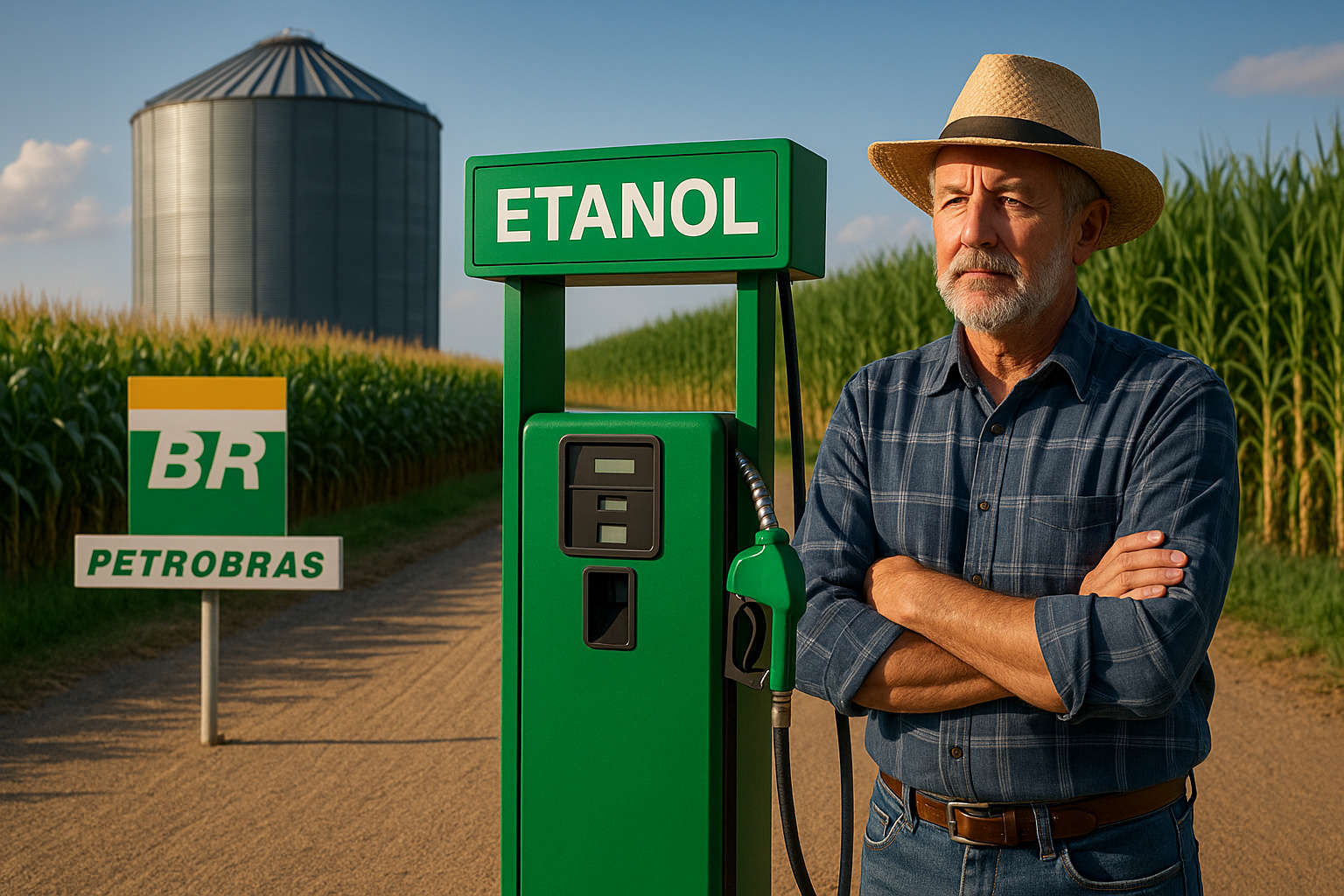
Brazil Is Known As The Country Of Sugarcane Since The 16th Century, But A Silent Turn Is Happening: Corn Ethanol Now Answers The National Market And Grows At An Impressive Pace
While sugarcane ethanol production has remained virtually stable for a decade, corn is advancing at an average rate of 33% per year since 2020. And Petrobras is keeping an eye on this movement.
The company that produces the most ethanol in Brazil uses what raw material? The correct answer is not sugarcane, but corn. In 2024, Inpasa produced 3.7 billion liters of ethanol, surpassing Raízen, which registered 3.1 billion.
Inpasa started its journey in Paraguay in 2007 but inaugurated its first Brazilian plant in 2019 in Sinop (MT). The financial results accompany the progress: in 2024, it recorded a net revenue of R$ 13.6 billion, a growth of 23% compared to the previous year. According to Moody’s, its net margin revolves around 18%, suggesting a profit of R$ 2.4 billion.
-
Low-Demand Brazilian Beef Offal Gains Popularity Abroad: Indonesia Purchases $19.5 Million, Boosting Revenue and Reducing Waste

-
Soy Expansion in Former Brazilian Savanna Sparks Water and Land Conflicts in Major Agricultural Frontier
-
Mexican Pest Threatens U.S. Cattle Herds at Historic Lows, Potentially Boosting Brazilian Beef Exports as Burger Prices Soar

-
Avocado Boom for European and U.S. Markets Fuels Water Crisis in Drought-Stricken Chilean Region




Moreover, the owner, José Odvar Lopes, known as “Seu Zé,” diversifies: he acquired a 3% stake in Vibra, the owner of BR gas stations, an investment valued at R$ 800 million.
The company that started in Paraguay now leads ethanol production in Brazil.
FS: The Force Competing With Sugarcane
The first company 100% dedicated to corn ethanol in Brazil was FS, created in 2017 and controlled by the American Summit. The company started with a plant in Lucas do Rio Verde (MT), producing 280 million liters. By 2020, it had already surpassed 1 billion, reaching 2.4 billion in 2024.
In the same year, FS’s revenue jumped 32%, reaching R$ 10.7 billion, with a net profit of R$ 937 million. Today, it is the third largest ethanol producer in the country, behind only Inpasa and Raízen.
Inpasa and FS together account for 80% of corn ethanol in Brazil, dominating a market that continues to grow.
Petrobras: Exiting and Possible Return
Petrobras left the ethanol sector in 2018 but now intends to return. President Magda Chambriard stated that it makes no sense to set aside a fuel that competes with gasoline.
The state-owned company is seeking minority partnerships, such as joint ventures, and according to Bloomberg, is negotiating with Inpasa and FS.
The corn, which until recently seemed secondary, may be key to Petrobras’ strategic return to the sector.
Why Does Corn Attract?
Corn ethanol is up to 40% cheaper to produce than sugarcane ethanol. In 2024/2025, the average cost was R$ 1.88 per liter, compared to R$ 2.36 for sugarcane.
This is happening because the area planted with corn has grown 15% since the end of the last decade, and production has increased by 25%. Additionally, international prices have dropped 35% in the last three years.
Another differentiator is the byproducts. The process generates DDG, dry grains rich in protein used in animal feed, and corn oil, intended for biodiesel.
The Symbiosis With Soybean And Corn Safrinha
The advancement of corn ethanol is connected to soybeans. In the Midwest, after the summer soybean harvest, corn safrinha is planted in the fall. This cycle ensures land utilization and a constant supply to the plants.
Today, there are 24 plants dedicated to corn, consuming 15% of national production. One-third returns to the food sector in the form of DDG.
Sugarcane Remains Relevant, But Loses Ground In Growth
Even with the advancement of corn, sugarcane ethanol remains vital. In 2023, the government increased the mandatory blend in gasoline from 27% to 30%, with the possibility of reaching 35%. And 80% of ethanol production still comes from sugarcane.
However, competition with sugar has limited the expansion of sugarcane ethanol. Between 2011 and 2019, the proportion in plants was 44.4% sugar and 55.6% ethanol. From 2020 to 2025, it changed to 48.8% and 51.2%.





Be the first to react!