








The straw bale house shows how sustainable construction can replace common walls with wood, clay, and straw, with thermal comfort, natural finish, and protection against moisture
Without using traditional brick walls, a couple built a straw bale house from scratch and demonstrated that straw can play a different role in construction. Instead of appearing as a fragile or makeshift material, it became part of the walls of a natural dwelling.
The information was published by Happen Films, a documentary producer on sustainability and natural construction. The project was carried out by Adam and Sian, in Victoria, Australia, using wood, straw, and clay as the main materials.
The case draws attention because many people still imagine that a house made with straw cannot have a nice finish or comfort. The construction shows the opposite: with structure, moisture protection, and well-applied plaster, the straw bales help form a sustainable and planned house.
-
A Brazilian city decided to purchase a piece of the Atlantic Forest with more than 153,000 square meters, and owners of preserved areas will be able to submit proposals to transform the forest into a conservation unit.

-
Brazilian siblings aged 11 and 7 read 240 books in just one year and caught attention on social media: while many children spend hours on screens, they turned their family’s routine into an example of reading, discipline, and curiosity.
-
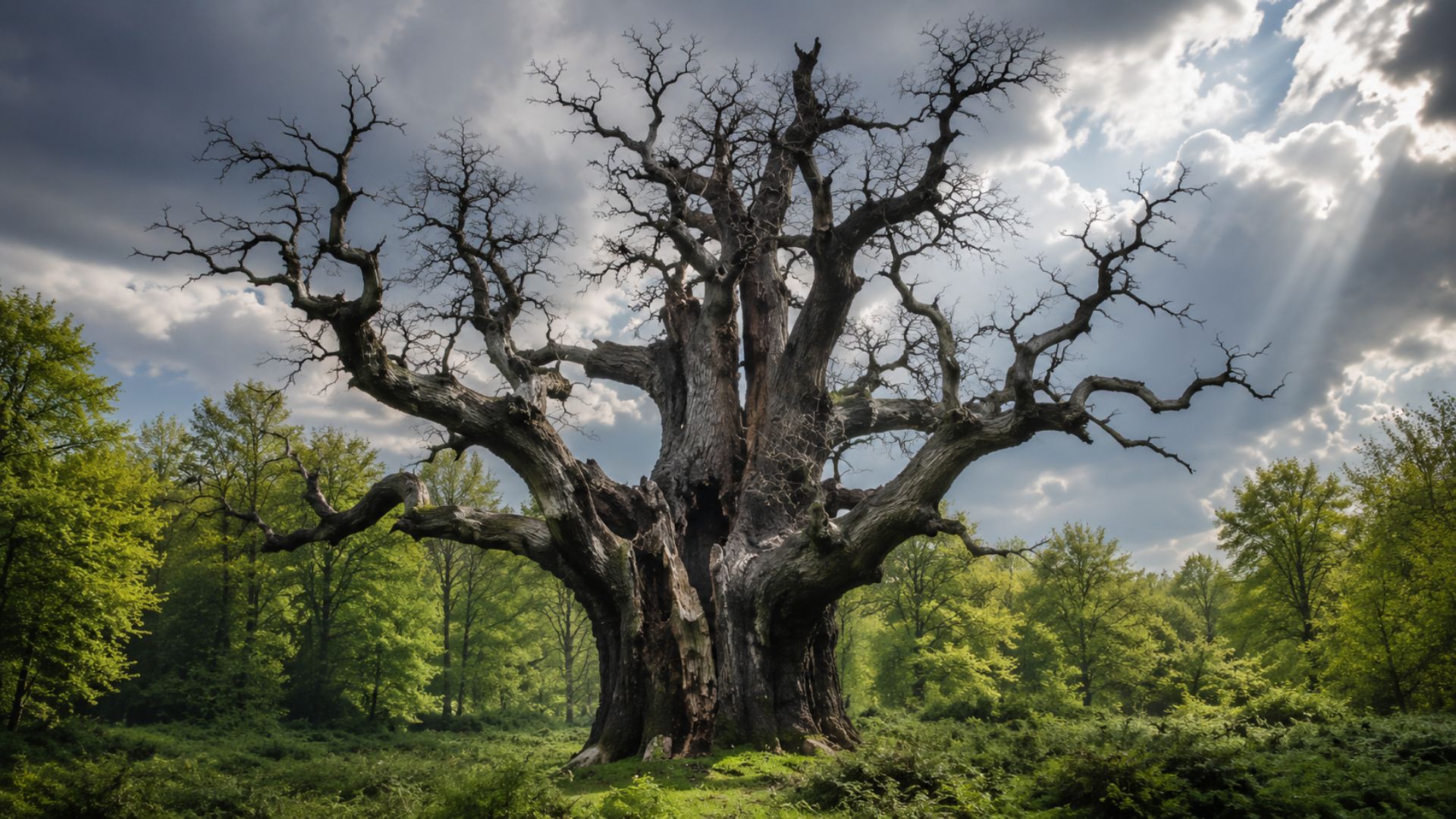
The legendary oak that, according to the story, hid Robin Hood from the Sheriff of Nottingham, died at the impressive age of 1,200 years in England, and the first chilling sign of its end was that no leaves sprouted on the tree this spring.

-
While the world looks at forests, the UN warns that the Earth is also threatened by the silent degradation of natural grasslands and savannas, ecosystems that cover half of the planet, support billions of people, and can exacerbate water, food, and climate crises.

The straw bale house was built with wood, clay, and a natural technique that deviates from the standard
The dwelling was made with a wooden structure, which functions as the skeleton of the house. This part organizes the construction and helps provide firmness to the whole.


The straw bales are used in the walls. They fill the spaces and form a thick layer around the house. For the Brazilian reader, the simplest comparison is to imagine natural blocks fitted within the structure.
The clay appears in the finish. It covers the straw and gives the wall the final appearance of a finished house, without that look of exposed material or unfinished work.
The straw does not work alone, which is why the wooden structure is an essential part of the construction
The straw draws attention, but it does not do everything alone. In a natural house of this type, the wood helps organize the construction and supports important parts of the dwelling.
This prevents a misunderstanding about the technique. It’s not about stacking bales any which way. The construction requires fitting, base, coverage, and finishing so that the walls work well.
When this combination is done carefully, straw ceases to seem like a weak material. It comes to be seen as part of a thick wall, protected and integrated into the rest of the house.
The clay plaster protects the straw bales and changes the final appearance of the house
The clay plaster is one of the most important parts of the construction. It covers the bales and helps protect the wall, as well as providing the finish that transforms the natural material into a habitable dwelling.
This coating also changes the visual perception of the house. Both outside and inside, the wall doesn’t look like a pile of straw. It gains texture, shape, and the appearance of a finished construction.
This point is important because the beauty of the house doesn’t come just from the different material. It comes from the combination of wood, straw, clay, and manual finishing, done with patience throughout the construction.
The care against moisture is the detail that defines whether a straw wall can last well
Moisture is a central concern in any construction with straw. Since straw is a plant material, it needs to be protected from accumulated water and direct rain.
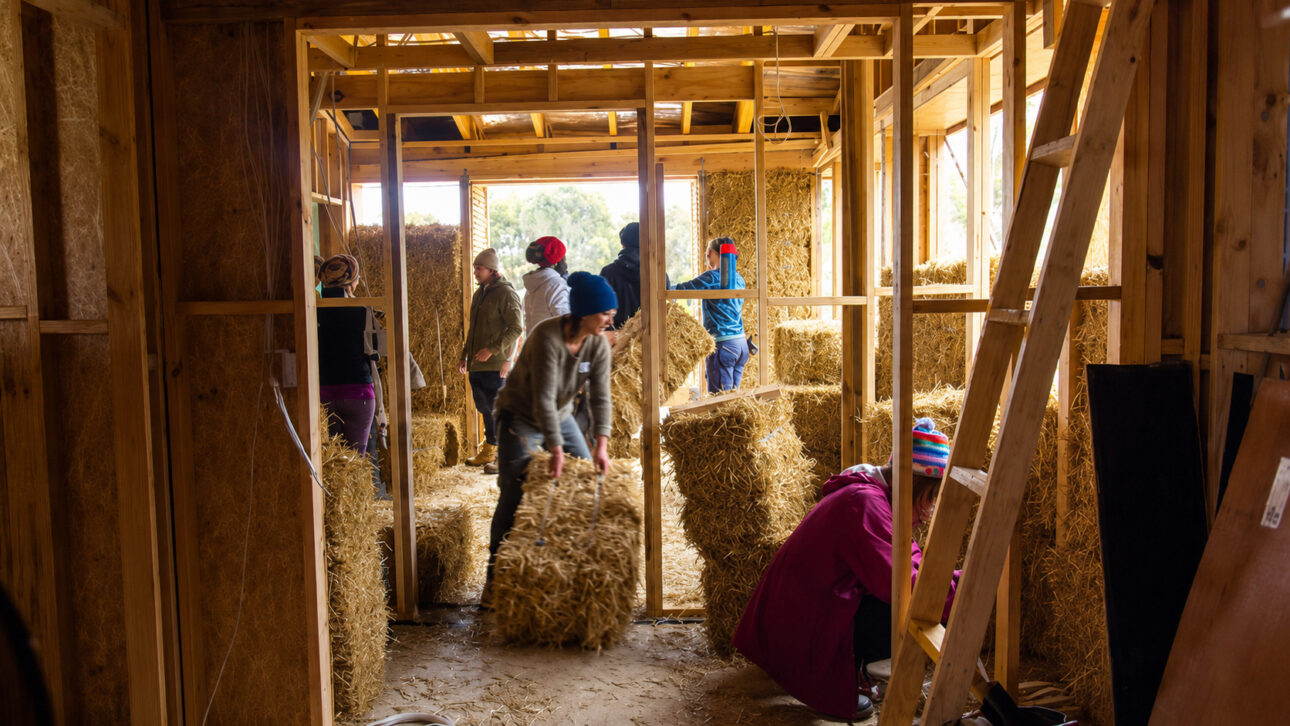
Therefore, the construction requires well-thought-out coverage, an adequate base, and coating applied with care. In simple terms, the wall needs to be protected, but without becoming a suffocated and poorly finished block.
This care helps to separate a serious natural construction from an improvised work. The technique does not depend solely on goodwill. It depends on planning, correct execution, and keeping the material away from excess water.
Natural construction also seeks thermal comfort inside the dwelling
A wall made with straw bales can help with thermal comfort. This happens because the straw forms a thick layer, capable of reducing the rapid exchange of heat between the outside and the inside.
In practice, the house tends to become more pleasant when the wall is well executed. The goal is to prevent heat or cold from easily passing into the interior of the home.
This type of solution shows why sustainable construction arouses curiosity. It combines simple materials, a cozy appearance, and a construction logic that tries to make better use of natural resources.
The film followed four years of construction and showed the house as the couple’s life project
Happen Films, a documentary production company about sustainability and natural construction, recorded the construction over four years. The film is 25 minutes long and follows Adam and Sian during the creation of the home.
The house is located in Victoria, Australia, and was presented as a traditional wooden construction, with wooden joints, straw bales, and clay. The construction is not just a visual curiosity but a life choice.
The time of monitoring also helps to show that a natural house does not come from a quick decision. Each stage requires patience, careful workmanship, and attention to details that are hidden behind the finish.
The straw bale house shows that simple materials can gain another value when they are part of a planned construction. The straw, clay, and wood form a sustainable home because they work together, each with a clear function.
The story also raises a bigger question about the future of construction: if a wall can be made from well-protected straw bales, how many other simple materials are still ignored in common constructions? Leave your opinion in the comments and share with those who like unconventional construction.






Be the first to react!