Portuguese
  Spanish


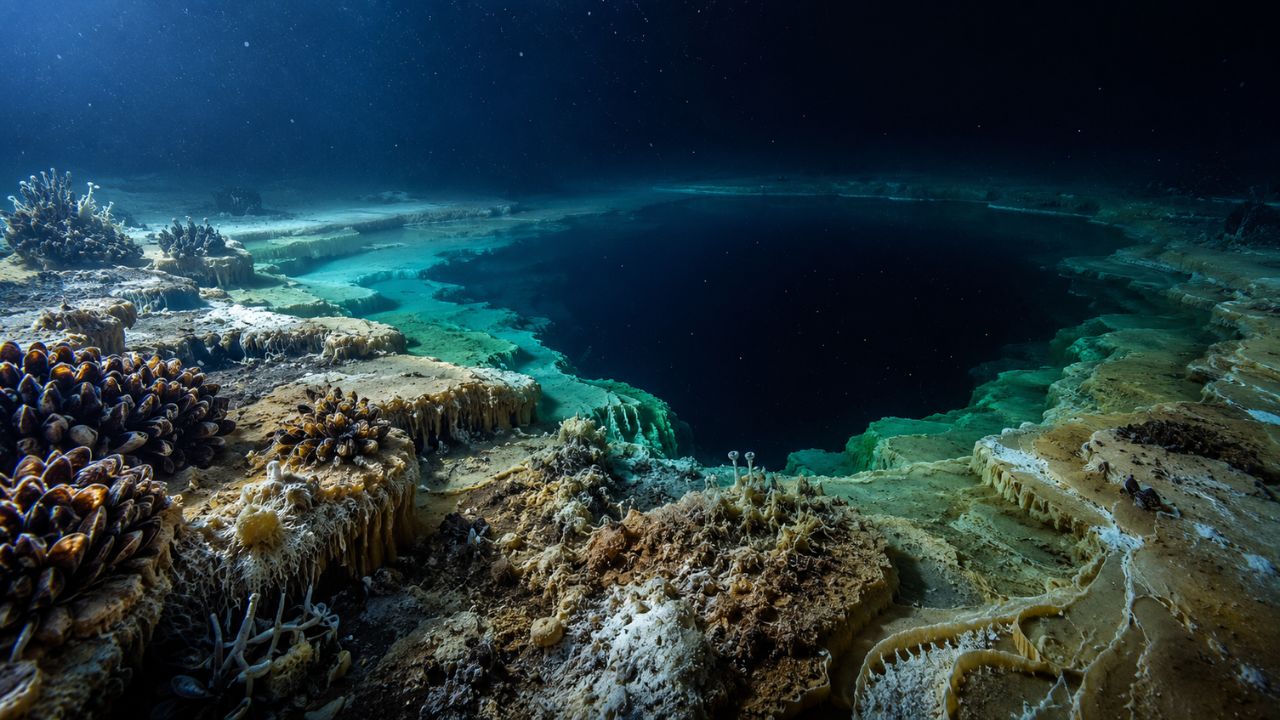

Discover the submarine lake that exists at the bottom of the sea and surprises scientists by gathering extreme conditions and adapted life.
About 1,000 meters below the surface of the Gulf of Mexico, a rare formation continues to spark the interest of researchers. Known as the “Jacuzzi of Despair,” this type of submerged lake presents such unusual characteristics that it acts as a boundary between a practically lethal environment and an ecosystem capable of surviving in extreme conditions.
The phenomenon occurs because a highly saline concentration remains accumulated at the bottom of the sea without quickly mixing with the surrounding ocean water. The result is an area with an appearance similar to that of a pool, surrounded by well-defined boundaries and marked by unusual chemistry.
According to Revista Oeste, besides revealing how organisms can adapt to extreme situations, the discovery helps scientists understand possible forms of life in similar environments outside Earth.
-
Resident left tap running to prevent freezing, but woke up to ice in the sink after -1.8°C cold snap in Brazil’s Serra Gaúcha region.

-
Man Inherits Old House in France and Discovers 100 kg of Hidden Gold Throughout the Property
-
Pyramid-Shaped Apartment Building in China Stands Out with 18 Floors, 45-Degree Inclined Facade, and Terraced Design Inspired by Traditional Rice Paddies

-
When Do Brazil and Japan Face Off in the World Cup?





How did this lake form at the bottom of the sea?
The origin of the structure is linked to the contact of seawater with ancient layers of salt buried under sediments.
When the water reaches these deep formations, it dissolves large amounts of salt and creates a solution much heavier than regular ocean water. As a consequence, this liquid remains concentrated in a depression on the seabed.
The density difference prevents a quick mix between the two environments and creates an isolated reservoir within the ocean itself. Because of this process, the location developed visible margins and even movements similar to small underwater waves.
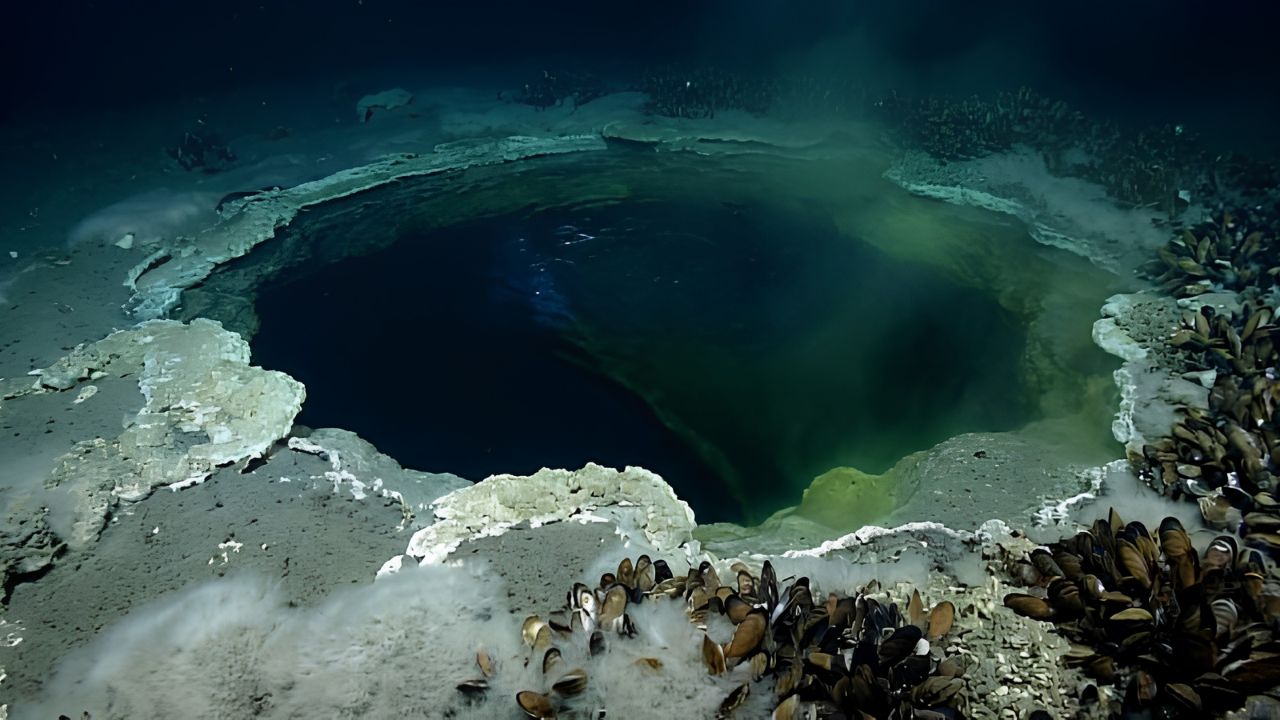
Despite its curious appearance, the region poses a threat to most marine organisms.
Researchers have identified several factors that make the area extremely hostile:
- Salt concentration between four and five times higher than that of regular seawater;
- Very low amount of oxygen;
- Presence of compounds such as methane and sulfide;
- Temperature different from that normally found at great depths.
When fish, crabs, or other animals cross the edge of this liquid mass, they face abrupt changes that quickly compromise their vital functions.
According to records cited by Live Science, the combination of high salinity and lack of oxygen makes it difficult for most species to survive.
Extreme lake also functions as a preservation environment
One of the most impressive characteristics of the Jacuzzi of Despair is its ability to preserve organic matter.
The enormous concentration of salt significantly reduces the activity of microorganisms responsible for decomposition. Furthermore, the environment draws water from biological tissues, further slowing this process.
Because of this, remains of organisms can remain preserved for long periods at the bottom of the formation.
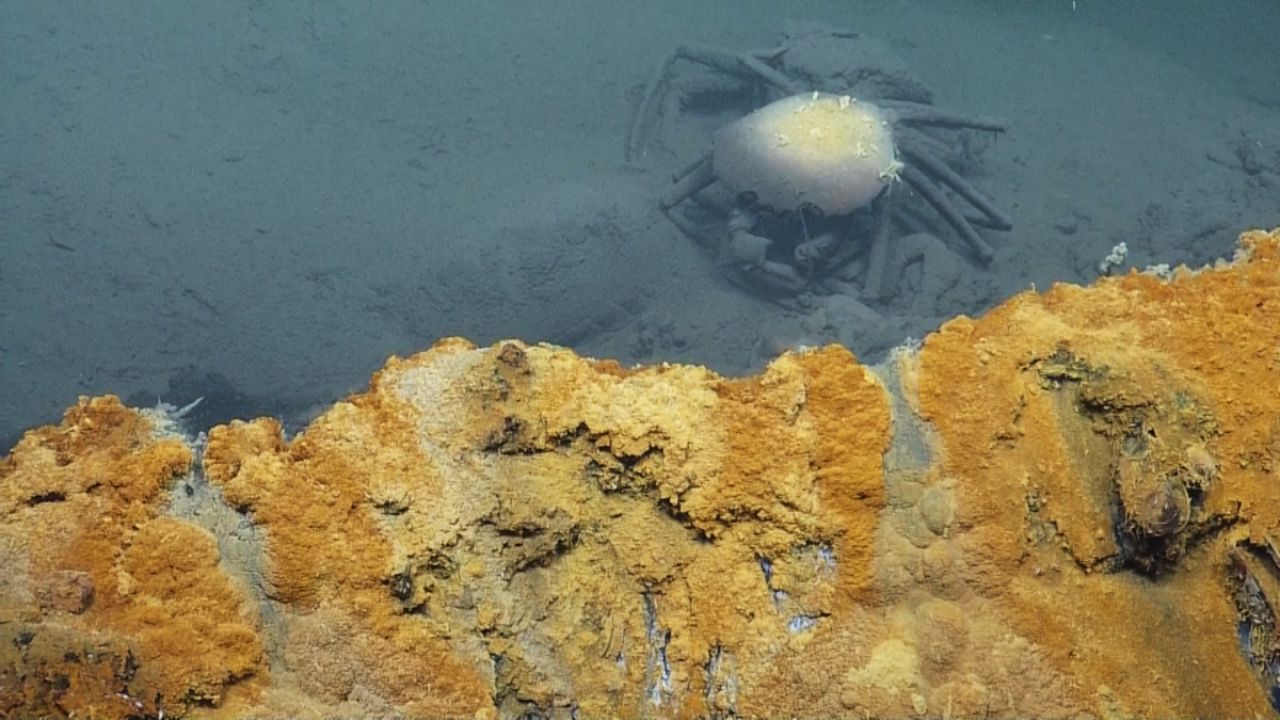
This behavior has turned the area into a true natural laboratory for studies on conservation in extreme environments.
Life thrives on the lake’s shores
Although the interior is practically uninhabitable for most animals, the transition region between the brine and seawater harbors adapted life forms.
Among the organisms found are mussels of the genus Bathymodiolus, capable of surviving precisely in this narrow band of chemical balance.
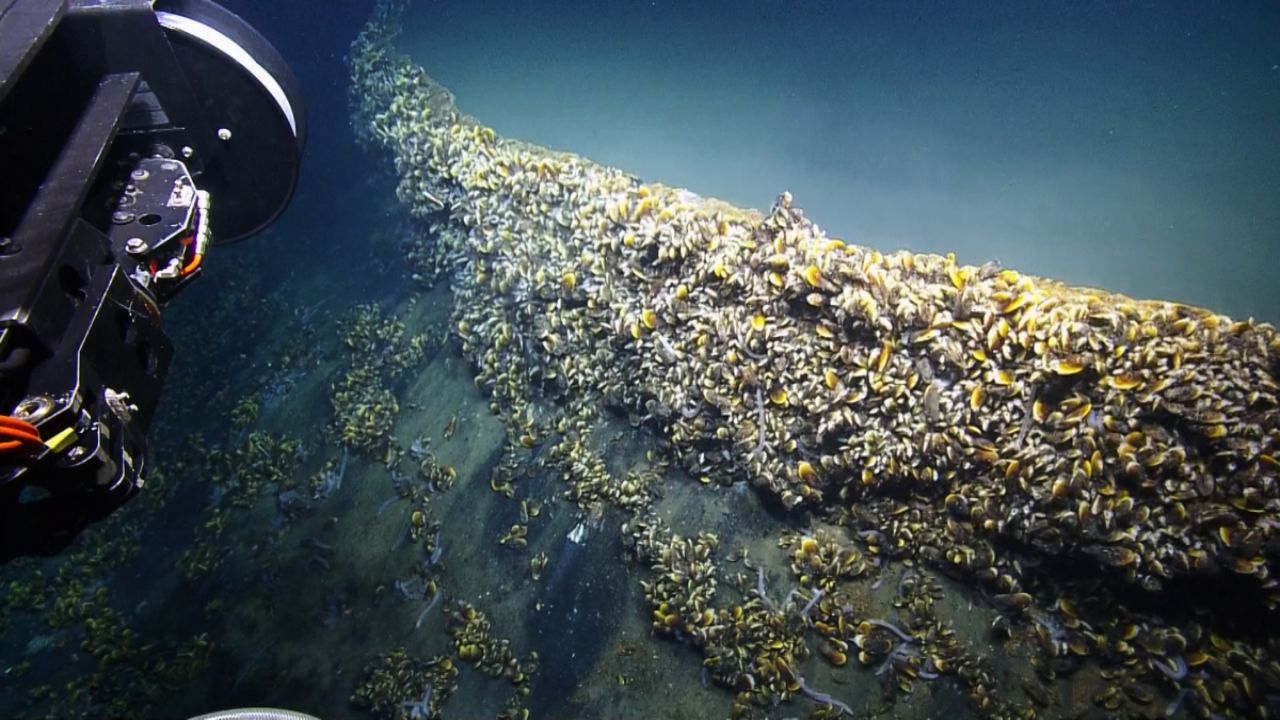
In this ecosystem, survival does not depend on sunlight.
The main components observed by researchers include:
- Mussels adapted to extreme conditions;
- Bacteria that obtain energy through chemical reactions;
- Organisms capable of living without relying on photosynthesis;
- A narrow habitable zone surrounded by hostile conditions.
While a few centimeters can mean the difference between life and death, these species manage to exploit resources unavailable to most living beings.
What this lake can reveal about other worlds
The studies conducted in the Gulf of Mexico go beyond oceanography. For scientists, extreme environments like this help understand how far life can adapt.
The existence of organisms living without light, in contact with aggressive chemical compounds, and under high salt concentration, expands the possibilities considered in research on other celestial bodies.
Therefore, the Jacuzzi of Despair is often analyzed as a natural model to understand ecosystems that could exist in subsurface oceans of distant moons.
Structure still holds mysteries
Even after several expeditions, many aspects of the formation remain unknown. Submarine robots have recorded approximately 19 meters of depth within the brine mass.
However, researchers have not yet been able to precisely determine where the definitive bottom of the crater is. Another detail observed is the outer walls, which reach about 4 meters in height and hide a more complex structure than it appears at first glance.
The combination of high pressure, difficult access, and aggressive chemistry continues to pose challenges to scientific investigations. Far beyond a geological curiosity, this lake gathers characteristics rarely found in a single location.
The formation combines natural preservation, extreme chemical conditions, and organisms highly specialized in surviving where almost no other species can exist.
These factors have turned the Jacuzzi of Despair into one of the most intriguing environments ever found at the ocean’s bottom. As new research progresses, the site continues to offer important clues about biological adaptation, evolution, and the limits of life in extreme conditions.
With information from Revista Oeste