






 Portuguese
  Spanish


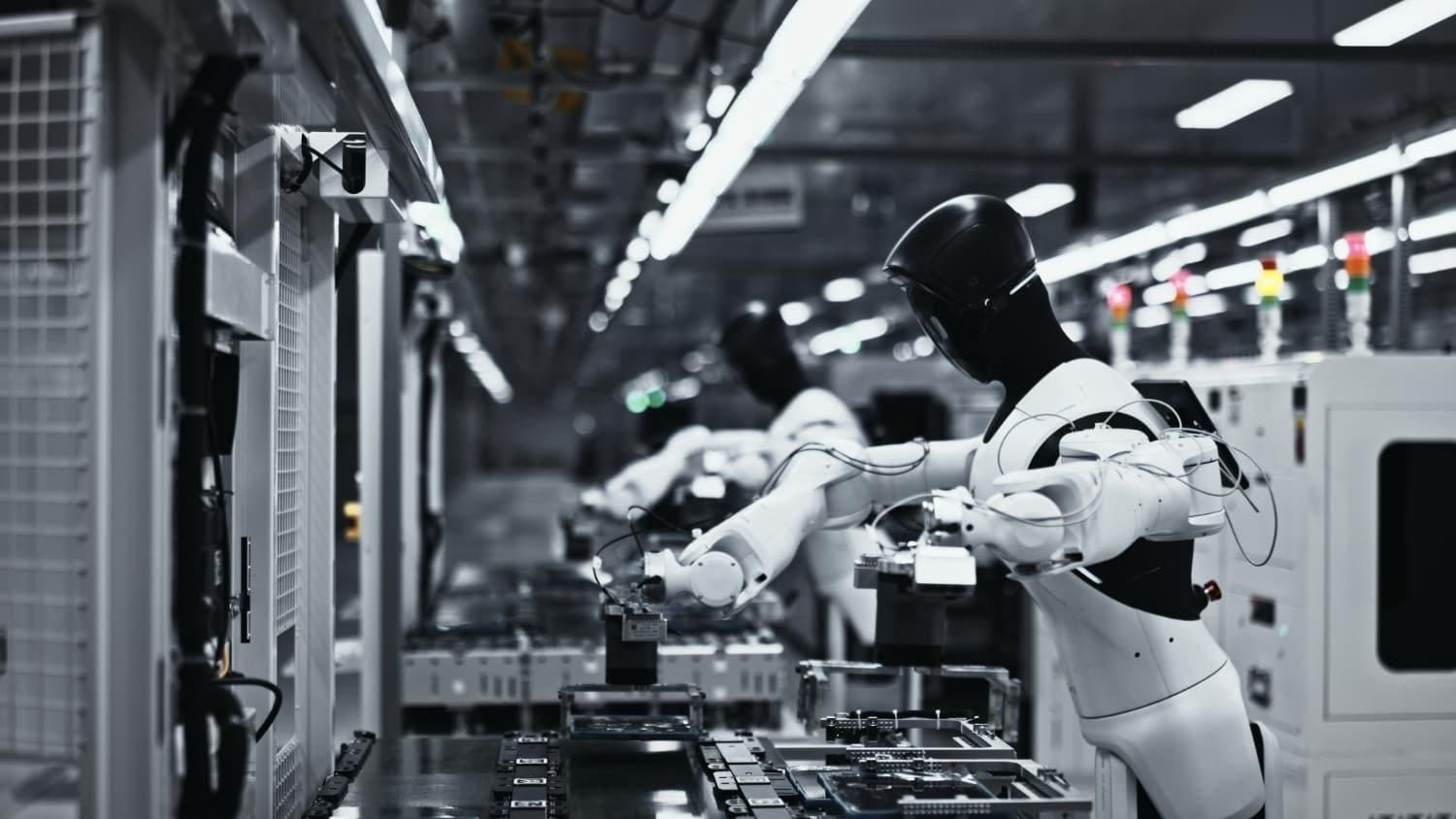
Humanoid robots have moved from viral demonstration videos to truly entering the production line of factories: they already carry parts, work alongside people, and learn new tasks by imitation, marking the shift of a technology from the lab to the factory floor and promising to redefine the future of industrial work.
For years, humanoid robots were almost an internet spectacle: impressive videos of machines walking, dancing, or doing somersaults, but they seemed far from any practical use. That time is over. Technology companies and automakers have started putting these robots to real work, in real tasks, inside factories that produce everything from cars to electronics.
The difference now is the purpose. Instead of showcasing acrobatics, humanoids are being trained for repetitive and tiring functions, such as moving boxes, fitting parts, and supplying assembly lines, the kind of work that wears out the human body and that companies find hard to fill. Robotics is moving from being a showcase to becoming a tool.
Why humanoids, and not other robots
The factory is already full of robots, so why give them a human form? The answer is simple: the world of work was entirely built for the human body. Doors, corridors, tools, benches, and machines are sized and shaped for people. A robot with legs, arms, and hands similar to ours can fit into this environment without needing to redesign the entire factory.
-
Anti-poaching patrol in Thailand accidentally discovers hidden cave with 2,000-year-old petroglyphs, geometric engravings, and mysterious three-finger patterns on sandstone walls.

-
Russia Deploys Largest Nuclear Icebreaker in Arctic Capable of Breaking Through Three-Meter-Thick Ice

-
TCL Launches Energy-Efficient Refrigerator in Brazil, Promising 70% Less Consumption Than Competitors

-
Project Daedalus: The 190-Meter Spacecraft Aiming to Reach Another Star with Nuclear Fusion and a 50-Year Fuel Supply




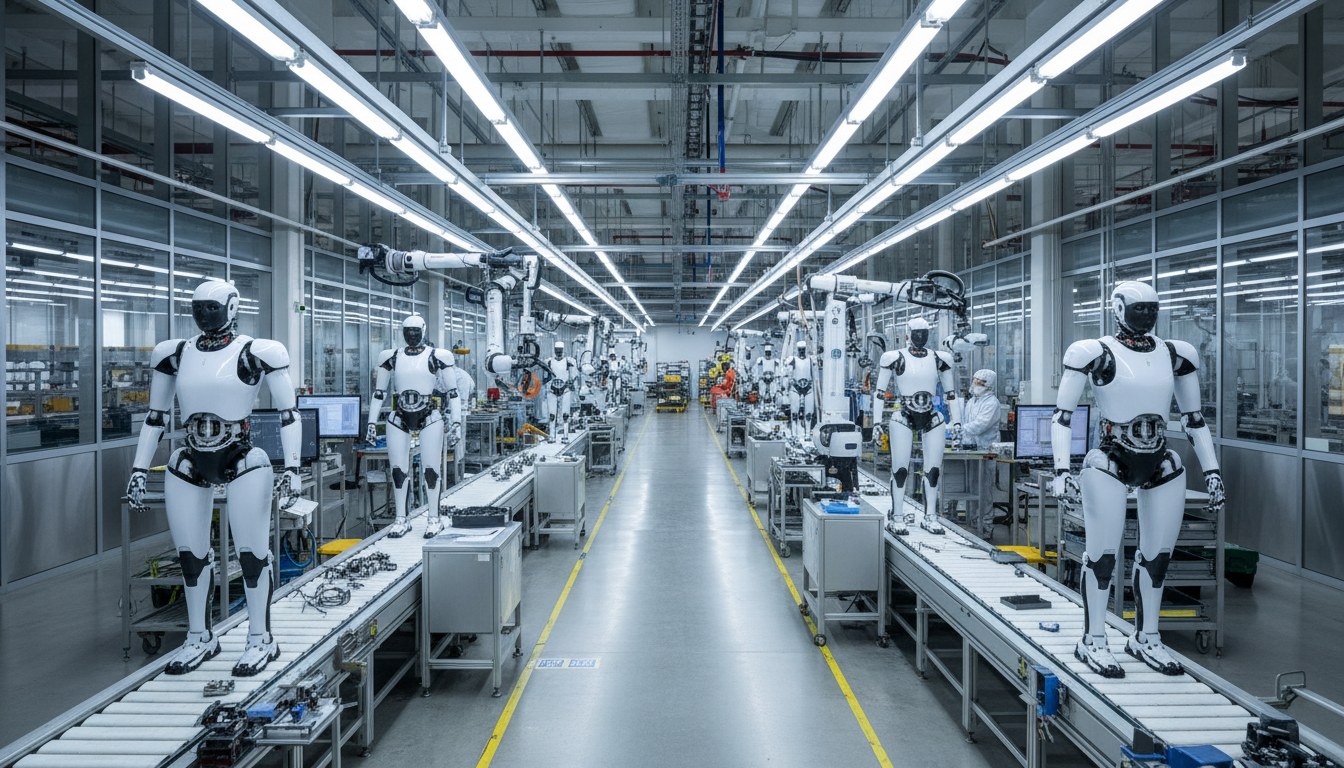
This versatility excites the industry. A traditional robotic arm performs only one task, bolted to a fixed point. A humanoid, however, can, in theory, walk around the factory and take on various different functions, just like a human worker does, simply by reprogramming it or teaching it a new task. This flexibility is the great asset of the technology.
And teaching has become easier. Instead of programming each movement line by line, many of these robots learn by imitation, observing a human perform the task, or training in simulations with artificial intelligence. It’s a leap that brings the robot closer to how a person learns a new trade.
Who is leading the race
The race has become a fever in the technology sector. Companies like Apptronik, with the Apollo robot, have formed partnerships to produce humanoids on a large scale with major manufacturers. Car manufacturers are testing these machines on their lines, and chip giants have launched processors tailored for the digital brain of humanoids, a sign that the industry believes in a huge market.
China has entered this race full force, with several companies presenting their own humanoids and the government treating the sector as a strategic priority. The United States and Asia are competing to dominate a technology that could be worth trillions in the coming decades, as robots leave factories and, in the future, may reach warehouses, hospitals, and even homes.
Money follows the enthusiasm. Investors are pouring billions into humanoid robotics startups, betting that we are at the beginning of a transformation as significant as the arrival of the personal computer or the smartphone. It could be an exaggeration, or it could be the start of a new industrial era.
The obstacles that still hold back
Despite the enthusiasm, humanoids still face significant barriers. They consume a lot of energy, have limited battery autonomy, and are expensive, which currently restricts their use to large companies. The dexterity of the hands, capable of handling delicate objects as naturally as a person, remains one of the biggest technical challenges, and balancing on uneven terrain is still not trivial for the machine.
There is also the issue of reliability. It’s one thing for the robot to work in a controlled demonstration video; it’s another to keep it working shift after shift, without failures, in a real factory environment full of unforeseen events. Proving they can withstand the intense daily use, with safety for the humans around, is the decisive test that separates the promise from mass adoption.
What this means for jobs
The inevitable question is about employment. If a humanoid robot can do the repetitive manual labor, what happens to the workers who rely on these functions? Companies argue that robots will fill positions that are already vacant, in tasks that no one wants or that are harmful to health, and that humans will move to supervisory and maintenance roles.
History, however, teaches that every major automation deeply impacts the job market, creating new jobs while destroying old ones, and not always the same people can make this transition. It’s a debate that society will have to face head-on, with training, retraining, and policies to prevent leaving workers behind in the race.
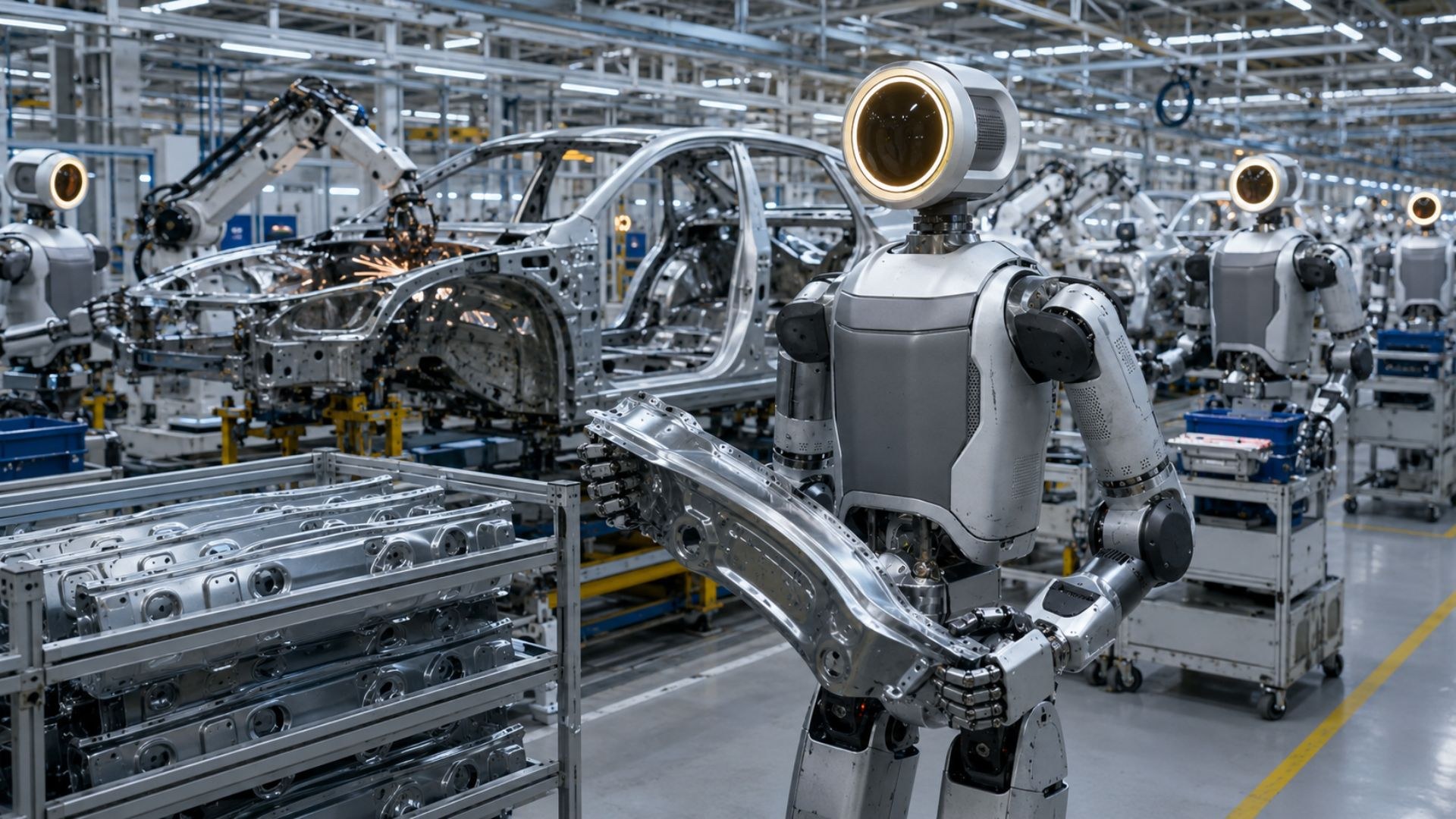
For Brazil, which has a significant industry and faces its own productivity challenges, keeping up with this revolution is important. Countries that master robotics will gain competitiveness, and being left out could widen the gap with major industrial powers. It’s a race where being attentive is already halfway there.
For now, the picture is clear: the humanoid robot has ceased to be a video promise and has become a flesh, bone, and steel colleague in factories. What seemed like science fiction a few years ago is now clocking in on the assembly line, and the trend is that this presence will only grow.
Will humanoid robots create more jobs than they will replace, or is the opposite what awaits us?


