






 Portuguese
  Spanish


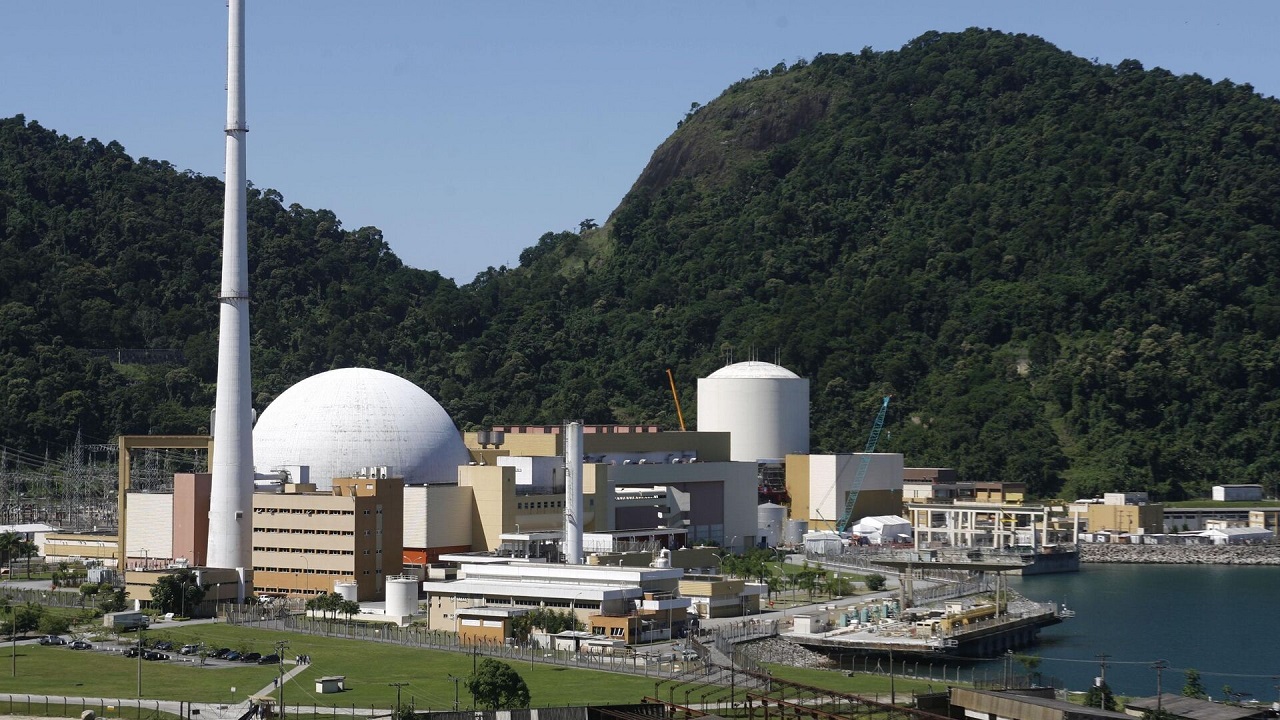

Brazil and Russia Seal Nuclear Deal for Uranium Supply That Could Strengthen Brazilian Energy Security.
Internexco, a subsidiary of the Russian state nuclear company Rosatom, signed a contract on September 7 for the sale of uranium to Brazilian nuclear plants starting next year. According to the Russian company, the contract is the result of an open international tender and is the first long-term contract with the country for the supply of enriched uranium products in the history of the Russian state company.
Rosatom and Enbpar Sign Memorandum of Understanding
At first glance, the nuclear plants in Angra dos Reis, Angra 1, and Angra 2, located in the state of Rio de Janeiro, may be the biggest beneficiaries of the nuclear agreement. The units have installed capacities of 640 and 1,350 MW respectively.
Thus, with the completion of Angra 3, the sector will make a significant leap, generating greater energy security. In this regard, it is important to highlight that in October of this year, Rosatom and the Brazilian Company for Participation in Nuclear and Binational Energy (Enbpar) signed a memorandum of understanding to expand their partnership in areas such as construction, decommissioning, and operation of new high-capacity nuclear plants based on Russian technologies in the country.
-
Brazil to Issue “Panda Bonds” in China, Aiming to Raise Up to 5 Billion Yuan at Lower Interest Rates Than Dollar Debt
-
NATO Faces Internal Tensions as U.S. Pushes for Increased Defense Spending, Targeting 5% of GDP by 2035, with Warnings for Countries Near 2% Level

-
Brazil to Introduce B16 Diesel with Increased Soybean Oil Content for Trucks by 2026
-
Brazil’s July Bolsa Família Payments May Include Extra $150 and $50 for Families with Children, Pregnant Women, and Updated CadÚnico Registration


The treaties are happening, according to Inácio Loiola Pereira Campos, a retired nuclear energy professor at UFMG and a delegate of the association, because there is a great international demand for energy, and Brazil can become a key country in this scenario, possibly becoming a major energy exporter. Russia, in turn, also gains essential benefits by strengthening ties with the largest market in Latin America and an international ally within the BRICS configuration.
Angra 3 Will Have a Capacity of 1.4 GW
According to Inácio, nuclear energy, a thermonuclear plant, actually means solid energy, generating greater energy security. It is a type of energy that you can rely on to be produced all day long, unlike solar and wind power plants, for example. Additionally, nuclear energy has undergone several reviews by environmentalists in recent years, and having been reclassified as a sustainable energy source, it has proven beneficial for society.
Its new model of plants, with smaller reactors, also known as small modular reactors, generates considerably less environmental impact and has a lower cost. According to Inácio, with this nuclear agreement with Brazil for uranium supply, Russia has reached the largest uranium product market in Latin America.
The country has partnerships with Bolivia and Argentina, but Brazilian demand is much higher because Brazil has a continental dimension. Angra 3’s production capacity is approximately 1.4 GW, about one-tenth of Itaipu’s capacity.
Russia Will Help Brazil with Energy Security
For Loiola, in addition to the document on nuclear energy production that could be used for Brazil’s advancement, the contract comes at an essential moment for the country, as the world increasingly demands clean energy and the Russian state company, Rosatom, could help the largest economy in Latin America advance several years in the complex scientific schedule for uranium enrichment.
According to the nuclear engineer, the contract will allow Brazil to skip steps in uranium enrichment. If Brazil had to fully develop its demand for enriched uranium, it would take years.
When uranium is used in a plant for electricity generation, the concentration level is around 3%. If used for naval propulsion, it is around 20%.





