Portuguese
  Spanish


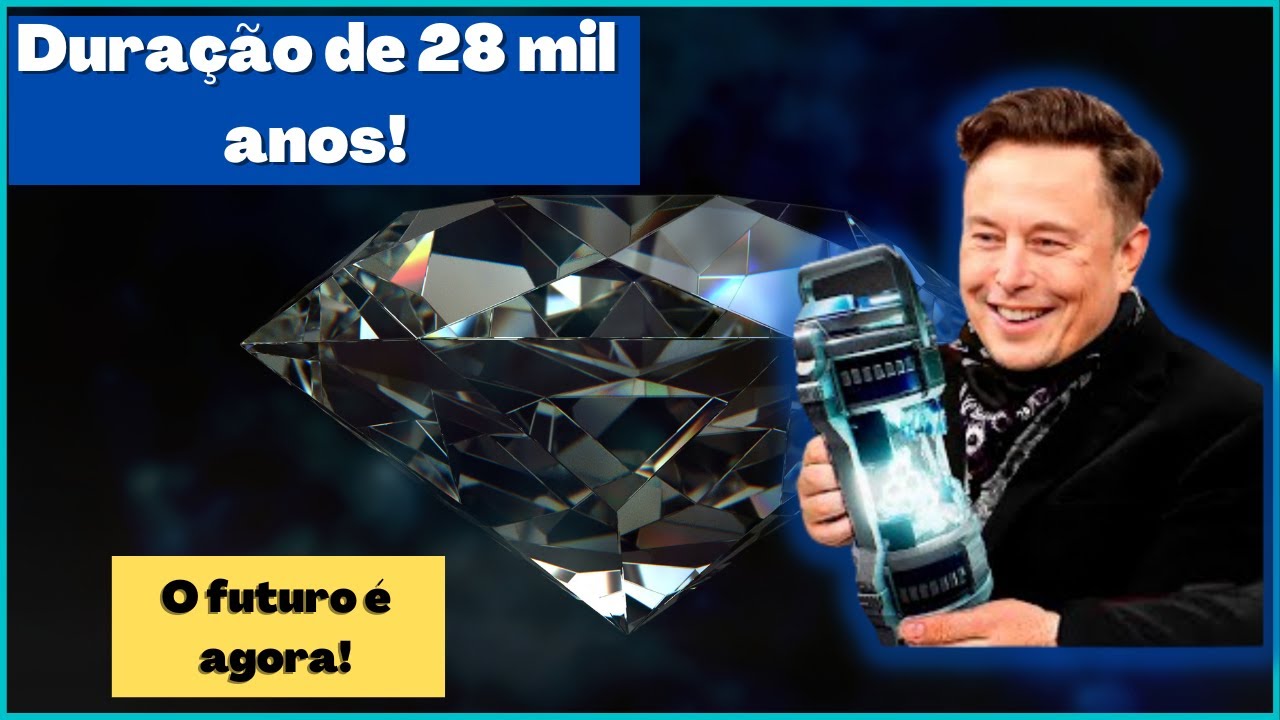

Elon Musk, Tesla Executive, Announces Production of a Nuclear Diamond Battery That Could Be the Great Solution for the Electric Car, Electronics, and Other Battery-Powered Devices Sector.
The battery is the component responsible for powering a large part of current technologies and, without it, various electronics and even vehicles would not function. However, the component still suffers from some limitations that affect its performance. Therefore, companies and institutions are working hard on a new technology capable of meeting all demands. One of these companies is the famous Tesla, led by billionaire Elon Musk, which is developing a nuclear diamond battery with the potential to last thousands of years, contributing to the elimination of nuclear waste.
Elon Musk’s New Battery May Replace Current Lithium Ones and Eliminate Nuclear Waste


Currently, the best batteries are made up of lithium ions, which power various devices such as mobile phones, electric cars, tablets, and many others. This component was responsible for replacing lead-acid batteries, mainly in intensive applications, due to its significant benefits.
Despite the benefits, this category of battery has several restrictions and challenges that hinder the advancement of new technologies. With this in mind, Tesla, led by Elon Musk, is developing a nuclear diamond battery that promises to change the world.
-
1983 Chevrolet Runs Over 100,000 km Without Gasoline, Powered by Wood Chips, Reaches 125 km/h in Airport Test

-
Workshop Converts Giant Tractor Tire Tricycle into a Three-Wheel Drive Hybrid with 36,000-Watt Electric Motor Capable of Climbing Hills

-
Chery Offers Lifetime Battery Warranty and Car Replacement for Major Failures Under New Chinese Regulations
-
Sales of Brazil’s Cheapest Electric Car Halted Before First Deliveries: E-Motors Suspends Emova Easy Due to Import Tax Increase and Rising Freight Costs



Self-Charging Battery
The technology consists of nuclear waste surrounded by artificial diamond, allowing the component to have a lifespan of 28,000 years. This new nuclear diamond battery could, in the future, serve as power for various electronics or even airplanes. The innovation was first presented by scientists from the University of Bristol, England, in 2016.
The scientists discovered a synthetic diamond that, when placed near a radiation source, can generate electricity, creating an effective self-charging battery. The nuclear reagent used by Tesla for the nuclear diamond battery is carbon-14, which has many reserves in graphite blocks within its reactors.
Although this element emits low-yield beta particles, it is still risky to allow it into the environment, so it must be stored safely for the long term. However, this use of carbon-14 is much more appropriate than simply disposing of it in the ground, considering that various factors must still be studied to prevent contamination. The nuclear diamond battery is beta voltaic, meaning it is similar to a solar cell used by solar panels.
Nuclear Diamond Battery Can Also Be Installed in Satellites
In addition to Tesla, Elon Musk is also the CEO of SpaceX, another giant in the global market, which works with satellites and rockets. Given that diamond is an almost indestructible material, nuclear diamond batteries could assist in managing satellites and space vehicles, extending their operational life in extreme environments.
A good candidate would be the James Webb Space Telescope, which has a lifespan of two decades due to its onboard fuel. If a nuclear diamond battery were used, the space station could continue to provide stunning images that help us discover more of the universe, for all eternity.
With the world more dependent on the input from sensors, batteries from Tesla, led by Elon Musk, could provide an excellent solution for launching wireless devices. This technology is very economical in terms of emission: for example, the resources used to manufacture an AAA battery require nearly 2.5 kg in production, much more compared to the nuclear diamond battery.