Portuguese
  Spanish


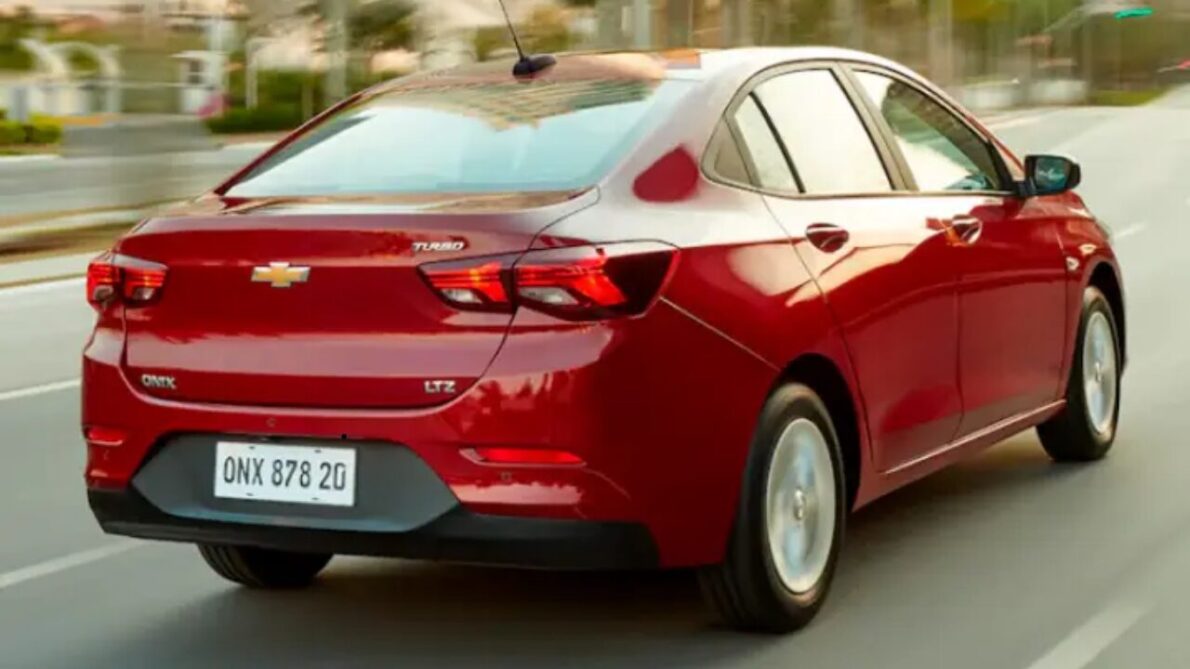

Get To Know The Most Fuel Efficient Cars In Brazil In 2024, Highlighting Fuel Efficiency And Save With Your Vehicle In Hand.
When choosing a vehicle, fuel economy is a decisive factor for many consumers. With the growing concern for the environment and the constant rise in fuel prices, the most fuel efficient cars gain prominence in the Brazilian market. In this article, we will explore the 5 most fuel efficient cars in Brazil, based on efficiency data provided by INMETRO and considering the most recent models until February 2024.
How INMETRO Evaluates Vehicles
INMETRO, responsible for testing and classifying the vehicles sold in Brazil, analyzed 813 models from 36 different brands.
The tests considered the most fuel efficient version of each model, following the protocols of the Brazilian Vehicle Labeling Program.
-
2027 Toyota Corolla Cross Unveiled: New Design, Enhanced Fuel Efficiency, Reduced Maintenance Costs, Advanced Technology, Connected Services, and Up to 10-Year Warranty

-
Fiat Cronos Precision 2018: Affordable Sedan with Spacious Trunk and Reliable Maintenance
-
Volkswagen to Cut Production by 1 Million Cars by 2030, Reducing Jobs and Platforms, Focusing on More Profitable Models

-
Toyota Launches First 100% Electric Car in Brazil: bZ4X with 343 HP, All-Wheel Drive, 361 km Range, Priced at $419,990 BRL, Limited to 99 Units



The vehicles were evaluated under controlled conditions, and the efficiency scale ranges from A (most efficient) to E (least efficient).
Check Out The Ranking Of The Most Fuel Efficient Cars
5th Place: Hyundai HB20
This is the 5th most fuel efficient car in Brazil. Equipped with a 1.0 3-cylinder Flex aspirated engine and a five-speed manual transmission, the HB20 presented an average consumption of 9.6 km/l with ethanol and 13.5 km/l with gasoline in the city, and 10.4 km/l with ethanol and 14.6 km/l with gasoline on the highway, achieving a grade of B in the vehicle labeling program.
4th Place: Fiat Mobi
The Fiat Mobi, with its 1.0 Flex engine from the Firefly line, occupies the 4th position. This modern engine, with an independent intake valve actuation head, reached averages of 9.6 km/l with ethanol and 13.5 km/l with gasoline in the city, and 10.4 km/l with ethanol and 15 km/l with gasoline on the highway, also receiving a grade of B in the labeling classification.
3rd Place: Peugeot 208
The Peugeot 208, which has a five-speed manual transmission and is equipped with the same 1.0 Firefly engine as the Fiat Mobi, becomes even more fuel efficient, especially due to its better aerodynamics. In urban areas, the consumption was 9.6 km/l with ethanol and 13.3 km/l with gasoline, while on the highway, the vehicle achieved 11.1 km/l with ethanol and 15.8 km/l with gasoline, maintaining a grade of B.
2nd Place: Fiat Cronos
The Fiat Cronos, equipped with the same engine as the Fiat Mobi, occupies 2nd place. As a sedan, the Cronos tends to have slightly better consumption due to its aerodynamic design. In the city, the consumption was 9.8 km/l with ethanol and 13.44 km/l with gasoline, and on the highway, 11 km/l with ethanol and 15.6 km/l with gasoline, also receiving a grade of B.
1st Place: Chevrolet Onix
The Chevrolet Onix, with a six-speed manual transmission and 1.0 Flex aspirated engine, occupies 1st place. The Onix stands out mainly on the highway, which is due to the extra gear that reduces engine speed at cruising speeds. In the city, the consumption was 9.3 km/l with ethanol and 13.3 km/l with gasoline, and on the highway, 11.4 km/l with ethanol and 16.5 km/l with gasoline, receiving a grade of B.
The Diversity Of The Most Fuel Efficient Cars
From light subcompacts to sedans, fuel consumption efficiency is an increasingly valued characteristic in the automotive market.
With the arrival of electric vehicles and pressure for more competitive prices, consumers have options that combine economy, performance, and respect for the environment.
The search for more fuel efficient cars is not limited to fuel consumption alone. Energy efficiency also involves reducing CO2 emissions and other pollutants. Hybrid and electric models have gained ground, but infrastructure and cost remain challenges to be overcome.
However, the Brazilian market has shown significant advances, with new technologies and models being constantly launched.