Portuguese
  Spanish


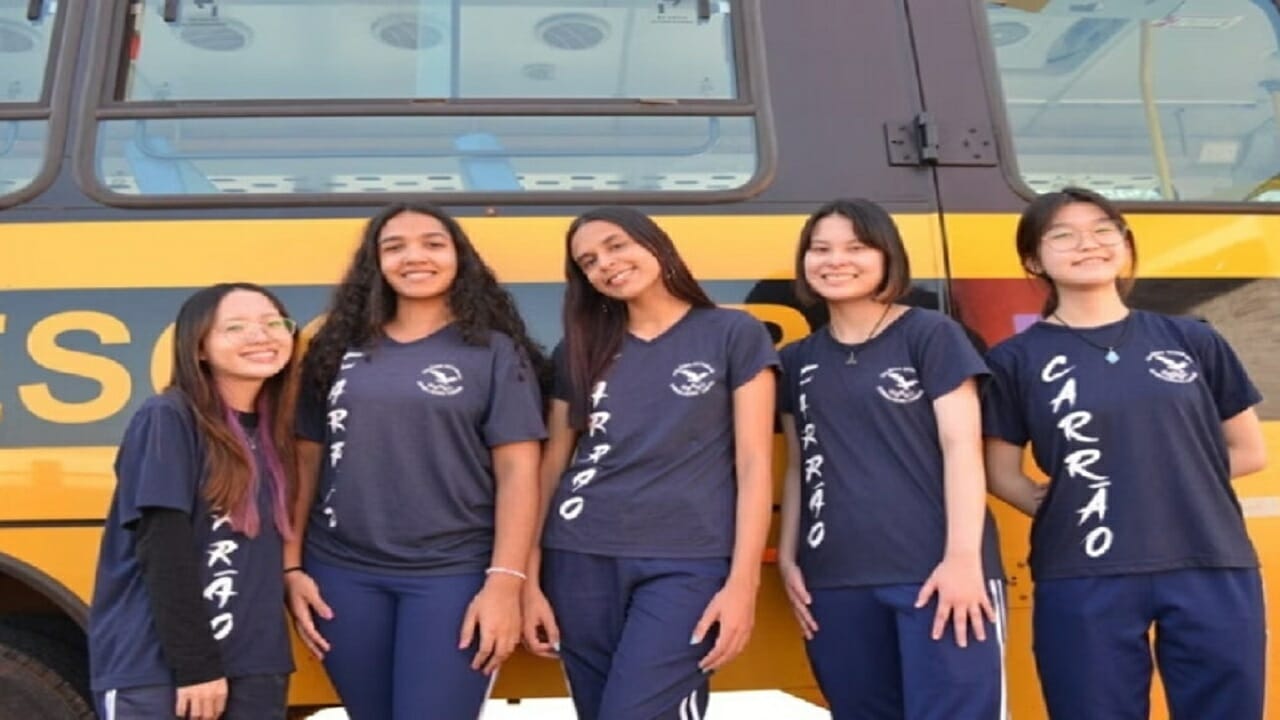

Paraná Teenagers Could Transform Cooking Oil into Sustainable and Economic Fuel. A Bus That Used the Fuel Managed to Run for Over a Week.
A project by teenagers transformed traditional cooking oil into biodiesel in Paraná. The group of students who transformed cooking oil into fuel is from Colégio Estadual Conselheiro Carrão, a public full-time high school in Assaí (PR). With this, the teenagers from Paraná created a junior startup for biodiesel generation.
Meet the Young Women Responsible for Transforming Cooking Oil into Fuel
Through the teenagers’ project, a bus ran for almost a week without needing to be refueled. The oil used was not pure; however, it was transformed into biofuel by a group of girls from a public school located in Assaí, almost 400 km from the capital, Curitiba.
The project is led by Eduarda Priscila Miura, 17, Leticia Ayumi Tazima Sato, 17, Luiza Alves de Souza, 17, Eduarda Pietra Santos Paixão, 16, and Fabiane Hikari Kikuti, also 16.
-
In a Place Many Doubt Solar Power Works, 360 Panels Operate in the Arctic, Harnessing Reflected Snowlight to Reduce Diesel Use at an Isolated Station

-
Island in Brazil Innovates by Installing 184 Solar Panels on Urban Lagoon to Generate Clean Energy
-
Japanese Island of 417 Residents to Test Living Half the Year Solely on Solar Power, Reducing Dependence on Diesel Brought by Ship
-
Brazilian Fishermen Use Solar Power to Produce Nearly One Ton of Ice Daily, Preventing Fish Spoilage Before Reaching Market



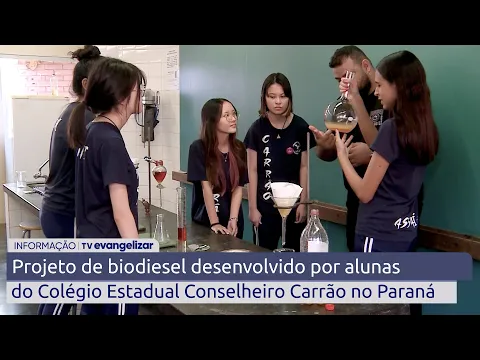

According to Matheus Rossi, a Chemistry and Physics teacher and project advisor, the main goal of the project, named BIOSUN, is to organize the production of biodiesel made from cooking oil within the school. Additionally, it aims to promote the creation of a green line in the city, focusing on public policy for urban mobility and sustainability.
The idea of the teenagers from Paraná was to transform, with the support of the city hall, part of the school buses into a specific line that only operates with the new fuel produced by the project. It is a way to address the issue of irregular disposal of organic compounds while promoting a genuine scientific and entrepreneurial experience.
Paraná Teenagers Speak About the Project
The BIOSUN was created for a hackathon, a municipal programming marathon, and developed during extracurricular activities in the full-time high school. Through a partnership with UFPR (Federal University of Paraná), the project to transform cooking oil into fuel had access to the chemistry lab and the necessary reagents from the institution to create biodiesel.
Leticia Ayumi emphasizes that she enjoys the area of natural sciences, the laboratory experience, and the idea of working on scientific research to solve everyday problems. For Eduarda Pietra, this is an opportunity to put into practice concepts learned in class. She highlights that it has been an incredible experience, especially since she has always been curious about the laboratory aspect and grew up hearing a lot about the importance of sustainable ideas.
The Process of Transforming Cooking Oil into Fuel
The teenagers’ project in Paraná is based on the premise that cooking oil, for the most part, is recycled into soap. However, when combined with certain chemicals, it is possible to generate an alternative, eco-friendly fuel with lower pollution levels.
In BIOSUN, the collected waste is heated and combined with alcohol and a strong base. The first batches were generated at the school, and the others were developed within UFPR, at the Jandaia do Sul campus.
Rossi explains that initially, a sample collection was carried out, a small amount sufficient for the bus to participate in the parade. During this phase, the equivalent of 12 liters of oil was collected from the college’s teachers, which were transformed into 10 liters of biodiesel.
The transformation of cooking oil into fuel occurred through a process known as transesterification. First, the oil was filtered to remove any solid residues. Then, the oil was heated and mixed with alcohol and a strong base, generating biodiesel and glycerol, going through 4 washing stages before utilization.