






 Portuguese
  Spanish


One of the largest gas ships ever ordered will cross the oceans hoisting giant rigid sails, similar to wings, that retract themselves to save fuel, marking a surprising return of wind power to the era of sea colossi.
For centuries, the wind moved ships. Then came the engine, and sails became a thing of the past, restricted to leisure boats and sports sailboats. But, in an unexpected turn of history, sails are making a comeback, and in great style. The novelty is that they are being installed precisely on the sea colossi, the enormous ships that transport natural gas around the planet.
The oil company Chevron and the Japanese MOL will equip a gigantic methane ship, of about 174 thousand cubic meters, with a system called Wind Challenger, made of rigid and telescopic sails, similar to wings. They rise to harness the wind and retract when necessary, cutting fuel consumption and emissions. Built in a South Korean shipyard, the ship is expected to be delivered in 2026.
The return of sails, now in high technology
Don’t think of the cloth sails of old ships. The rigid sails of the Wind Challenger are high-tech structures, more like airplane wings placed upright on the deck. They are computer-controlled, adjusting their angle to capture the wind in the best possible way, and can retract when the ship enters the port or faces storms. It’s cutting-edge engineering in service of an old idea.
-
Qatar Commissions World’s Largest Gas Ship, a 344-Meter Giant Now Under Construction

-
Expert Challenges Alarmism Over El Niño in Brazil: Atmosphere Yet to Respond to Warm Pacific, Advises Farmers Against Selling Cattle or Delaying Planting Before September
-
In a Degraded Atlantic Forest Area, a São Gonçalo Resident Transforms Land into a Living Eco-Museum, Now a Model for Environmental Education

-
World’s First Lithium-Sulfur Battery Factory Launches, Promising to Double Range Without Relying on China


I confess that I find it poetic to see humanity rediscover the power of the wind after more than a century relying solely on engines. It’s as if technology has come full circle to find a solution that our ancestors already knew. The difference is that now the sails work together with modern engines, combining the best of both worlds in a single giant ship.
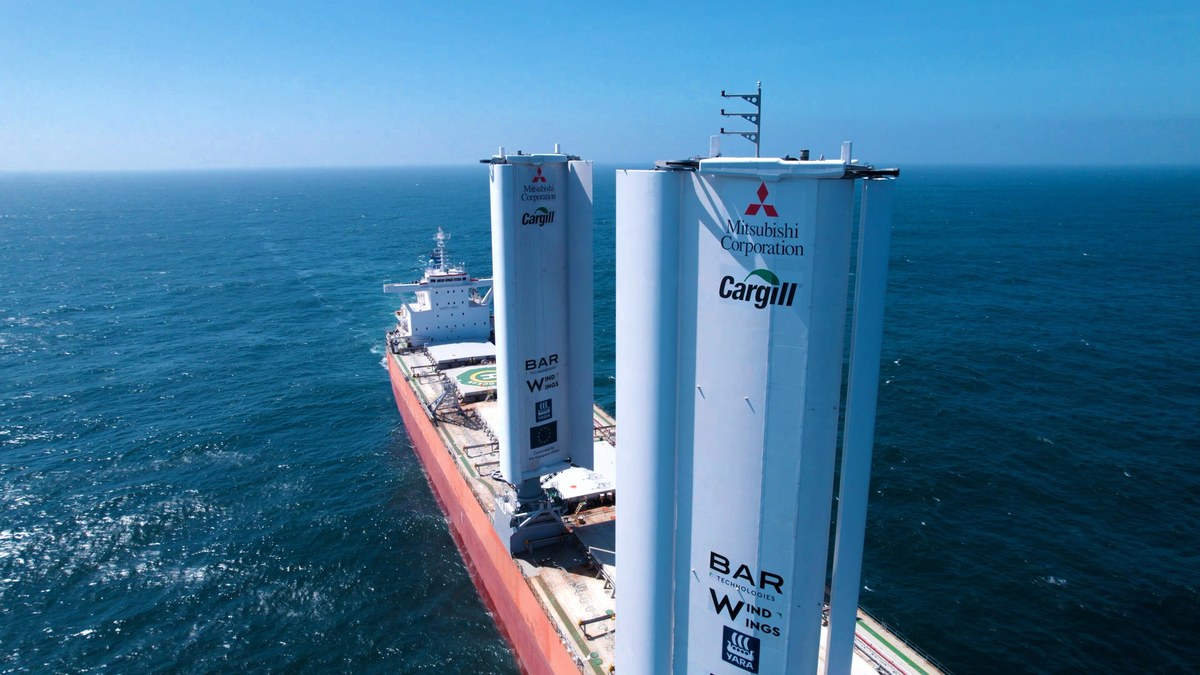
Why a gas ship wants sails
The answer lies in two words, fuel and emissions. Giant ships like methane carriers consume enormous amounts of fuel to cross oceans, which is costly and highly polluting. The sails help the wind push the ship, easing the work of the engines and reducing how much fuel is burned. Less fuel means lower costs and less pollution released into the air.
For a ship carrying natural gas, often sold as a cleaner fuel, it makes perfect sense to try to reduce the pollution of the journey itself. The pressure for more sustainable maritime transport is growing worldwide, and technologies like the Wind Challenger are a way for companies to show they are trying to reduce the environmental footprint of these colossi that cross the seas day and night.
It’s worth remembering the size of the problem that maritime transport represents. Ships move most of everything the world buys and sells, and the global fleet burns colossal amounts of fuel, accounting for a considerable share of the planet’s pollution. As these are vessels that operate for decades, any fuel savings per trip, multiplied by thousands of ships and millions of kilometers, becomes a huge number. That’s why solutions like rigid sails generate so much interest: even if they only cut a part of each ship’s consumption, the combined effect on the entire global fleet can represent a massive reduction in emissions and cost, precisely in a sector that has always been difficult to make cleaner.
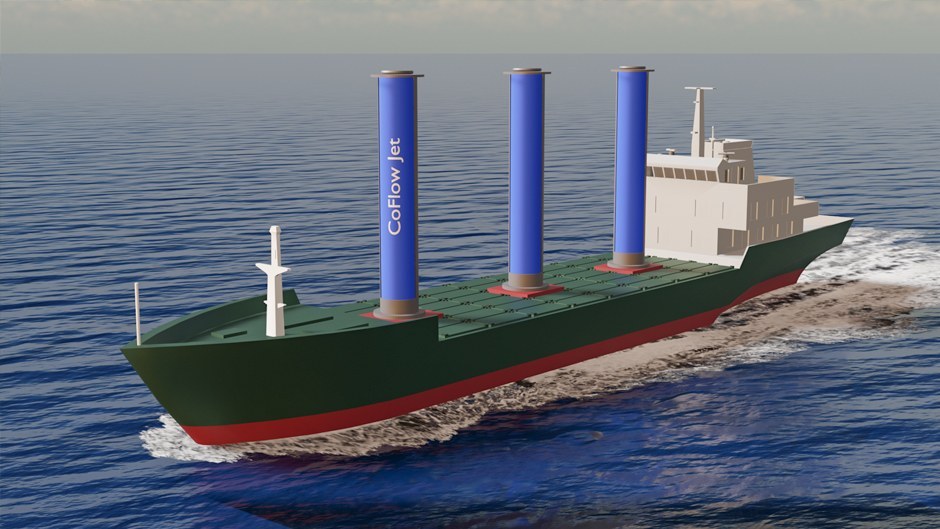
The engineering of moving a colossus with wind
Making the wind help push a ship the size of city blocks is quite a challenge. The rigid sails need to be strong enough to withstand gales in the middle of the ocean, but also adjustable and capable of retracting so as not to interfere when they are not needed. This entire operation is coordinated by automatic systems, which constantly calculate how to extract the maximum from the wind without compromising safety.
It’s a fascinating combination of tradition and modernity. The idea of using the wind is as old as navigation, but executing it on a 174 thousand cubic meters methane ship requires technology that ancient sailors could never have dreamed of. Every detail, from the shape of the sails to the sensors that control them, was designed so that a modern sea giant can, once again, rely on the help of the wind to continue its journey.
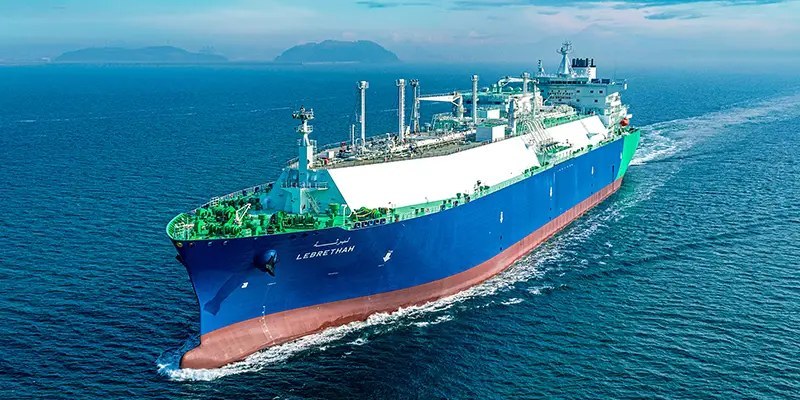
The wind back in command
I imagine the image of a colossal ship crossing the horizon with its rigid sails raised, blending the silhouette of old sailboats with the scale of modern giants. It’s a scene that unites past and future, showing how sometimes the best solutions for today’s problems are hidden in ideas that seemed outdated.
The gas ship with sails is a symbol of this quest for cleaner and smarter maritime transport. If the technology proves its worth, we may see more and more sea colossi raising sails to save fuel and pollute less. It would be a beautiful reunion of humanity with the power of the wind, the same that moved the first navigators and now returns to push the giants of the modern era, proving that not every future solution needs to be invented from scratch, sometimes it’s enough to reinvent what already worked in the past.
Did you imagine that sails, a thing of old ships, would return to move the largest colossi of the sea?


