Portuguese
  Spanish


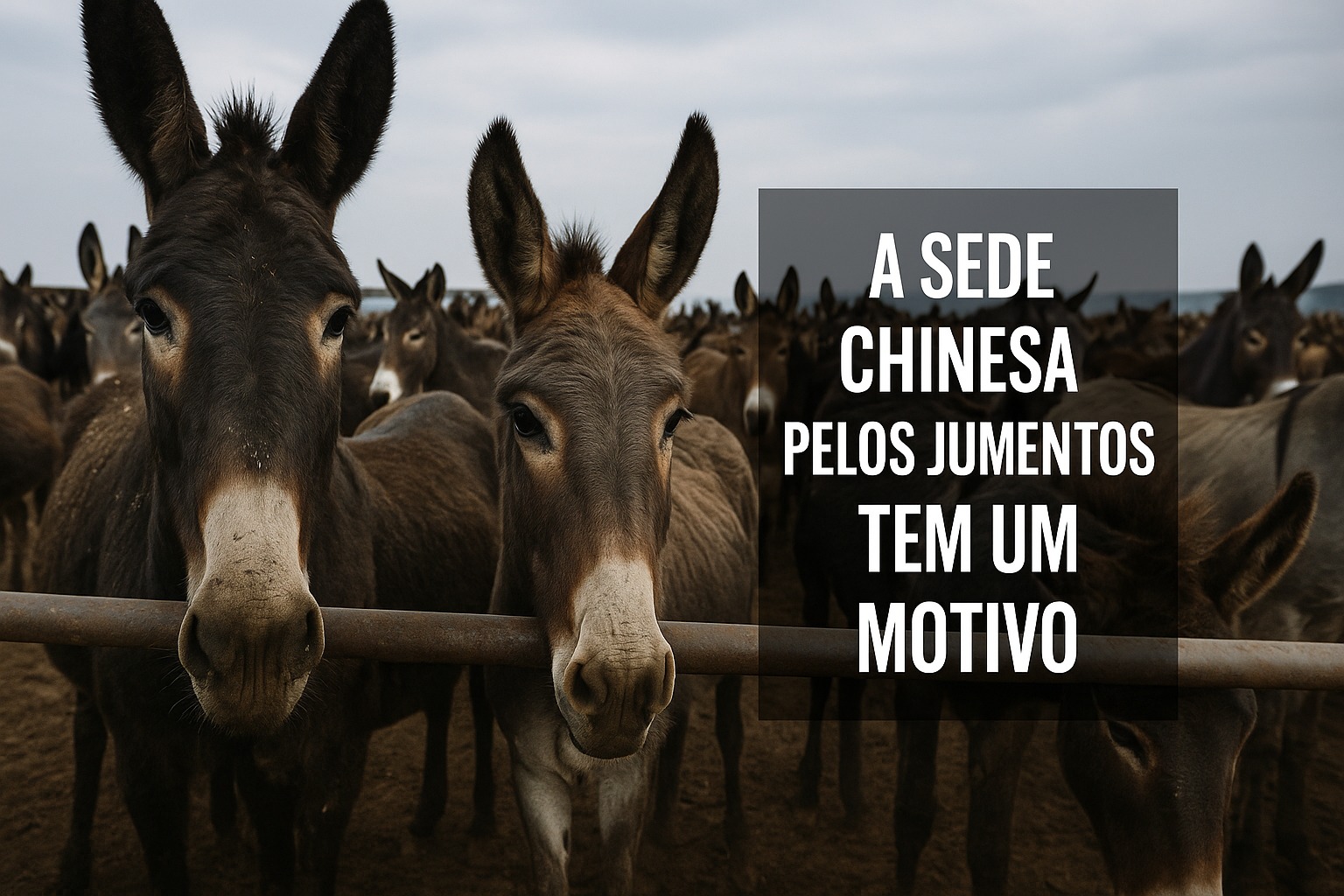


The Growing Demand of Traditional Chinese Medicine for Ejiao — A Medicine Made From Collagen From Donkey Skin — Is Leading to Mass Slaughter of These Animals, Causing Environmental Imbalances, Economic Impacts, and Risk of Population Collapse in Rural Areas of Various Countries
The growing demand of traditional Chinese medicine for donkey skin is generating an international alert. The reason is the use of collagen from these animals in the production of ejiao, a medicine valued for its supposed effects on vitality and rejuvenation.
As a result, the slaughter of donkeys has increased drastically in different regions, causing environmental imbalances and economic impacts on rural communities that depend on these animals in their daily lives.
The Valuation of Ejiao and the Increase in Slaughter
The ejiao is produced from the collagen extracted from donkey skin and has been used for centuries in Chinese medicine.
-
Abandoned Factory in Rio’s North Zone Becomes Urban Hazard with Standing Water and Debris

-
The U.S. Navy Conducts Submarine Tests in Idaho Lake to Detect Underwater Noises Hidden by the Ocean

-
British Factory Transitions from Mechanical Parts to Producing 420,000 Electric Power Units Annually, Supplying 70% of Ford’s Electric Cars Sold in Europe
-
France Launches Network to Recycle 20 Million Cookware Pieces by 2027, Accepting All Brands for Aluminum and Coating Separation


However, China’s economic expansion and the increase in the purchasing power of the population have intensified the demand for the product, creating a highly lucrative market.
In recent years, this valuation has resulted in a significant increase in the trade of donkeys, both legally and illegally.
This is because the growth in demand has outpaced Chinese domestic supply capacity, leading to large-scale imports of animals from countries in Africa, South America, and Asia.
Recent reports indicate that the number of donkeys has fallen drastically in several regions.
In Brazil, the high demand from China has caused a sharp decline in the number of donkeys: in some regions, the population decreased by about 90%, driven by the illegal trade of skins.
In some locations, the population has decreased by up to 70% in five years, which has raised alarms among international organizations about a possible population collapse of the species.
Social and Economic Impacts on Rural Communities
The disappearance of donkeys brings direct consequences for families living in rural areas. In many countries, these animals are essential for transportation, agricultural management, and small commercial activities.
With the advancement of international trade and the increase in slaughter, communities that previously relied on donkeys for basic tasks have lost accessible means of transportation.
This has led to decreased productivity, difficulty in mobility, and increased costs for rural workers.
Moreover, the price of the few available animals has risen considerably, making it unfeasible for small breeders to purchase them.
This scarcity compromises the income of many families, who lose an essential ally in their daily activities.
Therefore, the impact goes far beyond environmental issues — it directly reflects on the social and economic sustainability of entire communities.
Threats to Biodiversity and Ecosystems
The mass slaughter also causes environmental imbalances. Donkeys participate in important natural processes, such as seed transport, contributing to the regeneration of rural and semi-arid areas.
The rapid reduction of these animals interferes with these cycles and can affect local biodiversity.
The disappearance of the species alters the dynamics of entire ecosystems, influencing everything from plant growth to the survival of other species that indirectly depend on them.
Additionally, the illegal trade of skins has been expanding, often associated with cruel and unsustainable practices.
The trafficking of donkeys occurs along routes similar to those for smuggling other wildlife, complicating control efforts and facilitating the operations of criminal networks.
Global Efforts to Contain Exploitation
In light of this scenario, governments and international organizations are seeking solutions to curb the rampant slaughter.
One of the main measures is the regulation of the trade of donkeys and derivatives, requiring verified origins and stricter customs controls.
Some countries have begun adopting tracking and identification systems for the animals, with individual records to curb trafficking and improve oversight.
At the same time, animal protection movements are working to include donkeys among the endangered species, which would broaden their legal protection.
Cooperation between countries has also proven essential. The exchange of information regarding trade routes and seizures facilitates the detection of illegal networks operating in hard-to-access borders.
Another area of action is the promotion of scientific research in search of synthetic substitutes for ejiao.
Laboratories and universities have been exploring plant-based and biotechnological collagen alternatives, aiming to reduce pressure on the species without eliminating the cultural value of traditional Chinese medicine.
The Challenge of Balancing Tradition and Preservation
The debate over the slaughter of donkeys goes beyond economic issues. It involves a dilemma between tradition and sustainability.
While ejiao represents an ancient cultural practice, its large-scale production threatens the survival of a species vital to many communities.
The solution lies in global awareness and the creation of policies that reconcile commercial demands with environmental preservation.
Only with efficient oversight, educational campaigns, and viable alternatives will it be possible to contain the advance of predatory trade.
The future of donkeys depends on collective commitment — from consumers, governments, and institutions — to ensure that these animals continue to play their role in ecosystems and in the lives of millions of people around the world.
With information from Correio Braziliense.