Portuguese
  Spanish


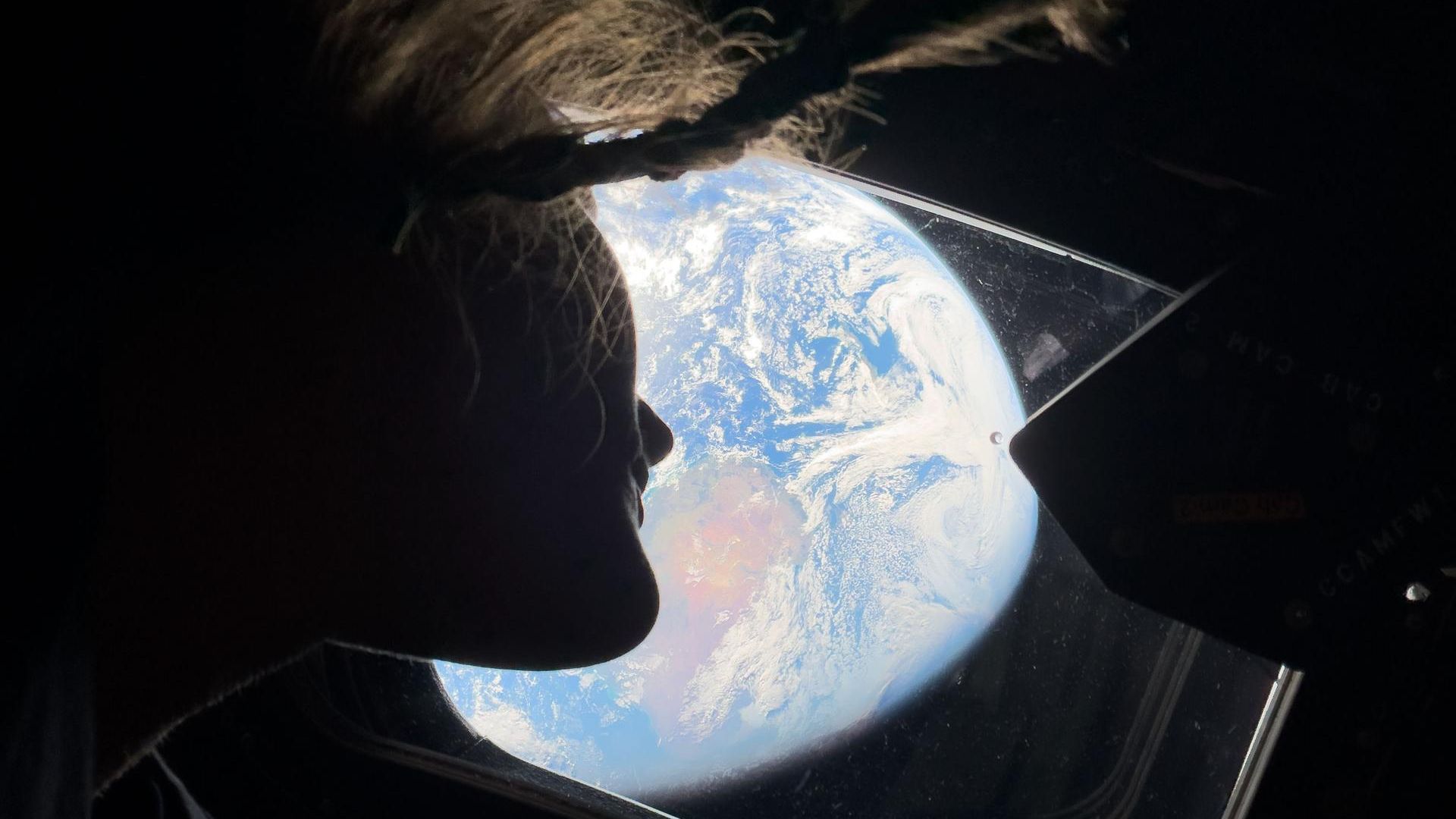

Understand why recent records of the planet generated strangeness to the public and how technological advancements, lighting, and editing completely changed the way we see the Earth in space
The difference between the most recent images of Earth captured during the Artemis II mission and the classic photos from the Apollo missions caught attention at first glance. After all, while the old images displayed a vibrant planet with intense shades of blue and high contrast, the recent records present a more muted and less saturated appearance. However, contrary to what some may imagine, this change is not related to any alteration on the planet, but rather to technical factors and visual choices that have evolved over the past decades.
The information was released by “Metrópoles”, which presented a detailed analysis of the behind-the-scenes of the Artemis II mission and explained why the Earth looks different in the most recent images. According to the report, the transformation is directly linked to the capture technology, lighting conditions, and post-processing of the images.
Why does the Earth look less vibrant in the Artemis II images?

The dark portion of Earth is experiencing nighttime. On Earth’s day side, swirling clouds are visible over the Australia and Oceania region.
In the foreground, Ohm crater has terraced edges and a flat floor interrupted by central peaks. Central peaks form in complex craters when the lunar surface, liquefied on impact, splashes upwards during the crater’s formation.
To understand this difference, it is important to go back in time and observe the impact of the images produced during the Apollo missions, especially the famous photograph “Blue Marble”, taken in 1972. This image helped to consolidate an almost idealized view of the planet, with intense and striking colors.
-
Pennsylvania Mine Creates Ice in Summer Heat and Melts in Winter, Turning a Mountain Crevice into a Reverse Natural Refrigerator

-
China Accelerates Global Expansion of Robotics: From Smart Vacuums to Industrial and Humanoid Machines, Millions Exported to Over 150 Markets
-
Polar Air Mass to Hit Brazil: Temperatures to Plummet in Nine States, Near Freezing in the South with Frost Risk Until Monday
-
Chinese “dark factories” produce electric cars 24/7 with minimal human intervention, as Zeekr assembles 800 units daily, raising concerns in Brazil.





Moreover, the cameras used at that time had specific characteristics that directly influenced the final result. The astronauts used Hasselblad equipment adapted with Ektachrome film, known for highlighting strong tones, especially the blue of the oceans.
On the other hand, in the Artemis II mission, technology has evolved significantly. Today, modern digital cameras have much more advanced sensors, capable of capturing a greater dynamic range and recording colors in a more balanced way.
In summary, the main differences between the old and current images include:
- Type of camera: analog film (Apollo) vs modern digital sensors (Artemis II)
- Color saturation: more intense in the past, more neutral today
- Dynamic range: limited before, much broader today
- Visual fidelity: striking aesthetics vs technical precision
- Public perception: idealized in the past, more realistic in the present
Consequently, the Earth may appear less vibrant, but this is because the image is closer to what would actually be seen with the naked eye under certain conditions.
How have technology and space photography changed the appearance of Earth?


In addition to cameras, various technical factors help explain why current images look different. Among them, fundamental elements of photography stand out, which directly influence the visual outcome.
To better understand, here are the most important technical factors:
- Capture settings: ISO, aperture, and shutter speed directly influence brightness
- Grain (noise): more present in low-light environments
- Color balance: modern sensors avoid chromatic exaggerations
- Camera internal processing: current algorithms prioritize naturalness
- Space conditions: extreme light variations affect the result
Therefore, when analyzing all these aspects, it becomes clear that the appearance of Earth has not changed — what has changed is the way it is recorded and interpreted by technology.
The role of light and post-processing in space images
Lighting also plays a crucial role in how we see Earth in space photos. In the iconic Apollo 17 image, for example, the planet was fully illuminated by sunlight, which favored intense colors and cleaner contrast.
In contrast, one of the most discussed images from the Artemis II mission shows the nighttime side of Earth, with the Sun positioned behind the planet. This condition requires more complex technical adjustments.

See the main impacts of lighting on this type of image:
- Direct sunlight: more vivid colors and high contrast
- Indirect light or absence of light: duller appearance
- Long exposure: increases brightness but reduces sharpness
- High ISO: generates more noise and less color purity
- Backlight: makes capturing details difficult
Moreover, post-processing has also evolved over the years. During the Apollo era, it was common for images to undergo adjustments for publication in newspapers and magazines.
Among the main adjustments made in the past and present, the following stand out:
- Color saturation: increased in old images
- Contrast: intensified for greater visual impact
- Cropping and rotation: adapted to the human eye
- Editing style: more emotional in the past, more technical today
Ultimately, Earth remains the same stunning planet that has captivated generations. However, the way we see it has changed profoundly. The images from the Artemis II mission reflect a new era of space photography, more technical, more faithful, and at the same time, less influenced by aesthetic standards of the past.