Portuguese
  Spanish


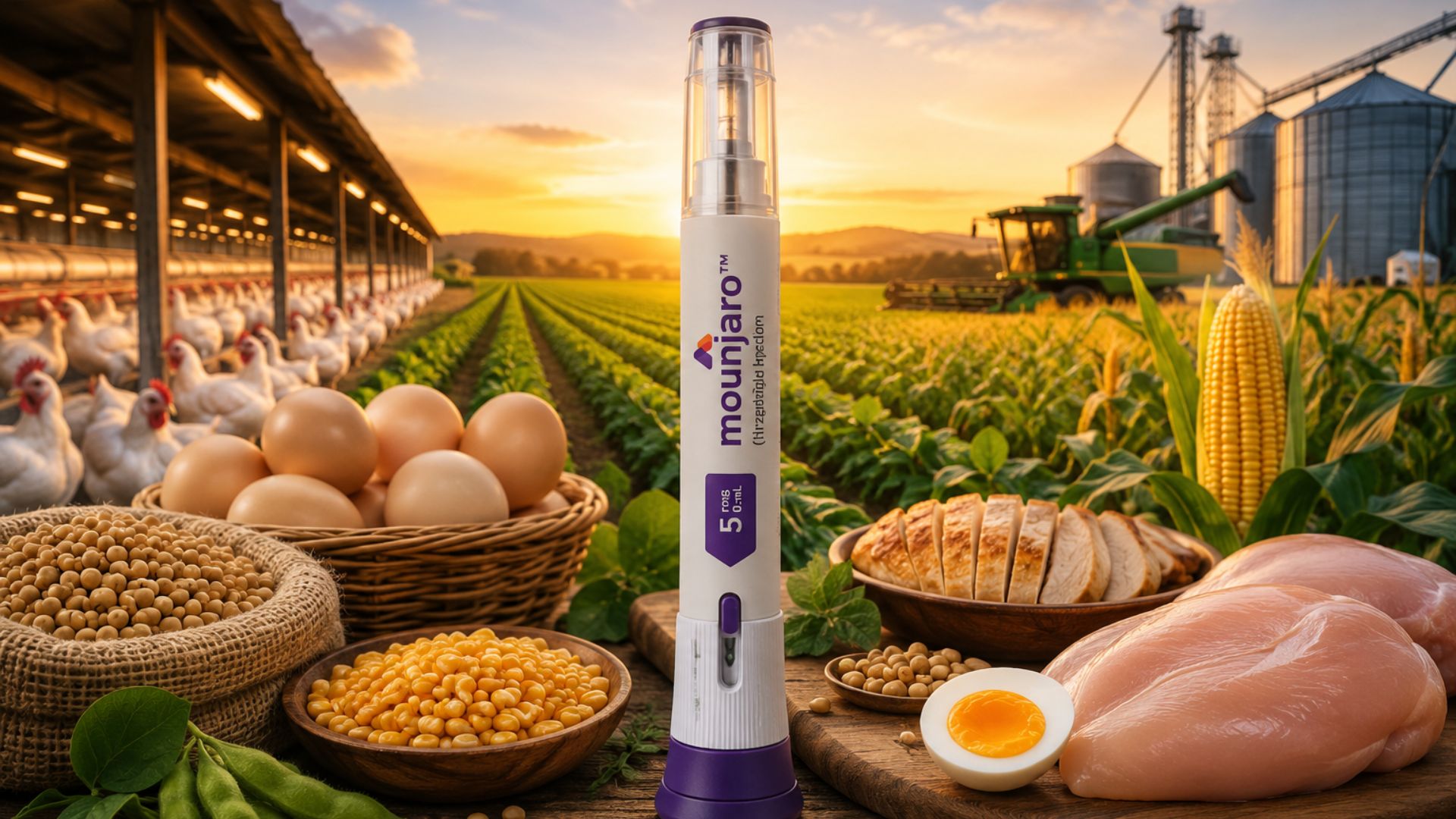

Weight-loss medications begin to reshape global food consumption and open a new dispute in agribusiness, with pressure on ultra-processed foods and greater space for animal proteins, soy, corn, and functional products aimed at satiety.
The advancement of GLP-1 agonist-based medications, known as “weight-loss pens,” is beginning to alter the consumption logic that has sustained a portion of the global food and agribusiness industry for decades.
According to a report by Cogo Inteligência em Agronegócio, the appetite reduction caused by drugs like semaglutide and tirzepatide tends to decrease calorie consumption but could strengthen supply chains linked to animal protein, corn, soybean meal, and foods with higher nutritional value.
More than a change in the quantity of food consumed, the movement indicates a reorganization in diet composition, with smaller meals, a greater search for satiety, and a preference for foods with more protein, lower caloric density, and a nutritional profile considered healthier.
-
India’s Sugar Export Cuts and Ethanol Shift Amid El Niño Threat Could Impact Global Prices and Stocks

-
Quarantine Pest Threatening Palm Trees Puts Brazilian Authorities on Alert, Prompts Monitoring at University of Taubaté and Potential Control Measures Across São Paulo
-
Global Alert: Report Finds 159 Pesticides in Coffee Beans Sold in Europe, Posing Serious Risks to Millions of Farm Workers
-
Low-Demand Brazilian Beef Offal Gains Popularity Abroad: Indonesia Purchases $19.5 Million, Boosting Revenue and Reducing Waste



“Fewer calories does not mean less agribusiness,” states Carlos Cogo in the report.
In the specialist’s assessment, the shift to more protein-rich diets could become a growth driver for Brazilian agribusiness, provided that companies position themselves in higher value-added links, such as animal protein, functional ingredients, and healthy convenience products.
The study estimates that more than 100 million people could use GLP-1 agonists worldwide by 2030, in a scenario of increased supply, the entry of generic versions, and a gradual decrease in prices across different markets.
In Brazil, the semaglutide patent expires in March 2026, paving the way for competitors in the national market and a possible expansion of access, although industrial costs and production limitations may still curb sharper price reductions.
GLP-1 Changes Eating Habits and Pressures Ultra-processed Foods
By reducing appetite, delaying gastric emptying, and prolonging the feeling of satiety, GLP-1 medications directly interfere with the purchasing and consumption patterns of foods associated with large portions, excess sugar, fat, and refined carbohydrates.
This effect tends to put pressure on segments such as ultra-processed snacks, soft drinks, sweets, fast food, industrialized pasta, breads of lower nutritional value, and alcoholic beverages, especially when the purchasing decision depends on impulse or high volume of intake.
Companies that built margins and market share based on large portions, recurrent consumption, and high-caloric-density products are also more exposed, a model that loses strength when consumers begin to prioritize satiety and nutritional quality.
Reports cited in the study indicate lower tolerance for excessively sweet or fatty foods among users of these medications, while smaller portions begin to generate a feeling of satisfaction more quickly, altering the consumer’s relationship with traditional brands and categories.
Chicken and Eggs Gain Space in the New Protein Diet
In the opposite direction to the decline of ultra-processed foods, the report points out that the main structural consequence for agribusiness could be the valorization of proteins, especially in foods capable of combining nutrition, practicality, affordable price, and prolonged satiety.
Lean meats, eggs, fish, protein-rich dairy products, soy derivatives, and healthy ready-made meals gain space in this new eating pattern, where consumers tend to eat less but choose products with higher nutritional density.
Among animal proteins, chicken appears as one of the most favored products because it combines competitive price, low fat content, high protein concentration, ease of preparation, and direct association with diets considered more balanced.
Brazil has an advantage in this scenario by being the world’s largest exporter of chicken meat and one of the main global producers, with companies capable of serving both volume markets and more sophisticated convenience and added-value categories.
Companies like JBS/Seara, BRF, and Aurora already operate in lines of prepared, portioned products with a clearer nutritional appeal, which can facilitate adaptation to consumers seeking smaller, practical, and protein-rich meals.
Demand may grow especially in portioned cuts, chicken breast, grilled items, healthy ready-made meals, and protein snacks, segments where the industry can capture a higher margin than in the traditional sale of unprocessed protein.
Instead of competing solely on volume, meatpackers and food brands tend to reinforce products with communication focused on health, practicality, and satiety, three attributes that gain importance when consumption is no longer guided primarily by quantity.
Eggs also appear as direct beneficiaries of this food transformation, as they combine complete protein, low cost, versatility, and quick preparation, characteristics aligned with consumers who reduce portions but seek more nutrient-dense foods.
In addition to traditional eggs, the market can advance into premium and functional categories, such as enriched eggs, individual packaging, ready-to-eat products, and refrigerated snacks, without abandoning the strength of this basic food in family budgets.
Despite the potential for expansion, the main risk for the sector remains linked to price fluctuations and sanitary problems, especially avian influenza, which can affect supply, production costs, and growth rates in different producing regions.
Beef targets smaller cuts and higher added value
In beef, the trend described by the report does not necessarily point to a significant increase in volume, but indicates an opportunity for special cuts, smaller portions, convenience products, and protein snacks, such as dried meats consumed between meals.
This change favors higher value-added items, as consumers under the effect of medication may reduce meal sizes but maintain interest in proteins considered premium, practical, and associated with greater satiety.
As the world’s largest beef exporter, Brazil can capture part of this growth by expanding products aimed at higher-income markets, controlled portions, and convenience, although high prices may limit broader expansion.
The challenge for the beef chain will be to adapt formats and positioning without relying solely on an increase in total consumption, seeking margin in more elaborate products, differentiated cuts, and presentations adjusted to new eating behaviors.
Corn and soy enter the indirect effect of animal protein
The impact on corn and soy is one of the most relevant points of the study, because it contradicts the initial reading that appetite-reducing medications would automatically cause a drop in demand for agricultural products.
Although calorie reduction seems to indicate lower food consumption, the advance of animal protein can increase the use of feed, especially in the poultry and swine chains, which rely heavily on corn and soybean meal.
The logic is indirect: consumers reduce refined carbohydrates, increase the proportion of proteins in their diet, poultry and swine production grows, and with that, the demand for grains used in animal feed rises.
In poultry and swine farming, feed has a strong participation of corn and soybean meal, which transforms the migration to more protein-rich diets into a possible supporting factor for Brazilian agricultural chains.
Therefore, the report projects a growth of 3% to 5% in corn use for feed in five to seven years, with the possibility of an increase of up to 10% in a more favorable scenario.
For soybean meal, the base estimate indicates an increase of 4% to 6%, potentially reaching 12% in the most optimistic scenario, while soy vegetable protein could grow between 10% and 25% in the coming years.
This movement reinforces Brazil’s importance as a global supplier of grains, animal protein, and food ingredients, especially if the industry can transform commodities into higher-value products focused on nutrition, convenience, and functionality.
Smart Foods intensify the competition for margins in agribusiness
Another axis of growth lies in so-called Smart Foods, foods designed to offer greater satiety, high protein content, low glycemic index, nutritional density, and practicality, attributes increasingly valued by consumers undergoing GLP-1 treatment.
This category tends to have higher margins than traditional commodities because it shifts part of the value from agricultural production to functional ingredients, specific formulations, convenience brands, and ready-to-eat products.
The report points to opportunities in isolated soy protein, protein concentrates, functional dairy products, premium meals, food supplements, and healthy snacks, areas that connect the farm to the food industry with greater sophistication.
In the United States, this segment is already growing at an accelerated pace and could gain strength in other markets as weight-loss medications become more accessible and change consumption habits on a large scale.
For Brazilian agribusiness, the change brought about by GLP-1 does not only represent a threat to traditional consumption but a redistribution of value within the chain, with less space for products of low nutritional density.
In this new market landscape, animal proteins, soy, corn, functional ingredients, and healthy convenience foods begin to compete for prominence in a global chain less dependent on caloric volume and more oriented by nutrition, satiety, and added value.