Portuguese
  Spanish


A New Perspective on the Challenges of Global Agribusiness, Farmers, Researchers, and International Institutions.
Currently, over 820 million people suffer from hunger on the planet. And the paradox is evident: despite global food production being sufficient, poor distribution, waste, and social inequalities prevent universal access to food.
On the other hand, with the population growing and consumption increasing, the pressure on agribusiness is also intensifying.
The Growth in Food Demand
According to the UN, if the current rate of consumption continues, the planet will need 60% more food, 50% more energy, and 40% more water in the coming decades.
-
India’s Sugar Export Cuts and Ethanol Shift Amid El Niño Threat Could Impact Global Prices and Stocks

-
Quarantine Pest Threatening Palm Trees Puts Brazilian Authorities on Alert, Prompts Monitoring at University of Taubaté and Potential Control Measures Across São Paulo
-
Global Alert: Report Finds 159 Pesticides in Coffee Beans Sold in Europe, Posing Serious Risks to Millions of Farm Workers
-
Low-Demand Brazilian Beef Offal Gains Popularity Abroad: Indonesia Purchases $19.5 Million, Boosting Revenue and Reducing Waste



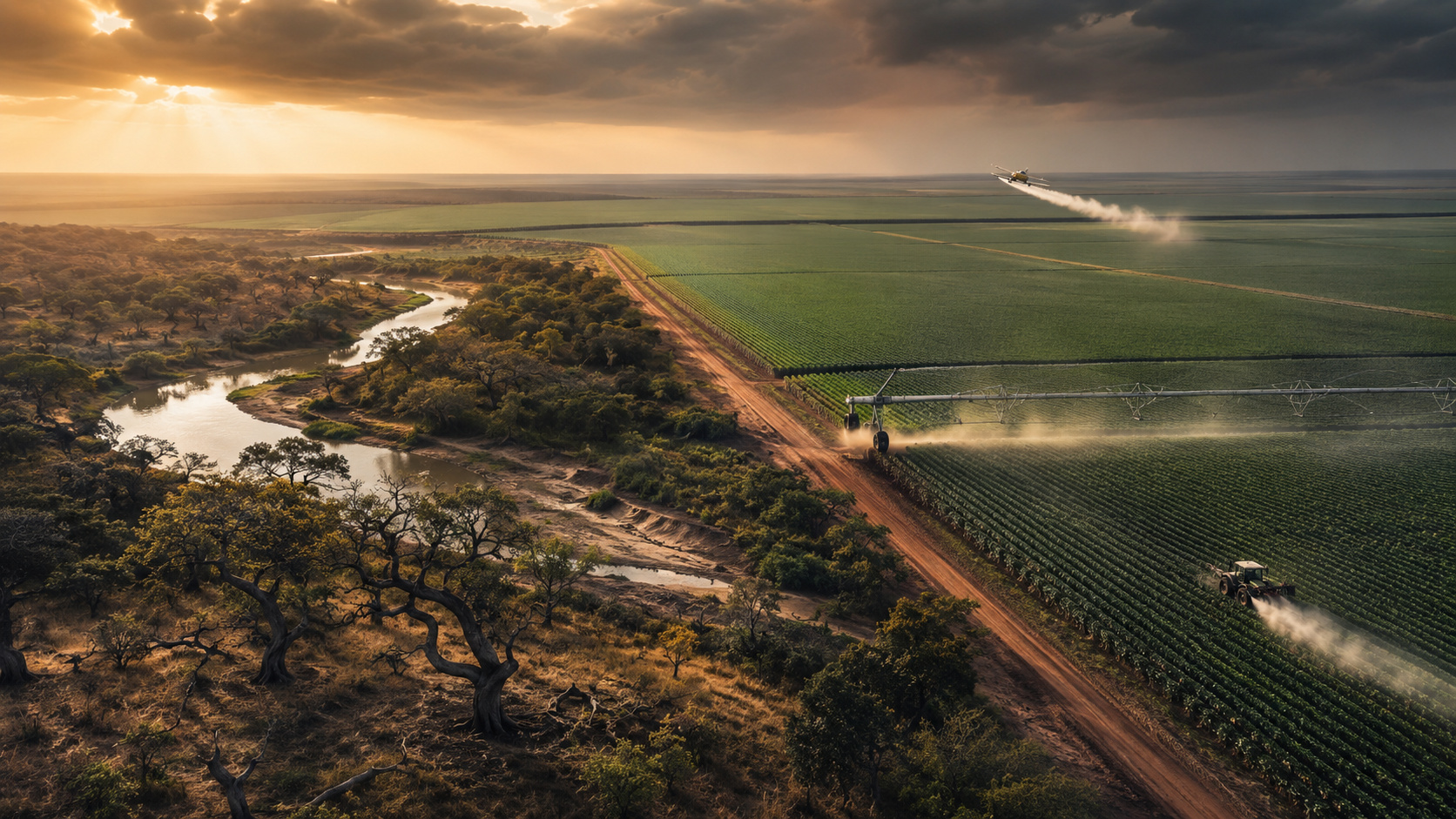
This growing demand requires sustainable and smart solutions. And Brazilian agribusiness plays a central role in this.
The main challenge of agriculture today is how to produce more and better with less.
Less Labor, More Technology
With urbanization, fewer people are working in the countryside. In Brazil, only 1 in 10 is in the agricultural sector. The solution? Investment in technology.
“The use of technologies can boost production and, contrary to popular belief, create new jobs”, says Marcos Roberto da Silva, a professor at UFRB.
The Water Challenge in Agribusiness
Irrigated crops represent 20% of arable land but produce 40% of global food. In Brazil, more than half of the water is consumed in agriculture.
“The available volume will have to compete with urban and industrial supply”, warns Jarbas Honório de Miranda from Esalq/USP.
Thus, smart irrigation will be essential to ensure production and sustainability.
Producing More Without Destroying the Environment
It is urgent to halt deforestation. The focus now is to recover degraded areas and adopt good practices to preserve soil and reduce carbon emissions.
The “Clean Field” initiative from inpEV is a positive example, promoting the correct disposal of agrochemical packaging.
According to Zavala, “the golden rule is to keep the soil covered and prevent erosion”.
The Problem of Food Waste
For every 3 tons of food produced, 1 is wasted. This impacts not only hunger but also the environment.
Since resources like water and energy are also thrown away. Wasted food also means wasted water.
Technology to Reduce Losses and Increase Production
Mechanization and digitization of agribusiness are essential.
From the use of smart tractors to drones and sensors, the so-called “precision agriculture” allows for greater productivity with less waste and environmental impact.
Better Distribution is a Solution Against Hunger
Hunger is not only the result of scarcity but also of inefficiency in food distribution.
It is estimated that over 13 million Brazilians live in poverty, without access to basic food.
Reducing losses, improving storage, and making food management more efficient are urgent paths to combat this scenario.
The Future of Agribusiness is in Innovation
As technology advances, agribusiness has the opportunity to reinvent itself. More efficient machines, digital management systems, and research in biotechnology point to a new era.
With a more modern and efficient sector, the challenge of feeding the world’s population and overcoming hunger becomes more achievable.
And Brazil, with its agricultural potential, can be a protagonist in this global transformation.