






 Portuguese
  Spanish


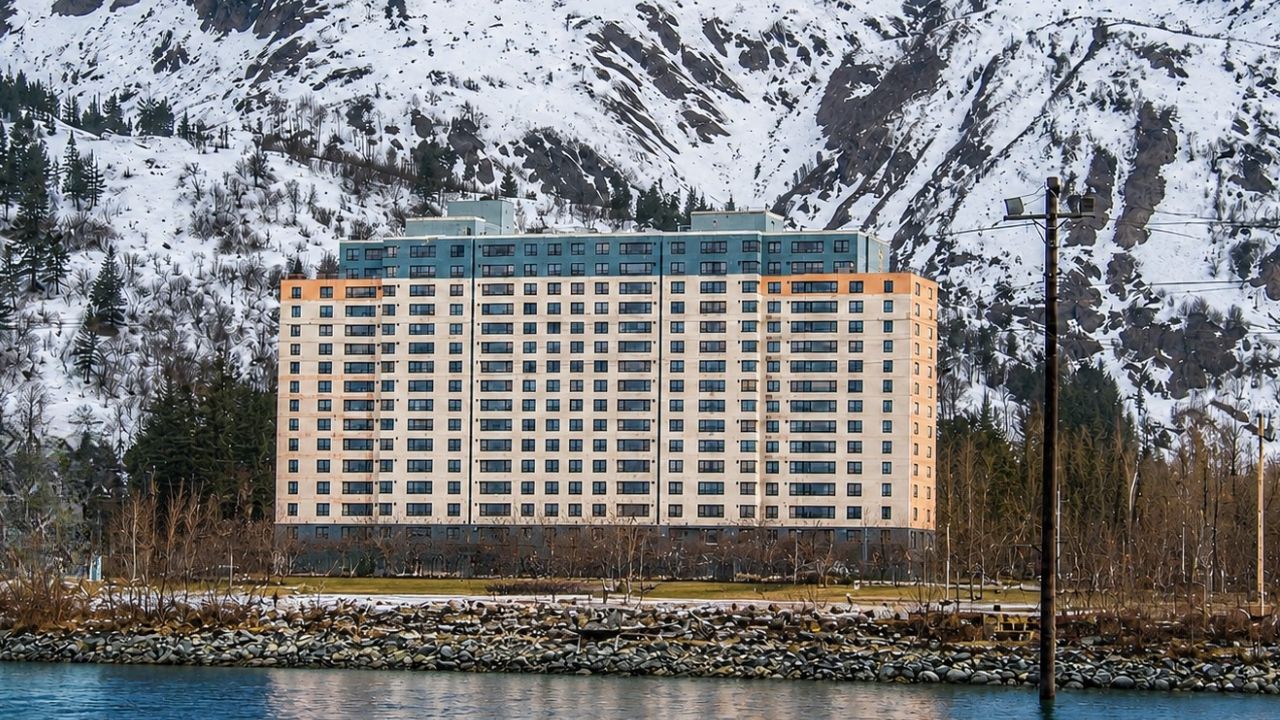

Whittier in Alaska has 272 inhabitants and about 200 live in the same building, which houses apartments, post office, shops, and even a police station.
Isolated between mountains and subjected to long periods of snow and intense winds, Whittier in Alaska developed an unusual urban configuration: about 200 of its 272 inhabitants live in the Begich Towers, a 14-story building that concentrates residences and public services. This organization allows much of the routine to take place at a single address and reduces the need for external travel during the harsh winter.
The numbers from the 2020 United States Census show that approximately 73% of the population lives in the building. Although there are other buildings and housing in the city, the Begich Towers has become the main residential and functional hub of the small community.
Inside the building, residents find apartments, a post office, small shops, and a police station. The concentration of these spaces helps explain why Whittier gained fame as the city where almost everyone lives in the same building.
-
Tiny Floating Home Combines 25 Square Meters, Electric Motor, Recycled Wood, and Button-Operated Roof

-
Brazilian Farmer Revives Corn and Soybean Production with Crop-Livestock Integration in Mato Grosso After Frost Setback
-
84-Year-Old Fredolino Preserves Cedar Bowls and Family Heirlooms, Reflecting a Life of Farming and Tradition in Rural Brazil

-
70-Year-Old Brazilian Dentist Fulfills 20-Year Dream by Visiting Seven of the World’s Highest Peaks in the Himalayas




Isolation helped define the structure of Whittier in Alaska
The geography imposes limitations even for those intending to reach the city by land. Access passes through a nearly five-kilometer tunnel carved into Maynard Mountain.
The passage operates with its own rules, including set times and one-way traffic at a time. This connection reinforces the community’s isolation, surrounded by mountainous terrain and weather conditions that hinder travel during part of the year.
The port also plays an important role in the local dynamics. Boats and small vessels are part of the landscape, while fishing is among the activities developed in the region.
In addition to permanent residents, the city has temporary accommodations and other structures aimed at the community’s functioning.
Building allows facing winter without going outdoors
The low temperatures, snow, and winds directly influenced the organization of Whittier.
To make travel safer, some buildings were connected to the Begich Towers by underground tunnels. Among them is the community school, which can be reached without students having to face the extreme weather directly.


This internal connection transforms the building into more than just a residential condominium. The building functions as the center of daily life, bringing together activities that, in larger cities, would be spread across different neighborhoods.
The model reduces distances and allows essential services to remain close to residences, an important advantage in a region where leaving home can mean facing intense snow for months.
Begich Towers was built to house military personnel
The origin of the building is linked to the United States’ military strategy in the period following World War II.
Whittier was considered an advantageous area because it had a deep port that remained ice-free for much of the year. The surrounding mountains also served as natural protection and made it difficult for the region to be identified by radar.
With the advancement of the Cold War, new facilities were built on the site. One of the buildings even housed a prison, but it was later abandoned.
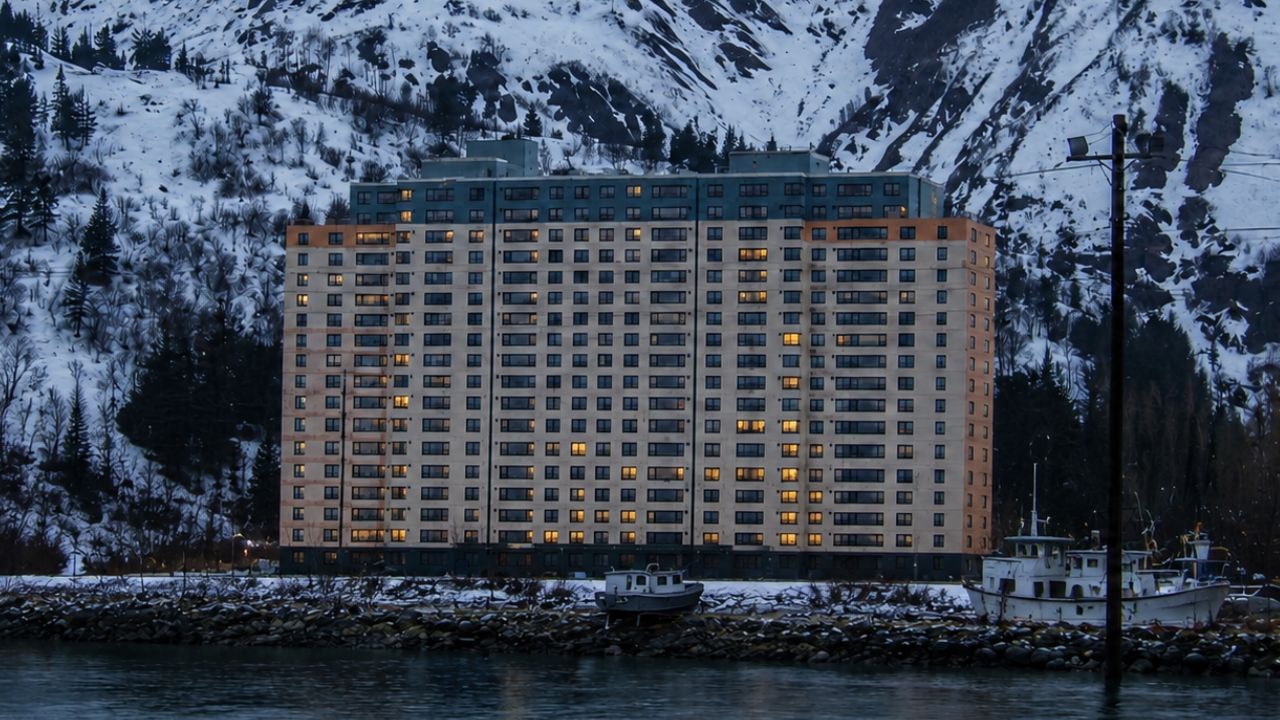
The building now known as Begich Towers was initially planned to accommodate military personnel. Its function changed after the 1964 Alaska earthquake, which caused a tsunami and contributed to the reduction of the military presence in the region.
After this period, the building was transformed into residential space and began to accommodate a growing portion of the inhabitants.
City goes beyond the most famous building
Despite the population concentration in Begich Towers, Whittier is not limited to the building. Other constructions are distributed throughout the region and help keep the small community functioning.
There are temporary housing, facilities related to local activities, and areas near the port. However, the building remains the main symbol of the city because it brings together an uncommon number of residents and services in traditional urban models.
This proximity creates a routine in which neighbors share not only the address but also a good part of the spaces used to solve day-to-day tasks.
Cruises change the city’s movement during the summer
Isolation does not prevent Whittier from receiving visitors. Between May and September, cruise ships arrive in the region and increase local movement. Summer also transforms the landscape and expands visual access to glaciers and other natural areas in the surroundings.
During this period, the city surrounded by snow and mountains becomes part of the routes of tourists visiting the region. The arrival of cruises contrasts with the winter routine, when the climate limits travel and makes the concentrated structure of Begich Towers even more important.
The way of life in Whittier sparked interest outside the United States through videos posted on social media. Residents and content creators began to show the building’s corridors, available services, city streets, and the mountainous scenery around.

The images help explain how a community functions where approximately three out of four inhabitants share the same building.
More than an architectural curiosity, Whittier shows how the environment can modify the organization of a city. Isolation, harsh winter, and military origin led the population to concentrate housing, services, and part of the routine in a building that became the center of the entire community.
With information from Diário do Litoral


