






 Portuguese
  Spanish
  4 min of reading
  1 comment


German Collagen Gel Regenerates Articular Cartilage Without Surgery Since 2013. ChondroFiller® Surprises With Effectiveness, But Is Still Little Known.
Under the promise of a future where joint degeneration does not necessarily mean surgery, Germany has developed a solution that seems straight out of science fiction, but has been among us for over a decade. This is ChondroFiller®, an injectable gel made from type I collagen, capable of stimulating cartilage regeneration in a minimally invasive manner. Created in collaboration with the prestigious Fraunhofer Institute, it has been clinically available since 2013, but has only recently been discussed on social media as if it were an absolute novelty.
The curious thing is that, despite already benefiting tens of thousands of patients in different countries, this technology remains little known to the general public.
How The German Gel That Regenerates Cartilage Works
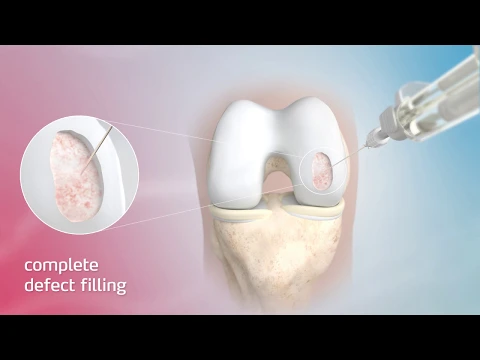
ChondroFiller® is presented in two forms: gel and liquid. In the liquid version, it is injected directly at the site of the injury and solidifies in minutes, forming a highly pure and biocompatible collagen matrix.
-
Japan sends ship to extract mud rich in rare earths at nearly 6,000 meters deep in the Pacific, attempts to lift 350 tons per day from the seabed, and transforms sediments near Minamitori Island into a strategic weapon to reduce dependence on China.

-
Venus Aerospace promises a rotating detonation hypersonic engine that takes the Stargazer to Mach 9 and crosses oceans in 1 hour, but the flight that made history barely surpassed the speed of sound.

-
Brazilian student creates a cheap formula that makes plants grow up to 90% faster and wins an award in a global scientific competition.

-
Europe unveils armored tank with remote turret, 1,500 horsepower, and 120-millimeter cannon




This matrix acts as a “biological scaffold,” filling the defect and serving as a base for the patient’s own cells to migrate and produce new cartilage.


The procedure is performed through arthroscopy, a minimally invasive technique that uses small incisions and cameras to guide the application.
Unlike traditional cartilage repair surgeries, there is no need for transplants, grafts, or complex reconstructions.
The simplicity of the technique is one of its most revolutionary points: in just a few minutes, the gel integrates into the joint tissue and begins the regeneration process.
The Reach of The Technology
Indicated for grade III and IV cartilage injuries up to 3 cm², ChondroFiller® has already been applied in joints such as the knee, hip, ankle, shoulder, and even in small joints of the hand.
According to clinical reports, more than 20,000 patients have been treated since 2013, with results including significant improvements in mobility and pain reduction in many cases.
This impressive number shows that the technology is not an experiment or a future promise: it is a reality established in regenerative medicine.
Still, its media reach has been limited, and only in recent years has the solution gained prominence in viral articles, which often presented it incorrectly as a “discovery of 2024 or 2025.”
What Few Say: Post-Treatment and Risks
Although the procedure is less aggressive than a conventional surgery, it is not a magic solution.
After the application, the patient needs to keep the joint immobilized for 48 hours with a brace, ensuring that the gel properly adheres. After this, a controlled rehabilitation protocol begins, essential for the success of the treatment.
Like all biological therapies, there are also risks. The collagen used, although purified, can cause allergic or inflammatory reactions in some patients. Additionally, success depends on the size of the injury, the patient’s age, and individual healing factors.
The Future of Articular Regeneration
The development of ChondroFiller® has paved the way for a new generation of biomaterials. Researchers worldwide, including in Germany and the United States, are working on more sophisticated, biodegradable, and fully integrable gels into joint tissue, capable of transforming into high-quality hyaline cartilage.
Some studies explore the combination of collagen with stem cells and growth factors, expanding the regenerative potential and seeking even more lasting results.
The goal is ambitious: to reconstruct cartilage definitively, safely, and efficiently, reducing the risk of future degeneration and preventing patients from having to resort to joint prostheses.
Between Science and Hope
The case of ChondroFiller® shows how cutting-edge medicine does not always receive the attention it deserves. While millions of people live with pain and limitations caused by cartilage injuries, a technology already established for over 10 years remains restricted to specialized clinics.
In a world where life expectancy is increasing and joints suffer more and more from impact sports, accidents, and aging itself, the existence of a minimally invasive regenerative gel should be at the center of medical discussions. More than a treatment, ChondroFiller® represents a new way of approaching orthopedics: less scalpel, more biotechnology.
Perhaps the question is not just when this technology will become popular, but whether we are prepared for a future where repairing the human body ceases to mean cutting and stitching, and instead means regenerating — cell by cell, tissue by tissue.






si es cierto es muy bueno