





 Portuguese
  English
  Spanish
  3 min of reading
  1 comment


A Lucky Buyer May Have Found a Lost Van Gogh for Just US$ 50! Experts Appraise the Painting at US$ 15 Million. See the Details!
Vincent van Gogh, one of the most iconic artists in history, produced some of the most recognizable works in the world during his short and turbulent life. Recently, a painting acquired for a mere US$ 50 at a garage sale in the United States was identified as a possible lost creation of the Dutch master, estimated to be worth at least US$ 15 million.
The Unusual Discovery
The story begins with an antiques collector who, intrigued by the technique and texture of the painting, decided to purchase it at a garage sale in Minnesota.
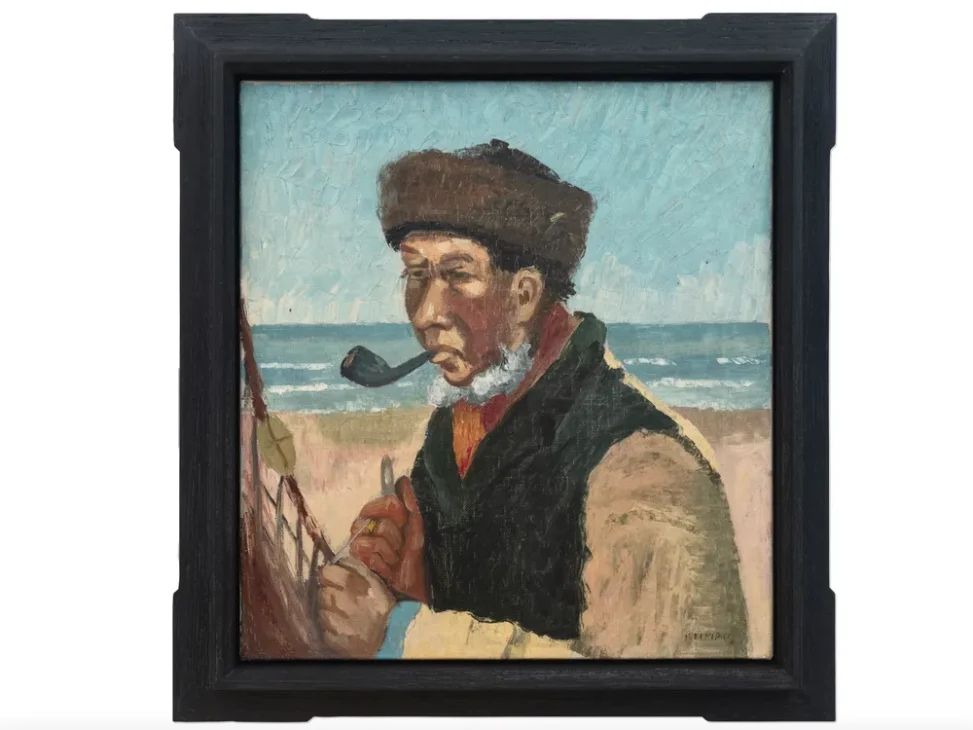
The work depicts a rosy-cheeked fisherman, dressed in simple clothes, mending a fishing net. Signed with the name “Elimar“, the piece intrigued the collector, who later sold it to LMI Group International, a company specialized in art research.
-
A property that once had more than 1,000 hectares now operates with 73 hectares and invests in coffee, cattle, photovoltaic energy, and hydroponic corn to prove that a small farm can also be profitable.

-
Four thousand PET bottles became a 24m² house in the interior of São Paulo, as ten students proved that it’s possible to build a home from floor to ceiling with recycled plastic, spending 30% less than a brick construction.

-
Without ATMs, with social networks blocked and travel controlled by the government, Eritrea challenges the modern world and reveals why it is called the “North Korea of Africa.”

-
Japan spent decades avoiding the export of major military assets, but is now negotiating the sale of used Asagiri destroyers to expand naval cooperation with Indonesia.



Since 2019, LMI Group has been conducting a thorough investigation of the painting. After years of analysis, a 450-page report was recently released, stating that the work is authentic and belongs to the renowned Van Gogh.
Scientific and Historical Evidence
Confirming the authenticity of a Van Gogh work requires meticulous examination. For this, researchers combined advanced science and technology techniques with a detailed study of the historical context.
The analysis of pigments revealed the presence of red PR-50, a pigment that was believed to have been patented only in 1905 — more than a decade after the artist’s death in 1890.
However, experts were able to find a patent from 1883, proving that the pigment was already available by the end of the 19th century.
Another significant detail was the identification of a hair strand embedded in the paint of the artwork. Genetic analyses indicated that it belonged to a person with red or auburn hair — a striking characteristic of Van Gogh, who often represented his own image with these colors.
The Connection to Van Gogh
Researchers also discovered that “Elimar” may have an important literary connection. The name appears in the Danish novel “The Two Baronesses” (1848), written by Hans Christian Andersen, one of Van Gogh’s favorite authors.
Additionally, the calligraphic analysis demonstrated that certain letters in the painting’s signature are identical to those used by the artist in other works.
Another intriguing point is the influence of the Danish painter Michael Ancher. It is believed that “Elimar” is a “translation” of the portrait of Niels Gaihede, a fisherman depicted by Ancher, a theme that also interested Van Gogh’s friend, Paul Gauguin.
Van Gogh often reinterpreted works by other artists, converting them into his own visual language.
Skepticism and the Path to Acceptance
Despite the evidence, acceptance of the work as authentic still faces resistance. The Van Gogh Museum in Amsterdam reviewed the painting in 2019 and concluded that it was not an original piece by the artist. However, the analysis at the time did not account for the recent scientific discoveries.
Experts like Richard Polsky argue that for the painting to be definitively recognized as a Van Gogh, scholars from the Van Gogh Museum need to review the new data and issue an updated opinion.
“People love when something goes unnoticed, and it would be amazing if they found a lost Van Gogh, but it’s essential that the research is accepted by the academic community“, Polsky stated to the Wall Street Journal.
If “Elimar” is accepted as an authentic Van Gogh, this discovery will have significant impacts on both the art market and the understanding of the artist’s legacy. The painting’s current estimated value of US$ 15 million could increase exponentially.
With information from Wall Street Journal.




Fantástico!! Adorei.