






 Portuguese
  Spanish
  4 min of reading
  0 comments


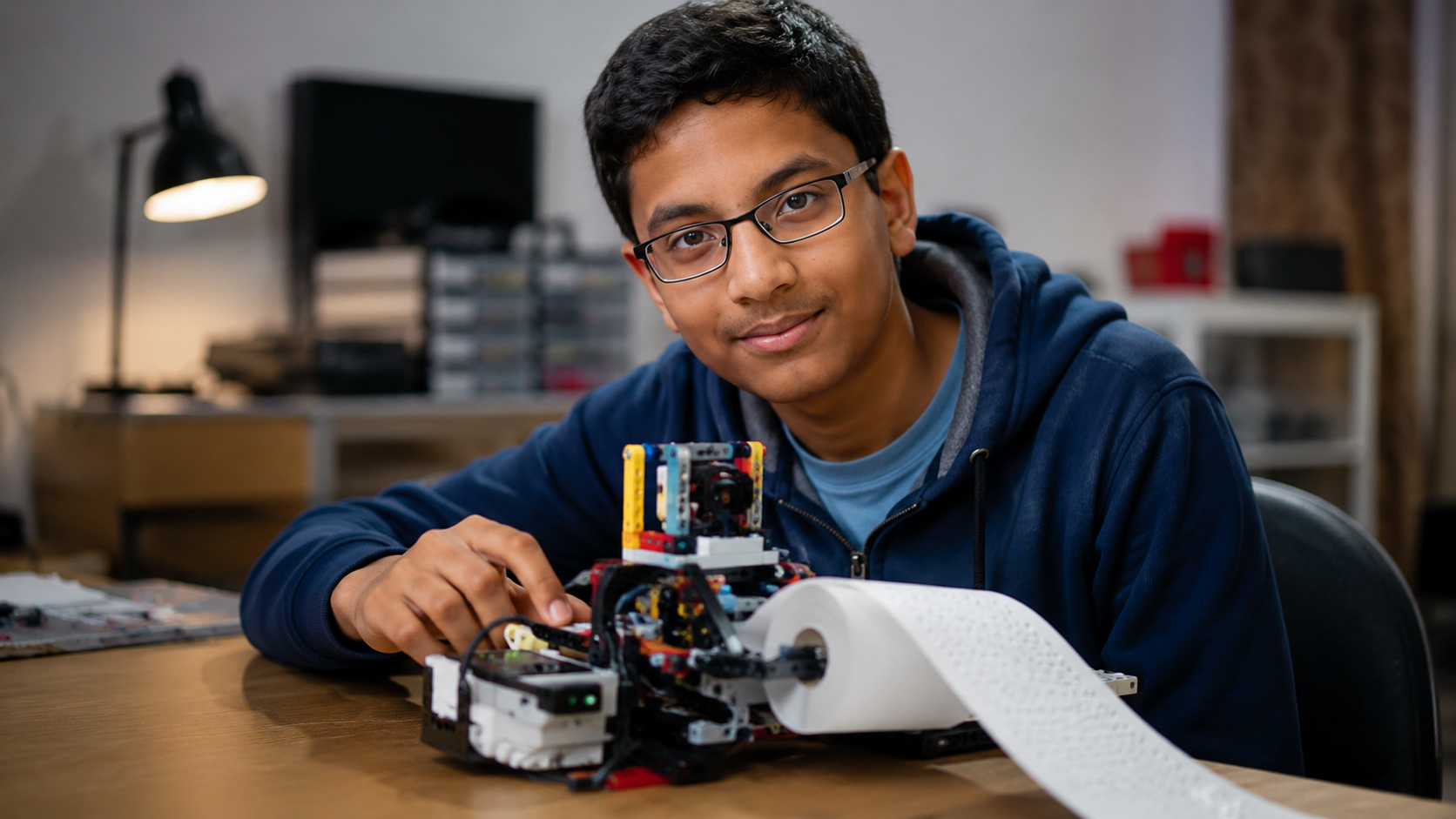
The creation of Braigo showed how a low-cost braille printer made with Lego opened a discussion about accessibility, assistive technology, and the price of equipment used by blind people. The case draws attention because it was born outside the big laboratories, started from a simple question, and brought to debate a real barrier for families, schools, and users who depend on braille reading.
The technology seemed too expensive for many families when Shubham Banerjee, then a 13-year-old boy from Santa Clara, California, used Lego pieces to create a low-cost braille printer.
The information was published by Smithsonian Magazine, a science, innovation, and culture magazine. The project became known as Braigo and was born with a direct goal: to test an alternative for equipment that could cost US$ 2,000, aiming for a price around US$ 200.
The idea did not solve braille access on its own, but it showed an interesting path. A children’s robotics kit became an engineering prototype and highlighted the high cost of an essential technology for many blind people.
-
A forgotten society lived isolated in caves for 500 years in Spain, and now the ancient DNA from human remains has revealed smallpox, signs of violence, and a routine marked by animal husbandry.

-
Brazilian study finds chemical signal indicating stars that have consumed a planet: analysis of twin stars reveals an excess of beryllium resistant to 3.5 million °C, detected by an 8.2-meter telescope, and raises doubts about the rarity of systems like the Solar System.

-
Intense cold arrives with winter on Sunday, threatens frost from the South to the Southeast, and could leave Rio Grande do Sul with negative temperatures starting this weekend.
-
Astronomers find a “fossil” of the Milky Way that survived for 12.5 billion years, remained hidden near the center of the galaxy, and now reveals four different generations of stars.


The price of the braille printer was the barrier that drew attention
A braille printer creates raised dots on paper. These dots form letters that can be read with fingers by blind people. For those who cannot see, this type of resource can help with studies, reading, and autonomy.

The problem was the cost. Traditional equipment could reach US$ 2,000, a price far from the reality of many families. Therefore, the proposal to bring the price closer to US$ 200 made the project so appealing.
The difference between these values helps the reader understand the impact. It wasn’t just about assembling a machine with Lego pieces. The discussion involved access to reading, inclusion, and assistive technology.
How Lego pieces became an engineering prototype
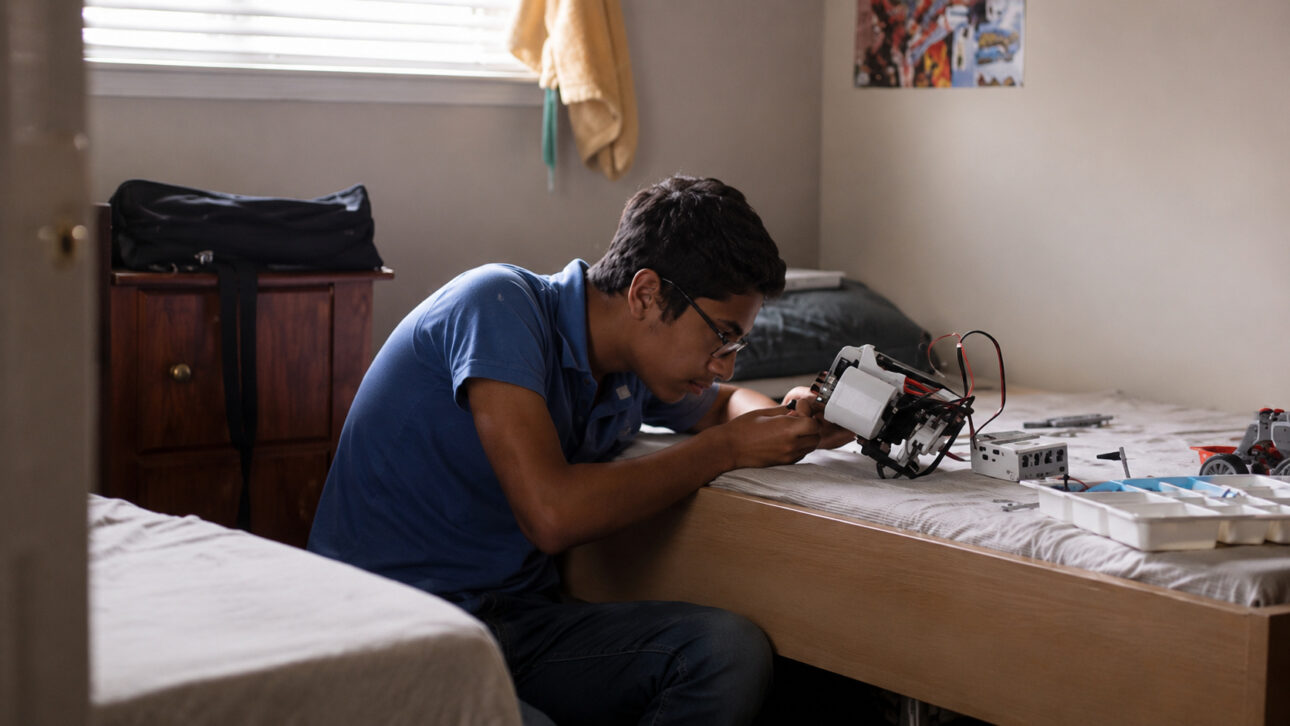
Banerjee started working on the idea in January 2014, when he was still 12 years old and was looking for an engineering project for a science fair. Later, at 13 years old, he began to be introduced as the creator of Braigo.
The kit used was the Lego Mindstorms EV3, a robotics box that allows the assembly of simple machines with motors, sensors, and programming. In simple words, it is a set of pieces that helps transform assembly into movement.
Smithsonian Magazine, a science, innovation, and culture magazine, detailed that the student went through 7 attempts before reaching a functional prototype. The machine printed the 6 points of the braille sequence.
This point is important because it shows trial, error, and adjustment. Braigo didn’t appear ready all at once. The prototype was corrected until it could demonstrate the main idea.
Braigo combined braille, Lego, and a simple question about cost
The name Braigo was born from the union of braille and Lego. The choice well translates the origin of the project: a technology linked to the reading of blind people, created from pieces used in educational robotics.
The question behind the invention was simple. Why did a braille printer need to be so expensive? The answer involves production, precision, and a smaller market, but the question opened space to think about alternatives.
Banerjee’s prototype did not eliminate all these challenges. Even so, it showed that an initial solution could come from an unexpected place, without relying on a large factory or a sophisticated laboratory.
Assistive technology still needs to be more accessible
Assistive technology is any resource that helps people with disabilities study, work, communicate, or perform daily tasks with more autonomy. For blind people, this may include braille reading, audio, and adapted equipment.
Braigo entered this debate because it talked about price. When a technology is very expensive, it fails to reach those who need it most. This is a practical problem, not just a technical one.
That’s why the case gained traction. A boy managed to show that the cost of a machine can also be part of the accessibility problem. Without an affordable price, technology remains distant from schools, families, and common users.
What the invention shows about ideas outside major laboratories
Banerjee’s story shows that innovation doesn’t always need to start in expensive environments. A clear question, a real problem, and several attempts can generate an initial solution with social impact.
This doesn’t mean that any prototype becomes a ready product. A prototype is a test version, made to show that an idea can work. After that, adjustments, safety, and production are still necessary.
Even with these precautions, Braigo placed an important message at the center of the conversation: technology needs to serve people better. When a child looks at an expensive problem and tries to lower that cost, the debate about inclusion becomes more concrete.
A small creation that opened a big conversation about accessibility
The braille printer made with Lego should not be seen as a definitive answer to all challenges of accessible reading. Its value lies in showing that the price of assistive technology can be questioned and rethought.
By aiming to reduce from $2,000 to $200, Shubham Banerjee brought to a domestic table a discussion that affects families, students, and blind people: how to make access to braille simpler and less expensive.
Could more accessibility solutions be born from simple ideas like this before reaching big companies? Leave your opinion in the comments and share with those who believe in technology with real impact.


Be the first to react!